KRISP COVID-19 NEWS

Every year, the photo team from Science select the best pictures for Science. Here is some of the other Science collection of 2022âs best, from the edges of outer space to microscopic close-ups, from the genetics of ancient times to the discovery of new species.

Presenter: Prof Darren Martin, University of Cape Town, Date: Wednesday, 22 February 2023, BMRI, Tygerberg Campus, Stellenbosch University

We invite applications from ambitious post doctoral scientists, to undertake research in a Flagship research programme on epidemics in Africa. Fellows will receive a very well paid fellowship and access to some of the best datasets and facilities in the world.
Time: 12h00 | Wednesday, 25 January 2023,Venue: STIAS, Stellenbosch Campus or virtually,Presenters: Prof James R. Carey, University of California Davis (UC Davis)

CAPE TOWN - Health experts have cautioned South Africans that it is too early to panic over the new COVID-19 Omicron subvariant, dubbed "Kraken".

South Africans, especially the elderly and those with underlying health conditions, are being urged to vaccinate against Covid-19 or get booster shots as a precaution.

Prevalence of a new subvariant of Omicron is increasing, but whether it will cause a big surge in infections or hospitalizations is not clear.

LONDON, Jan 3 (Reuters) - Leading scientists advising the World Health Organization said they wanted a "more realistic picture" about the COVID-19 situation from China's top experts at a key meeting on Tuesday as worries grow about the rapid spread of the virus.
Time: 12h00 | Wednesday, 30 November 2022, Venue: STIAS, Stellenbosch Campus or Online, Presenters: Dr Christopher Trisos, directs the Climate Risk Lab for the African Climate and Development Initiative at University of Cape Town.
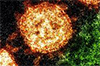
China's daily COVID-19 cases hit a record high since the beginning of the pandemic, according to the data revealed by the National Health Bureau. The country reported as many as 31,444 domestic cases on Wednesday despite its targeted approach. However, the numbers are relatively small when compared with China's t population of 1.4 billion, AFP reported.

One highlight of the forum was meeting Barack Obama and Dr. Sonia Vallabh. Both have worked against major adversity to develop health solutions. Dr Vallabh is a scientist working on rapid dementia, a genetic disease that killed her mother, and she is also at risk of developing dementia.

The BRICS Network for Genome Surveillance (NGS-BRICS) was established in 2021 and generates and investigates sequence data of viral pathogens of public health importance, such as COVID-19. In the interest of increasing bioinformatics and experimental expertise within BRICS countries. Applications close on 1st of August 2022.

This intensive, hands-on workshop will use microbiome data as a backdrop to learn R. The workshop will feature morning & afternoon sessions taught by expert faculty and technical assistants. All participants will acquire fundamental computational skills, bioinformatics best practices, exploratory data analysis, and modeling techniques. Deadline for application - 7 Aug 2022.

Please find CERIâs & KRISPâs newsletter June/July issue of 2022. This monthâs edition is a celebration of more awards and recognition of the tireless efforts of our teams towards the global pandemic response; but also a reflection on the future, not only of the evolution of COVID-19 sub-variants and their repercussions, but also the emergence or continuation of other viral threats. Another area of interest is the evolution of Monkey Pox to a global health emergency and what that means for the African continent.

The Stellenbosch University has received a grant from the International Bank for Reconstruction and Development (IBRD) for Accelerating Genomics-based Surveillance for COVID-19 Response in South Africa (P177439) and intends to apply part of the proceeds to eligible payments for goods and consulting services to be procured under this project.
Presenter: Professor Gerhard Walzl, Stellenbosch University Medical School, Date: 13 Jul 2022, Locations: JN De Villiers Auditorium, Tygerberg Campus or virtually
Please find CERIâs & KRISPâs newsletter June/July issue of 2022. What an eventful and action-packed period it has been! In this issue we feature our recent paper on the real-time tracking of the 2022 Monkeypox outbreak, the renaming of Monkeypox to remove the geographic stigma, and our Nature Medicine publication that identified the BA.4 and BA.5 Omicron lineages and how they drove the 5th wave in South Africa.
Please find CERIâs & KRISPâs newsletter May/June issue of 2022. In this issue, we feature the recent research describing how we worked with the WHO develop an early warning system for emerging SARS-CoV-2 variants and the opinion piece in The Lancet on why African science should have a central place on the world stage and needs to be recognised and supported. We congratulate Professor Tulio de Oliveira and Dr. Sikhulile Moyo on being listed in the Time magazineâs 100 most influential people of 2022.
In South Africa, a network of researchers are studying whether new lineages BA.4 and BA.5 escape immunity from COVID-19 vaccines and prior infections.

As the WHO mulls when to call the Covid pandemic over, attention is turning to the future. Last November, having alerted the world to the new and highly transmissible Omicron variant of the Sars-CoV-2 virus, South Africa-based scientist Tulio de Oliveira saw that country hit with travel bans.

Join the next African Union and Africa CDC 2022 Lecture and Discussion Series of Omicron and other COVID-19 variants of concern âwhere are we now?, "A New Public Health Order in the 21st Century ", Tuesday, 1 March 2022 at 3:00 pm EAT.
In this webinar, we will hear about the setting up of sequencing and bioinformatic pipelines for SARS-CoV-2, timeliness of data generated and the overall system coordination to inform public health action, with experiences and lessons learned from Denmark, South Africa and Argentina.

Presenter: Prof Tulio de Oliveira, Date: 2 February 2022, Locations: JN de Villiers Auditorium, Clinical Building, University of Stellenbosch Tygerberg Campus & K-RITH Tower Building, Nelson R Mandela School of Medicine, UKZN.
An Omicron investigator, a Mars explorer and an AI ethics pioneer are some of the people behind the yearâs big research stories. The Natureâs 10 list explores key developments in science this year and some of the people who played important parts in these milestones. Along with their colleagues, these individuals helped to make amazing discoveries and brought attention to crucial issues.

Scientists in a cutting-edge laboratory at CERI and KRISP do part of the work. Local health workers on foot do the rest. Front Page NYTimes Sunday edition paper covering our work.

Little is known about the Omicron variant, which was first detected in Southern Africa, but the nature of its mutations and its seemingly rapid emergence have concerned governments around the world. Interview with Prof. Tulio de Oliveira at the New Yorker.

What do a seaweed farmer from Tanzania, a scientist in South Africa and a Senegalese influencer all have in common? The BBC's Malu Cursino looks back at how Kaije, Tulio de Oliveira and Khaby made their mark in 2021.
Cape Town - In December 2020, South Africa detected the Beta variant and in May 2021 the Delta variant, thanks to robust genomic surveillance. Professor Tulio De Oliveira, a renowned bioinformatician who identified the Beta variant, explains the criticality of genomic sequencing. Professor De Oliveira is the Director of the KwaZulu-Natal Research Innovation and Sequencing Platform (KRISP) and Centre for Epidemic Response and Innovation (CERI) based in South Africa.

The launch of a new genomics facility, CERI, in South Africa bolsters the continentâs epidemic and pandemic public health response
As United States reveals its plan to offer an extra dose of COVID-19 vaccine, equity and scientific questions abound
KRISP COVID-19 TV COVERAGE
COVID-19 | News sub-variant being monitored closely
By: Tulio De Oliveira and CERI and KRISP teams