
Building Better Ways to Diagnose Disease in Africa
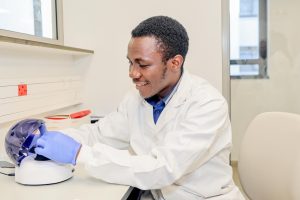
text: Joel Kabugo photo: CERI Media
For me, home is Uganda. This is where my work is rooted in the realities of clinical care and public health systems, with a clear focus on implementation.
As a clinical microbiologist and infectious diseases research scientist, my main goal has always been to expand access to laboratory diagnostics through operational research and health system strengthening.
Over the past decade, I have contributed to how Uganda diagnoses and responds to diseases such as tuberculosis, HIV, and SARS-CoV-2, playing a direct role in national disease response strategies.
At the centre of my work are three core public health challenges in Africa: increasing antimicrobial resistance, inequitable access to diagnostics, and limited global representation in genomics research. That imbalance is significant. Africa carries a large share of the global disease burden, yet contributes less than two percent of genomic data. For me, this shapes how diseases are understood, how outbreaks are tracked, and how responses are designed.
My work focuses on practical shifts within these systems. Between 2024 and 2025, I led the rollout of stool testing as an alternative method for diagnosing tuberculosis in children, an approach that helped identify cases that would otherwise have been missed. This contributed to closing the gap of missed children who would go undetected for TB.
My decision to come to Stellenbosch University through the African STARS Fellowship at the Centre of Epidemic Response and Innovation (CERI) was shaped by how closely the programme aligned with the gaps I had experienced. I saw a deliberate design for the exact gaps that exist in our national laboratory systems back home.
The fellowship, supported and sponsored by the Mastercard Foundation, brings together mentorship, research management, biotechnology entrepreneurship, and exposure to advanced infectious disease research areas that are often not addressed together in resource-limited settings.
My experience in South Africa has been smooth, shaped by multidisciplinary and multicultural teams that are open and willing to share knowledge, alongside access to laboratories and practical working resources. What stood out most for me were seminars focused on scaling healthcare in Africa. They addressed the actual problems we face from Uganda to other African countries and laid out applicable solutions that have worked in one setting and can be translated to where I come from.
For me, this is what being In Africa, for Africa looks like in practice. Its about empowering the African child to lead research and innovation that is translatable to African problems. My current work focuses on contributing baseline genomic and immunological data on HIV reservoir size, particularly in children, with the aim of supporting future HIV cure research built on African data. While rooted in Uganda, my work is ultimately about ensuring that fewer children are missed, and that diagnosis reaches those who need it most.
News date: 2026-06-03
Links:
KRISP has been created by the coordinated effort of the University of KwaZulu-Natal (UKZN), the Technology Innovation Agency (TIA) and the South African Medical Research Countil (SAMRC).


Location: K-RITH Tower Building
Nelson R Mandela School of Medicine, UKZN
719 Umbilo Road, Durban, South Africa.
Director: Prof. Tulio de Oliveira