
Finding Belonging in the Small Moments
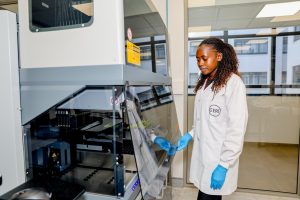
text: Celestine Kemunto Nyamari photo: CERI Media
Kenya is home for me. It is where my family is, where I first discovered my passion for science, and where many of the questions that continue to shape my research began. My background is in Molecular Biology and Biotechnology, and my work has focused on some of Africas most pressing health challenges, particularly infectious diseases and cancer.
What motivates me most is the belief that science should improve lives in practical and accessible ways. In Kenya, I helped establish molecular diagnostic laboratories, strengthening local diagnostic capacity and showing me how transformative locally built scientific infrastructure can be for African healthcare systems.
Today, my research focuses on cervical cancer and Human Papillomavirus (HPV), the virus responsible for nearly all cervical cancer cases. I am also driven by the need to address the underrepresentation of African populations in genomics and precision medicine research. African health challenges require solutions informed by African data, African realities, and African-led research.
I came to Stellenbosch University through the Africa STARS programme, and what immediately stood out was its culture of innovation and collaboration. Researchers are encouraged to think beyond publications and towards meaningful impact. Through the fellowship, I have explored biotechnology innovation beyond my core research area, including enzyme production and entrepreneurship. These experiences have expanded the way I think about science as a pathway to locally driven diagnostic and therapeutic solutions for Africa.
Settling into Stellenbosch was not always easy because it meant leaving my family behind in Kenya. As a mother and a scientist, balancing personal responsibilities with professional growth has been challenging. What made the transition easier was the people.
The Africa STARS fellows were welcoming from the beginning, and shared experiences quickly became genuine friendships and a sense of community. Sometimes belonging was found in simple moments conversations after work, shared meals, or going for runs together. The staff at CERI and the International Office were equally supportive. Through these experiences, I realised that belonging is not always about geography. Sometimes it is created through shared purpose and human connection.
For me, this experience reflects what In Africa, With Africa, For Africa truly means. It means African scientists leading research that addresses the needs of African communities and building sustainable scientific systems within the continent. It also means working together across borders. My journey from Kenya to Stellenbosch has shown me the power of pan-African collaboration and what becomes possible when scientists share knowledge, ideas, and expertise towards common goals.
I hope my research contributes to a future where African women benefit from more context-specific approaches to disease prevention, diagnosis, and precision medicine. I also hope to help strengthen scientific capacity, biotechnology innovation, and research ecosystems that will support future generations of African scientists. In doing so, I hope to play a small part in ensuring that more African researchers can lead discoveries and innovations that improve health outcomes across the continent.
News date: 2026-06-03
Links:
KRISP has been created by the coordinated effort of the University of KwaZulu-Natal (UKZN), the Technology Innovation Agency (TIA) and the South African Medical Research Countil (SAMRC).


Location: K-RITH Tower Building
Nelson R Mandela School of Medicine, UKZN
719 Umbilo Road, Durban, South Africa.
Director: Prof. Tulio de Oliveira