
Building Africas Biotech Future
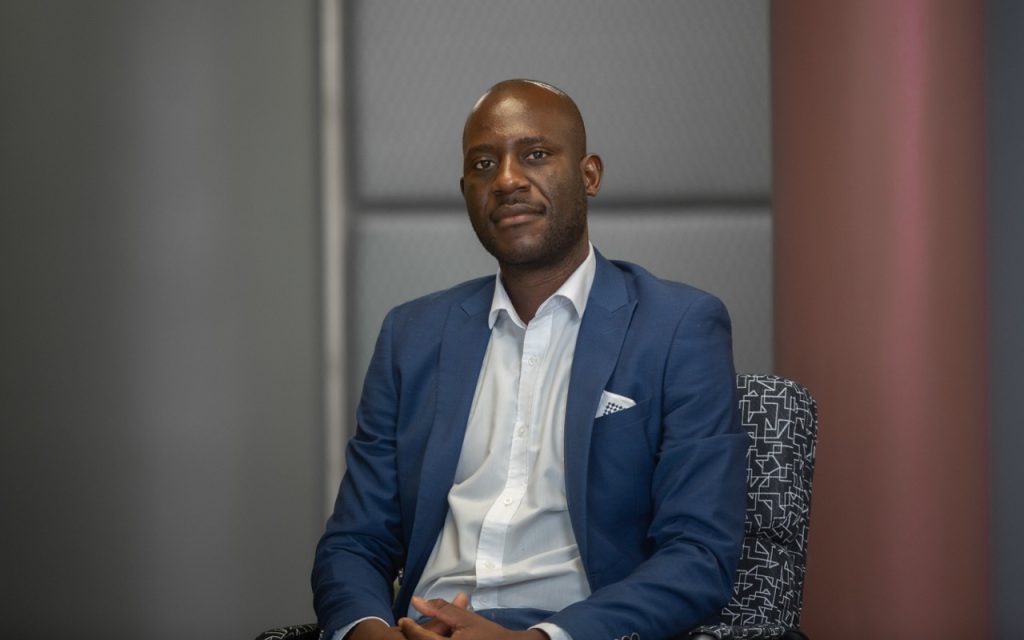
In July 2026, Kingstone Nihaka had news worth celebrating. His biotech start-up, Plasmigene, was selected as one of only three companies to join the UVU BIO/TIA Bioprocess Platform Acceleration Programme a fully-funded, equity-free and IP-free initiative that will take the companys molecular and diagnostic enzymes from validated lab-scale processes to full biomanufacturing. In the same month, Plasmigene also secured a grant from the Durban University of Technologys Technology Transfer Office to establish Africas first Plasmigene Vector Repository a biological bank that will store, curate, and distribute plasmid vectors to researchers across the continent.
For Kingstone, a fellow of the African STARS Young Professional Programme (YPP), the two announcements are a direct reflection of the training he has received. I am so humbled to be able to quantify the direct impact of this fellowship before it even ends, he says. I have a strong feeling that this is just the beginning, and there are more wins and achievements ahead.
Kingstones path to this moment was already in motion before he joined the fellowship. He was building Plasmigene alongside his co-founders and team while pursuing his PhD in Biotechnology at the Durban University of Technology, and had already come through other leadership-focused programmes including the University of Cambridge Global Biotechnology Revolution (GBR) Excellerator Fellowship (2023) and the U.S. Government Mandela Washington Fellowship (2025). I realised that a companys growth cannot be divorced from personal and professional growth, he explains, so I was intentional about nurturing and developing my leadership capabilities.
What set the African STARS YPP apart, Kingstone says, was that it went beyond leadership training. The programme also covered media and science communication and grant writing skills that would prove decisive. The fellowship has changed my perspective and mindset about how I see and do things, he says. I have come to realise that in translational research and business, technology alone is not enough. One must be able to communicate effectively to stakeholders and people across all walks of life, from funders to consumers of the product.
Kingstone directly credits the communication and grant-writing training with Plasmigenes ability to secure both new grants and move the company from research and development into biomanufacturing. A series of experiences during the fellowship shaped Plasmigenes direction such as site visits to biotech companies and ecosystem builders.
He says it was a privilege to work at Immobazyme as part of industry placement where he focused on both laboratory and administrative aspects of manufacturing and the pan-African rollout of an epidermal growth factor treatment for diabetic foot ulcer patients. I admired many things about Immobazyme from the company culture and work ethic to stakeholder engagement, marketing, and business development. Because of that experience, I found myself more confident in engaging with various stakeholders and selling the brand, not only for Immobazyme, but for Plasmigene as well.
Plasmigene is a biotech start-up with two specialities: manufacturing molecular and diagnostic enzymes, and constructing and producing plasmid vectors the essential tools researchers use to produce proteins such as enzymes, vaccines, and other therapeutic biologics. We provide gene and protein solutions to researchers in academia and industry, Kingstone says. When we fully scale, Africa ultimately benefits from the work we do because we are focusing on local manufacturing, thereby reducing overdependency on importation and creating jobs for locals.
The UVU BIO/TIA Bioprocess Platform Acceleration Programme will allow Plasmigene to move its already lab-validated enzyme processes into large-scale manufacturing that complies with the regulatory standards required for market release, while the DUT Technology Transfer Office grant tackles a gap Kingstone has experienced first-hand. Through his PhD research, he has constructed numerous plasmid vectors for gene cloning and protein expression vectors that, without a shared platform, would likely remain locked in the labs that created them. There is no single repository of these important tools in Africa, he explains. As a result, African scientists pay a premium to import these vectors from wealthy Global North countries. This process is slow, difficult, and sometimes, when these vectors arrive, they do not serve our needs. The Plasmigene Vector Repository is designed to close that gap a governance and distribution platform that lets scientists across the continent deposit and access vectors locally.
Selected as one of just three companies for the UVU BIO/TIA programme, Kingstone points to alignment and groundwork as the deciding factors. The funders told us that they strongly believe the work we are doing at Plasmigene aligns with their vision, he says. It is also important to note that meeting the selection criteria meant that a lot of work had already been done. I attribute this to the whole team at Plasmigene, who believe in this vision and work tirelessly to achieve the set goals.
As Plasmigene moves from R&D towards commercialisation, Kingstone expects the companys growth to translate directly into new jobs and training opportunities. Plasmid vector construction and recombinant protein production are niche skills, and Plasmigene has already begun training students and young scientists through its research activities a pipeline he expects to expand as the company scales.
For Kingstone, this moment is proof of something bigger than one companys success. Training young African leaders has a ripple effect, he says, as they can ethically lead within their areas of influence and give back to their communities not only by providing jobs, but also by providing goods and services that our African people desperately need but cannot access due to disparities in wealth.
Over the next 12 to 24 months, Kingstone plans for Plasmigene to establish Africas first Plasmid Vector Repository, opening access to scientists across Africa and the Global South, while positioning the company as a leading manufacturer of molecular and diagnostic enzymes on the continent.
Asked what he would tell the new cohort of African STARS fellows, Kingstone doesnt hesitate: Celebrate our success as recipients of the prestigious fellowship. But our success is incomplete until we give back to the community and give other deserving Africans a chance to be successful as well. Value relationships along the way, and always remember that the journey is more important than the destination. The fellowship already gives you goodwill guard that goodwill jealously and make it work for you in your journey of success.

By Katrine Anker-Nilssen
News date: 2026-07-30
Links:
KRISP has been created by the coordinated effort of the University of KwaZulu-Natal (UKZN), the Technology Innovation Agency (TIA) and the South African Medical Research Countil (SAMRC).


Location: K-RITH Tower Building
Nelson R Mandela School of Medicine, UKZN
719 Umbilo Road, Durban, South Africa.
Director: Prof. Tulio de Oliveira