
AI Will It Make Us Or Will It Break Us?
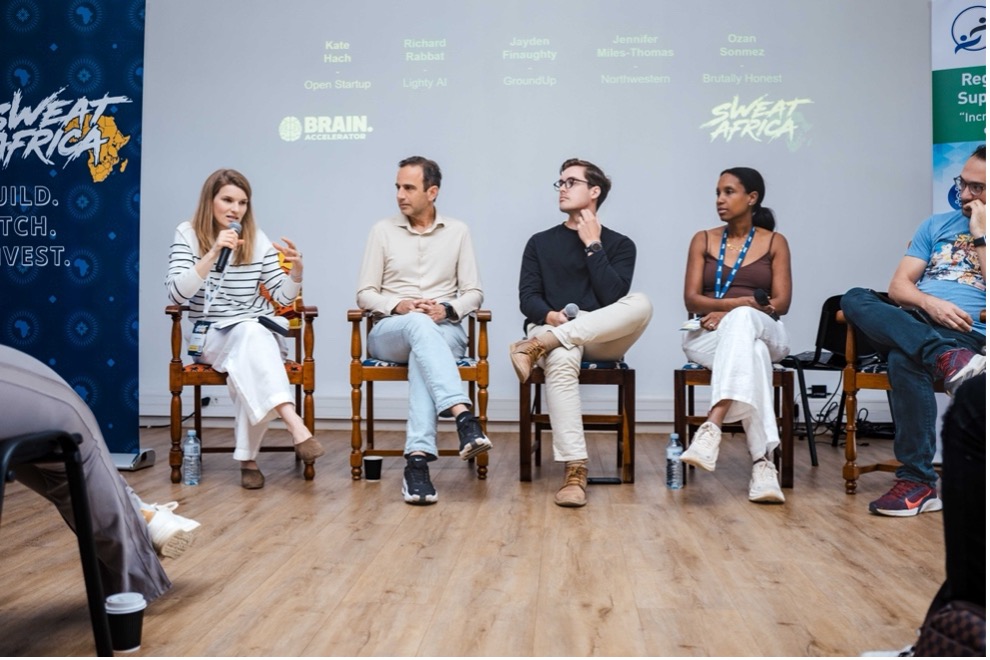
A major highlight of SWEAT Africa 2026 was the Side Event which featured an AI panel discussion where Ozan Somnez, Kate Hach, Jayden Finaughty, Richard Rabbat, Jennifer Miles Thomas, and others unpacked the realities of AI integration in the modern workplace.
Moving beyond the usual hype, the conversation explored both the promise of AI and the profound uncertainties that come with increasingly autonomous systems.
For Kate Hach, who works at the intersection of deep tech, entrepreneurship, and organisational transformation, the answer to the panels central question: AI will we make it or will it break us?, ultimately comes down to human choices. In short: us, she said. Humans built AI to support them, but weve also designed it for increasing autonomy systems that can train themselves, make decisions, and take actions based on those decisions.
Hach compared AI development to raising children: humans define the environment, provide examples and guidance, and gradually reduce oversight as autonomy grows. But there is a crucial difference.
With humans, autonomous decision-making is always tied to responsibility and accountability, she explained. Even when parents are no longer involved, institutions exist to hold people accountable for their actions. With AI, were building systems that can act autonomously without that same accountability.
Building the Ship while Sailing it
A recurring theme during the panel was the need for AI conversations to involve founders, scientists, investors, and policymakers alike. Were building the ship while sailing it, Hach said. And in Africa especially, we need to make sure we are part of the conversations shaping its design.
For AI to deliver real value on the continent, collaboration across science, investment, industry, and government will be essential, along with investment in infrastructure and locally relevant data.
Without indigenous datasets and locally developed applications, Africa risks becoming merely a consumer of technologies designed elsewhere.
How Organisations are Actually Using AI
Despite the rapid rise of AI tools, most organisations are still in the early stages of adoption. According to Hach, many companies are currently using AI primarily to optimise existing workflows making processes faster, cheaper and more reliable rather than fundamentally redesigning their systems. Its still largely known territory, she said. The architecture of the organisation stays the same.
The next phase will come when organisations allow AI to play a greater role in designing systems themselves. For now, were treating AI like a clever 14-year-old.
Where Companies Stumble
Embedding AI into real workflows is rarely straightforward. Large organisations often struggle because clearly defined roles, locked-in processes, and incentive structures are designed for stability, not experimentation. Innovation becomes difficult when companies are built for structure and predictability, Hach said.
For founders, the challenge is different. In such a fast-moving field, what they build today may quickly become obsolete as new models emerge. This creates a constant strategic question: build, wait, or buy.
Why Emerging Markets may Adopt Faster
Hachs experience working with accelerator programmes in Europe and supporting innovation ecosystems in Africa has shaped her view that emerging markets may sometimes adopt disruptive technologies more rapidly.
In places where infrastructure is lacking, AI can do more than optimise systems it can replace them entirely, she said. At the same time, barriers such as compute capacity and reliable energy remain major constraints in many African contexts.
The Human Factor
One insight from the panel highlighted the human dimension of technological change.
Panelist Jayden Finaughty noted that integrating AI into database management requires cooperation from the very professionals whose roles may be affected by automation. The labour force relenting their own erasure is a huge factor, Hach said. Businesses and economies are human systems, and resistance to change is inevitable when livelihoods are involved.
Promise and Concern
Despite the risks, Hach sees enormous promise in AI particularly its democratising potential.
Language barriers, literacy limitations, and technical training requirements have historically excluded many people from participating fully in digital economies. AI has the potential to eliminate many of those barriers, she said.
Tools that once required specialised engineering knowledge can now be built by individuals with far less technical training, opening new opportunities for innovation.
But the technology also raises serious concerns. Were building systems that can define their own capabilities without accountability mechanisms in place, she warned. Combined with growing global investment in defense technologies, the race to deploy AI quickly may outpace efforts to regulate it responsibly.
A Conversation Just Beginning
The tone of the discussion reflected the atmosphere of SWEAT Africa itself. Held in an intimate garden setting, the gathering created space for founders, scientists and investors to engage openly with difficult questions about technologys future. Everyone felt they were part of something new, Hach said. That created an environment where people were willing to experiment with ideas and learn from each other.
If the panel made one thing clear, it is that AIs future is still being written and the choices humans make now will determine whether it strengthens the systems we rely on, or destabilises them.
For Hach, the conversation is only just beginning. She is excited about what lies ahead. Im already looking forward to SWEAT 2027, she said.
News date: 2026-04-09
Links:
KRISP has been created by the coordinated effort of the University of KwaZulu-Natal (UKZN), the Technology Innovation Agency (TIA) and the South African Medical Research Countil (SAMRC).


Location: K-RITH Tower Building
Nelson R Mandela School of Medicine, UKZN
719 Umbilo Road, Durban, South Africa.
Director: Prof. Tulio de Oliveira