
Investing in Insight
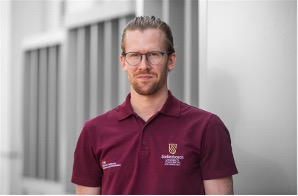
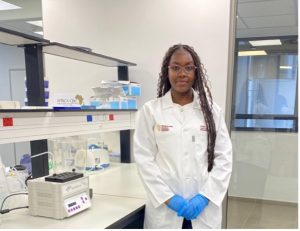
Two emerging researchers at CERI, Khomotso (Kitty) Mohlala and Graeme Dor, have been awarded the SAMRC Biostatistics Capacity Development Initiative Award a recognition that speaks not only to their individual potential, but to a broader need in health research: the ability to turn complex data into meaningful, actionable insight.
At its core, biostatistics sits at the intersection of data and decision-making. As health datasets grow in scale and complexity from genomic sequences to behavioural and environmental data the ability to analyse, interpret, and apply this information is becoming increasingly critical to how public health challenges are understood and addressed.
For Kitty, currently pursuing an MSc in Medical Virology, this journey into biostatistics began during her Honours studies in Bioinformatics and Computational Biology at Stellenbosch University. Through biostatistics, I learned that combining statistical analyses with biological data to derive valuable insights is both impactful and essential for evidence-based research, she explains.
That foundation now underpins her current work analysing Human Papillomavirus (HPV) and Human Leukocyte Antigen (HLA) genotyping data, alongside behavioural data, to better understand the population-level impact of HPV vaccination in an HIV-endemic setting.
For Graeme, a PhD researcher, the path into biostatistics evolved from an early interest in spatial patterns and environmental data, developed through studies in Geographic Information Systems (GIS) and remote sensing. As his work moved into public health, that analytical foundation found new application in infectious disease research. The kinds of questions were trying to answer around how diseases spread and what drives transmission rely heavily on statistical thinking, he says. His work now focuses on phylodynamic approaches, using statistical models to understand how viruses evolve and spread over time and space.
The SAMRC award plays a critical role in enabling this kind of work. While it provides financial support, both researchers emphasise that its value extends far beyond funding. For Kitty, it represents recognition of the importance of my research and its potential impact on public health, while also allowing her to focus fully on generating meaningful insights from complex datasets. For Graeme, the award marks an important step in building a sustainable research career, providing the space to deepen his work and contribute more directly to the development and application of statistical methods.
Importantly, the initiative is designed not only to support individuals, but to strengthen national capacity. By investing in postgraduate researchers, it builds the analytical expertise needed to address complex and evolving health challenges. This is particularly relevant in fields such as genomic surveillance and infectious disease modelling, where the challenge is no longer just generating data, but making sense of it.
Both Kitty and Graemes work reflects this shift. Kittys research aims to generate evidence that can inform HPV vaccination strategies and support cervical cancer prevention efforts in South Africa. At the same time, she is developing advanced analytical and modelling skills to translate complex health data into actionable public health insights. Graemes work, meanwhile, seeks to integrate genomic, environmental, and ecological data to better understand disease transmission dynamics. By building tools that link these data streams, he aims to support more targeted and informed public health responses, particularly in the context of climate change and increasing humanenvironment interaction.
Together, their research highlights a central reality: effective public health responses increasingly depend on the ability to interpret complex, multi-layered data. This requires not only strong technical skills, but also interdisciplinary thinking and the capacity to translate findings into practical impact.
Initiatives like the SAMRC Biostatistics Capacity Development Initiative Award are therefore not simply funding mechanisms they are strategic investments in the future of public health. By enabling researchers to develop the skills, tools, and insights needed to navigate complex data landscapes, they help ensure that scientific advances can be translated into better health outcomes.
Within CERI, this kind of capacity is central to advancing genomic surveillance, strengthening research, and supporting timely, evidence-based responses to infectious disease threats. And through researchers like Kitty and Graeme, that capacity continues to grow shaping not only individual careers, but the broader systems that underpin public health worldwide.
News date: 2026-04-09
Links:
KRISP has been created by the coordinated effort of the University of KwaZulu-Natal (UKZN), the Technology Innovation Agency (TIA) and the South African Medical Research Countil (SAMRC).


Location: K-RITH Tower Building
Nelson R Mandela School of Medicine, UKZN
719 Umbilo Road, Durban, South Africa.
Director: Prof. Tulio de Oliveira