
From Bench to Breakthrough
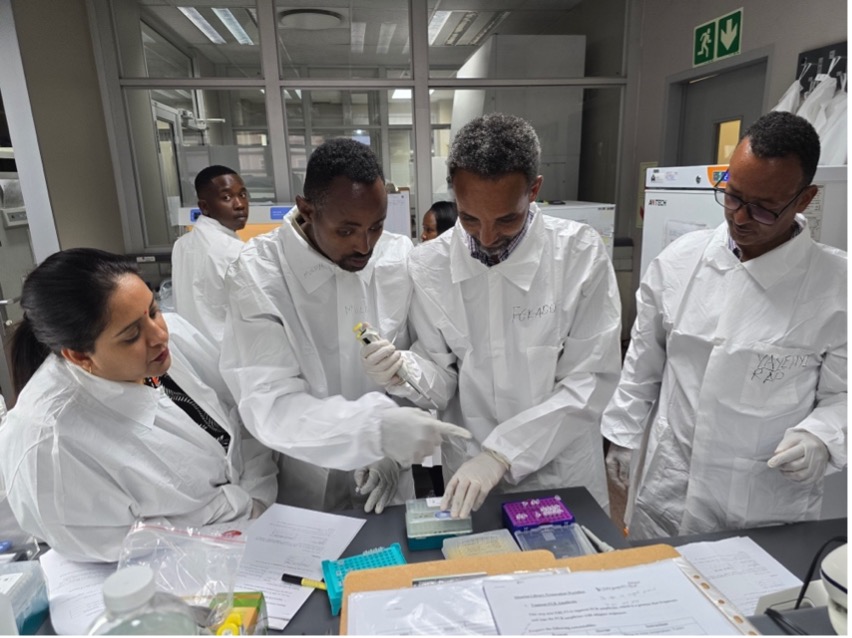
At the KwaZulu-Natal Research Innovation and Sequencing Platform (KRISP), a recent week-long Illumina Library Preparation and Sequencing Workshop brought together more than just samples, reagents, and sequencing platforms it brought together people, ideas, and a shared vision for the future of science on the African continent.
Seventeen participants from across the region including the University of Limpopo, University of the Free State, Sefako Makgatho Health Sciences University, and the Armauer Hansen Research Institute gathered in Durban for an intensive, hands-on training experience. What unfolded over the course of the week was not only a deep dive into next-generation sequencing, but also a powerful reminder of how science can unite individuals across borders through a common purpose.
Laying the Foundation
The workshop opened with an introduction to Illumina sequencing technology, grounding participants in the principles that underpin modern genomics. But it was the human element the exchange of ideas, backgrounds, and expectations that set the tone. Participants shared insights into their respective institutions and research focus areas, immediately establishing a sense of community rooted in collaboration.
From there, the group moved into the laboratory, where the sequencing journey began. Early sessions focused on observing the critical steps of the workflow from tagging and amplification to post-tag clean-up offering participants a clear view of the precision and care required at every stage.
From Observation to Application
As the week progressed, the laboratory became a space of growing confidence and curiosity. Participants engaged with increasingly complex processes, including quality control, gel electrophoresis, and library quantification. Discussions flowed easily, questions were encouraged, and knowledge was shared openly a reflection of KRISPs commitment to meaningful capacity building.
By the third day, the shift was tangible. No longer observers, participants stepped into the role of practitioners. Working in pairs, they carried out their own library preparation and quality control, translating theory into hands-on experience. It was here, at the bench, that learning truly came alive through collaboration, problem-solving, and a shared sense of purpose.
As Refilwe Motswiane, a PhD student from SMU, reflected: The hands-on experience we got this week really showed us how capable we are to work with and perfect new protocols and workflows in our own laboratories.
Sequencing Success
The final stages of the workshop saw participants preparing their libraries for sequencing and loading them onto the Illumina MiSeq. This moment where individual efforts converged into a collective output marked a significant milestone in the weeks journey.
For many, the experience opened new doors. Tshepiso Khoza, an MSc student from the University of Limpopo, shared: It was my first time being exposed to Whole Genome Sequencing and this type of data analysis, which will be a critical part of my research going forward.
On the final day, participants assessed their results and reflected on the skills they had gained. The sense of achievement was evident, but equally important was the recognition of what lay ahead: the application of these skills within their own institutions, and the continued strengthening of genomics capacity across the continent.
Beyond the Laboratory
While the technical training formed the backbone of the workshop, its broader impact lies in the connections forged along the way. Across institutions, disciplines, and countries, participants found common ground in their commitment to advancing science for public health.
This spirit of collaboration was echoed by Fekadu Acemu, a Senior Health Researcher at AHRI in Ethiopia: It is a great opportunity to be here at KRISP to see how they work and learn about all of the exciting research going on. There is a lot of common ground and areas where our two institutes can collaborate together. We are excited for the future.
The workshop also highlighted the importance of partnership with support from sponsors and collaborators playing a key role in making this initiative possible. Together, these efforts contribute to a growing network of skilled scientists equipped to respond to current and future health challenges.
A Shared Future
As the group transitions into the next phase of training in bioinformatics data analysis, the journey continues moving from the bench to the screen, and from data generation to insight.
Workshops like this serve as a powerful reminder that science does not happen in isolation. It thrives in environments where knowledge is shared, skills are nurtured, and collaboration is embraced.
At KRISP, this vision remains clear: by investing in people and partnerships, Africa is not only building capacity it is shaping the future of genomics and global health.
Text: Paul Harris
News date: 2026-04-09
Links:
KRISP has been created by the coordinated effort of the University of KwaZulu-Natal (UKZN), the Technology Innovation Agency (TIA) and the South African Medical Research Countil (SAMRC).


Location: K-RITH Tower Building
Nelson R Mandela School of Medicine, UKZN
719 Umbilo Road, Durban, South Africa.
Director: Prof. Tulio de Oliveira