
Strengthening Genomic Surveillance Across Continents
text: Emilyn Costa Conceição photos: Supplied
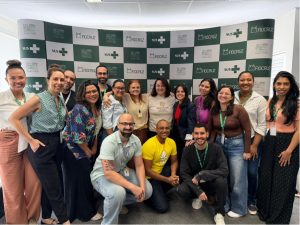
In December 2025, I travelled to Brazil to lead a series of high-impact training and research activities under two major initiatives: REVIGET (Genomic Surveillance Network for Tuberculosis) and REVIGEN (Genomic Network for Precision Medicine and Surveillance of High-Prevalence Infectious Diseases). These engagements reflect CERI’s growing role in advancing genomic surveillance and precision public health in high-burden settings across the Global South.
I began the journey in Rio de Janeiro, at the Fiocruz/INI (Oswaldo Cruz Foundation National Institute of Infectious Diseases Evandro Chagas), where I contributed to an intensive workshop on integrated tuberculosis diagnostics under the REVIGET consortium. The programme bridged classical microbiology, molecular diagnostics, and whole-genome sequencing (WGS), with a strong emphasis on real-world laboratory challenges led by Cristina Lourenço, Head of the Laboratory of Bacteriology and Bioassays in Tuberculosis and other Mycobacteria, a regional reference laboratory in Mycobacteria.
My sessions focused on WGS as a transformative tool for tuberculosis management, covering DNA extraction, library preparation, sequencing workflows, and bioinformatics interpretation. I aimed to reinforce how genomics can shift clinical decision-making from empirical to precision-based approaches.
From the southeast, I travelled north to Belém, the capital of Pará state, where my activities expanded under both the REVIGET and REVIGEN frameworks. I led a dedicated workshop titled “From Genomics to Clinic: Applying the World Health Organization Mutation Catalogue in Tuberculosis Management”, which brought together clinicians and researchers to co-create solutions for implementing genomic data in routine care.
The training combined foundational concepts with hands-on, co-creation sessions, including the development of genomic-based clinical reports and Portuguese-language resources to support broader adoption in Brazil’s Unified Health System (SUS). This participatory model reflects a core principle of our approach at CERI: building sustainable, locally owned capacity.
During the clinical WGS training, I was honoured with a Certificate of Recognition from the Instituto Evandro Chagas, awarded through its Bacteriology Section. This distinction acknowledges scientific excellence, dedication, and contributions to advancing research, surveillance, and innovation in infectious diseases. It also reflects a commitment to capacity building and collaborative science, which continues to strengthen genomic surveillance and public health systems across regions.
To me, this recognition represents not only an individual milestone, but also the growing impact of international partnerships between Brazil and South Africa, particularly through initiatives such as REVIGET and REVIGEN. It reinforces how science, when driven by collaboration and purpose, can leave a lasting legacy in transforming public health.
A major highlight of the visit was the REVIGEN “Marco Zero” meeting at the Instituto Evandro Chagas, which marked the formal launch of a national genomic network focused on high-prevalence infectious diseases. I co-led this initiative with Prof Karla Lima from the Instituto Evandro Chagas. Together, we are bringing multiple institutions across Brazil into a shared effort to integrate genomic, epidemiological, and clinical data for diseases such as tuberculosis, arboviruses, respiratory viruses, parasitic infections, and antimicrobial-resistant pathogens.
The programme outlined structured work packages spanning laboratory systems, bioinformatics, ethics, and data integration, laying the foundation for a scalable, interoperable surveillance ecosystem.
Beyond the December activities, from March to April 2026, I have been actively engaged in coordinating the strategic development of REVIGEN. Together with Prof Karla Lima, I am leading efforts to consolidate national and international partnerships, align project work packages, and strengthen collaborative frameworks across participating institutions.
These efforts are critical to ensuring the long-term sustainability, scalability, and impact of the network.
These engagements underscore our strategic commitment at CERI to embedding genomics into routine public health practice, particularly in regions disproportionately affected by infectious diseases and antimicrobial resistance. By aligning research, training, and implementation, initiatives such as REVIGET and REVIGEN are helping to translate cutting-edge science into tangible health impact.
As genomic technologies become increasingly central to epidemic preparedness and response, I believe collaborations like these will be critical in ensuring that innovation is not only advanced, but also equitable, accessible, and locally meaningful.
NEW PUBLICATION: Standardising TB Genome Sequencing from Mycobacteria Growth Indicator Tube (MGIT) Cultures
A new study by GenPath Africa consortium members, including Emilyn Costa Conceição and colleagues from Stellenbosch University and the University of Antwerp, provides practical guidance to support the adoption of whole-genome sequencing (WGS) for tuberculosis (TB) using Mycobacteria Growth Indicator Tube (MGIT) cultures. Analysing 15 studies and over 1,000 datasets, the research shows that more than 96% of samples met quality standards, demonstrating that clinical primary culture (CPC)-based WGS is robust, feasible, and suitable for routine use.
The study identifies sequencing cycles as the key factor influencing data quality, rather than more complex laboratory steps, and recommends standardising workflows to improve consistency and reduce costs. By supporting simpler, scalable approaches, this work can accelerate drug-resistant TB detection, strengthen outbreak tracking, and expand equitable access to genomic tools in high-burden settings.
Access the full publication via this link: https://www.microbiologyresearch.org/content/journal/mgen/10.1099/mgen.0.001565
News date: 2026-05-13
Links:
KRISP has been created by the coordinated effort of the University of KwaZulu-Natal (UKZN), the Technology Innovation Agency (TIA) and the South African Medical Research Countil (SAMRC).


Location: K-RITH Tower Building
Nelson R Mandela School of Medicine, UKZN
719 Umbilo Road, Durban, South Africa.
Director: Prof. Tulio de Oliveira