


NEWS

The School for Data Science and Computational Thinking at Stellenbosch University is seeking to appoint two Bioinformaticians with great potential and ambition to become leading scientists. These two positions will work with some of the best pathogen and bioinformatics genomics program in the world, which is currently focused on the COVID-19 response. These full-time positions are offered for a period of up to three years.
Come work with one of the best pathogen research programs in the world, which is currently focused on the COVID-19 response. Twp positions at KRISP at UKZN & Four at Stellenbosch University.
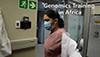
A senior scientist from the Instituto Nacional de Saude (INS) de Mozambique spent two weeks at KRISP labs at UKZN to receive training generating whole genomes of SARS-CoV-2.

The Africa Union and Africa CDC, in partnership with KRISP, H3AbioNet, ACEGID and SANBI have started a Webinar series to capacitate African researchers on the generation and analysis of SARS-CoV-2 genomic data in Africa.
The Africa Union and Africa CDC, in partnership with KRISP, H3AbioNet, ACEGID and SANBI have started a Webinar series to capacitate African researchers on the generation and analysis of SARS-CoV-2 genomic data in Africa.

As the world less affluent countries scramble for COVID-19 vaccine and contend with deadly surges of the disease, researchers in South Africa have just documented an ominous development: the collision of the pandemic with HIV/AIDS.
The Africa Union and Africa CDC, in partnership with KRISP, H3AbioNet, ACEGID and SANBI present a webinar series to capacitate African researchers on the generation and analysis of SARS-CoV-2 genomic data. Webinar: How to make publication-ready professional-looking figures Part II.

From Alpha to Omega, the labelling system aims to avoid confusion and stigmatization. To quell such confusion and avoid geographical stigmas, everyone should now just call it Beta according to a naming scheme announced on 31 May by the World Health Organization (WHO) in Geneva and described in a forthcoming article in Nature Microbiology.

What is better than music to simplify and spread the facts on a pandemic clouded by so much misinformation? Watch a video series between musicians and scientists aimed at decrease vaccine hesitancy.
The Africa Union and Africa CDC, in partnership with KRISP, H3AbioNet, ACEGID and SANBI present a webinar series to capacitate African researchers on the generation and analysis of SARS-CoV-2 genomic data. Webinar: NGS genome assembly and quality control.
The Africa Union and Africa CDC, in partnership with KRISP, H3AbioNet, ACEGID and SANBI present a webinar series to capacitate African researchers on the generation and analysis of SARS-CoV-2 genomic data. Webinar: Ancestral state reconstruction and import/export analysis of viral lineages.
The Africa Union and Africa CDC, in partnership with KRISP, H3AbioNet, ACEGID and SANBI present a webinar series to capacitate African researchers on the generation and analysis of SARS-CoV-2 genomic data. Webinar: How to make publication-ready professional-looking figures Part I.

While richer places, such as the U.S., hope to vaccinate most of their citizens within months, poorer countries, like Kenya, expect to reach just small fractions of their populations in that time.
Some people mount an immune response able to fend off a menagerie of coronavirus variants. Nature news covering four of our recent papers on the variant, neutralisation of plasma and Vaccines (Novavax and Astrazeneca)

New research from South Africa’s genomic surveillance network shows that people infected with the 501Y.V2 variant are also immune to other forms of the virus. The team found the protection against the 501Y.V2 variant could also extend to the original virus circulating the country and the variant first identified in Brazil.

Tracking the coronavirus’s evolution, letter by letter, is revolutionizing pandemic science.In the beginning, there was one. The first genome for the virus causing a mysterious illness we had not yet named COVID-19 was shared by scientists on January 10, 2020. That single genome alerted the world to the danger of a novel coronavirus.

The 501Y.V2 variant reportedly produces a high number of antibodies, providing protection against infection by other variants. The findings in laboratory studies offer hope that COVID-19 vaccines based on the 501Y.V2 variant first identified late last year could protect against multiple variants circulating in different parts of the world
B.1.351 may sound sweet to a molecular epidemiologist, but what is the alternative, other than stigmatizing geographical names? News piece at NY Times highlighting our work with WHO on a new nomenclature system for COVID-19 variants

A new SARS-CoV-2 variant, which has dominated Covid-19 infections in Uganda and Rwanda, has been detected in South Africa. The announcement was made by Professor Tulio de Oliveira, director of the KRISP lab. However, de Oliveira told Health24 that is not a variant of concern, and that genome surveillance will monitor this and other variants

A variant of concern first identified in Brazil has now been found in the UK. Public health officials are investigating the six cases and are deploying more testing to see if it has spread to more people. Some variants, like this one, appear to be more contagious and there are concerns vaccines may not work quite so well against them.
Scientists worldwide have been closely monitoring the emergence of coronavirus variants. Although there are a large number of variants, some of them have turned out to be more alarming. Professor Tulio de Oliveira provided an update on the spread of three of these, and said that two more have been placed on the WHO's watchlist.

South Africa’s pause of its rollout of the Oxford/AstraZeneca vaccine in response to concern about a local coronavirus variant sparked global debate —and shone a spotlight on how the country’s science has become vital to understanding where the pandemic may go next.

As potentially more dangerous variants of Covid-19 spread, scientists are taking a crack at giving them clearer names that’ll help in the fight. Another very interesting piece of The Wired magazine one SARS-CoV-2 variants' names
Across the globe, SARS-CoV-2 is evolving ways to evade the immune system and become more infectious. Blown pandemic response plans are to blame. Really interesting but funny piece at The Wired magazine.
Evidence that a variant of the coronavirus identified in South Africa might compromise immunity sparks concerns about vaccine effectiveness.

Phylogenetic identification of variants 501Y.V1, 501Y.V2, 501Y.V3 (B.1.1.7, B.1.351, P.1 / Nextstrain 20I, 20H, 20J). Tool also determines nucleotide (NT), amino acids (AA) and codon (CDS) mutations. The mutations list are provided in html and excel formats.
Efforts to track SARS-CoV-2 sequences have helped identify worrying variants - but researchers are blind to emerging mutations in some regions.
As more lineages emerge, researchers are struggling with a patchwork of nomenclature.
A South African tip led to the discovery of mutations around the world. With infections skyrocketing, 'it's a race against time.'. Doctors and nurses at a South African hospital group noticed an odd spike in the number of Covid-19 patients in their wards in late October...
One year later and the new coronavirus is still posing new questions for researchers. The recent emergence of new COVID-19 variants across the world has left scientists searching for answers once again as they try to understand what these changes mean for the pandemic - and vaccine roll-outs. As South Africa awaits the arrival of its first shipment of COVID vaccines there are growing concerns about a new coronavirus variant - known as 501Y.V2 - circulating in the country, and what the changes in the virus could mean for how well the jabs work.
MOST POPULAR
BLOG

KRISP has been created by the coordinated effort of the University of KwaZulu-Natal (UKZN), the Technology Innovation Agency (TIA) and the South African Medical Research Countil (SAMRC).


Location: K-RITH Tower Building
Nelson R Mandela School of Medicine, UKZN
719 Umbilo Road, Durban, South Africa.
Director: Prof. Tulio de Oliveira