


NEWS

By Katharine Child, 05 December 2017. SA's policy to reduce HIV infections is to do what the UN recommends, which is to get 90% of people tested, 90% of HIV-positive people taking antiretrovirals and 90% of those on treatment taking it properly so they are not infectious. Press coverage of our KRISP paper Iwuji et al. (Lancet HIV 2017).

By Linda Nordling, 2 December 2017, Quartz Africa. Antiretrovirals 'the drugs used to keep HIV in check' don't only prevent people from getting AIDS; they also keep virus levels low, making those taking them less likely to pass the infection to others. Press coverage of our KRISP paper Iwuji et al. (Lancet HIV 2017).
By Sikhulile Moyo, 1 December 2017. The conversation, press coverage of our KRISP paper Moyo et al. (PLoS One HIV 2016). A critical part of reaching zero new HIV infections by 2030 as the 'UN's Sustainable Development Goal aims to do' is to be able to track accurately when specific high risks groups become infected with the virus.

Drug resistance in HIV is rising to more than 10% in people with HIV who are preparing to start (or re-start) first-line antiretroviral therapy, according to a recently published meta-analysis. Press coverage of our KRISP paper Gupta et al. (Lancet ID 2017).

HIV drug resistance is approaching and exceeding 10% in people living with HIV who are about to initiate or reinitiate first-line antiretroviral therapy, according to the largest meta-analysis to date on HIV drug resistance. Press coverage of Gupta et al. (Lancet ID 2017).
Commentary by Jens Lundgren & Andrew Phillips, Lancet HIV, 30 November 2017.
KRISP Talks by Dr. Aliza Monroe-Wise, University of Washington, 16 November 2017 (11:00am - 12:00), K-RITH building, Nelson R Mandela School of Medicine, UKZN, Durban, South Africa. All welcome!
KRISP Talks by Prof. Andrew Rambaut, Edinburgh University, 15 November 2017 (15:00 - 16:00), K-RITH building, Nelson R Mandela School of Medicine, UKZN, Durban, South Africa. All welcome!

KRISP staff are based in a state of the art building in Durban and have access to fast advancing technologies such as genomics, epigenetics, bioinformatics and epidemiology.
KRISP Talks by Dr. Wim Delva, SACEMA (Stellenbosch), 23 October 2017 (11:00am - 12:00), K-RITH building, Nelson R Mandela School of Medicine, UKZN, Durban, South Africa. All welcome!

Bioinformatics is now a strategic area for Brazil and all Latin America and, therefore, it is also strategic to the development of Science, Technology and Economy. The X-Meeting is a Brazilian event with international reach which has an average of 400 participants.

KRISP Talks by Prof. Philip Goulder, Oxford University, 20 September 2017 (14:00 - 15:00), K-RITH building, Nelson R Mandela School of Medicine, UKZN, Durban, South Africa. All welcome!

The workshop is targeted at 400 clinicians, clinical virologists and nurses working in the public sector who are currently involved in the treatment of patients with HIV and TB in KwaZulu-Natal, South Africa.

The workshop provides both theoretical and practical training in phylogenetic inference and evolutionary hypothesis testing. It is recognized as one of the best international virus bioinformatics courses. It covers sequence analysis, phylogenetics, phylodynamics methods and large scale methods for next-generation sequencing (NGS) analytics

KRISP Talks by Dr Carren Ginsburg, SAMRC/Wits Rural Public Health & Health Transitions Research Unit (Agincourt), 23 August 2017 (11am - midday), K-RITH building, Nelson R Mandela School of Medicine, UKZN, Durban, South Africa. All welcome!

The concept behind this newsletter is that anyone with 15 minutes to spare can learn about KRISP work. In this July 2017 issue of our newsletter, we have included interesting news, videos, blogs, reports, tweets, publications and training events of KRISP
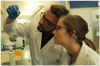
KRISP Researcher and Fulbright scholar Dr. Eduan Wilkinson news from the US: HiPerGator supercomputer is enabling infectious disease transmission research in UF's Emerging Pathogens Institute.

Friday, 7 July, 2017, Dr Marcel Tongo Passo, a SANTHE Post-doctoral trainee, has won a "Best Abstract" award at the DELTAS (Developing Excellence in Leadership, Training and Science) Africa Annual Grantees Meeting 2017, held in Accra, Ghana, between 3 to 5 July. Passo is based at KRISP (KwaZulu-Natal Research and Innovation Sequencing Platform) and HPP (HIV Pathogenesis Programme) at the University of KwaZulu-Natal, South Africa.

By Arthi Gopi, Independent on Saturday Newspaper - KRISP atrracts the brightest - Durban is leading the way in DNA research, having attracted some of the brightest minds in the science field, in a new state-of-the-art lab in the city.

The Technology Innovation Agency (TIA) and UKZN have signed an agreement for the establishment of KRISP - the KwaZulu-Natal Research and Innovation Sequencing Platform.
KRISP Talks by Professor Bonga Chiliza, Discipline of Psychiatry: College of Health Sciences, UKZN, 23 June 2017, K-RITH building, Nelson R Mandela School of Medicine, Durban, South Africa. All welcome!
The concept behind this newsletter is that anyone with 15 minutes to spare can learn about our research work. In this Jan-Mar 2017 issue of our newsletter, we have included interesting open access publications, news, blogs, reports, tweets, and training information produced by our group.

The workshop is targeted at clinicians, clinical virologists and nurses working in the public sector who are currently involved in the treatment of patients with HIV and TB in KwaZulu-Natal, South Africa.

Patients coinfected with human T-cell lymphotropic virus 1 (HTLV-1) and HIV continue to have elevated CD4+ T-cell counts, even though there is no difference in their HIV viral load levels after antiretroviral therapy when compared with patients who just have HIV (Curr HIV Res 2017).
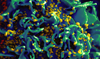
News coverage and clinical management implication of our recent HIV/HTLV co-infection manuscript, Current HIV Research, 2017

Perspective by Carlos del Rio, MD Professor of medicine, division of infectious diseases, Emory University School of Medicine on our recent CID manuscript on high-level transmitted resistance epidemic in Aruba.

The prevalence of resistance to nonnucleoside reverse transcriptase inhibitors among HIV-infected individuals has increased to 'alarming levels' in Aruba, reaching 45% in 2015, see our recent publication at CID.
KRISP Talks by Prof. Tulio de Oliveira, College of Health Sciences, UKZN & CAPRISA Research Associate, 17 March 2017, K-RITH building, Nelson R Mandela School of Medicine, Durban, South Africa

The Wellcome Trust DELTAS funded SANTHE program awarded seven grants to develop collaborative research projects to address critical challenges to African capacity in HIV and/or TB clinical, social/behavioural, and biomedical science.

The National Research Foundation and Swiss National Science Foundation through their Swiss-South Africa programme, have funded a project entitled: A context-based knowledge resource integrating HIV and Mtb molecular biology with host-pathogen and drug-resistance data. As part of the project, the University of Cape Town Computational Biology Division and our research group at UKZN are hosting a symposium on pathogen genomics.
MOST POPULAR
BLOG

KRISP has been created by the coordinated effort of the University of KwaZulu-Natal (UKZN), the Technology Innovation Agency (TIA) and the South African Medical Research Countil (SAMRC).


Location: K-RITH Tower Building
Nelson R Mandela School of Medicine, UKZN
719 Umbilo Road, Durban, South Africa.
Director: Prof. Tulio de Oliveira