


NEWS

By BIANCA CAPAZORIO - A BABY girl who contracted HIV after being breast-fed by a well-meaning aunt has become the first proven case in SA to have contracted HIV from a surrogate feeder or 'wet nurse'.

A baby girl who contracted HIV after being breast-fed by a well-meaning aunt has become the first proven case in South Africa to have contracted HIV from a surrogate feeder or 'wet nurse'. The case contained in new research highlights the importance of HIV testing of mothers and surrogate feeders at a time when the government is phasing out free infant formula in its clinics.

The Africa Centre for Health and Population Studies, Zululand's HIV-AIDS research hub based near Mtubatuba, has revealed the first proven HIV surrogate transmission case in South Africa.

DNA sequencing has provided evidence of HIV-1 transmission from an infected woman breastfeeding her niece in South Africa, drawing attention to infant feeding practices and the need for HIV testing of all breastfeeding surrogates as well as mothers.

A case where an aunt infected her niece with HIV through breastfeeding has drawn attention to feeding practices in South Africa. The case was published in the medical journal Lancet and highlighted the risk of HIV transmission from a surrogate carer, the Africa Centre for Health and Population Studies said today.

Sequencing-based diagnostics for human immunodeficiency virus (HIV)-infected individuals will be carried out in Africa in order to determine resistance to antiretroviral drugs.

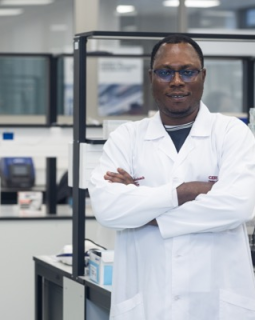
During July, the acclaimed researcher, Dr Tulio de Oliveira from the Southern African Treatment Research Network (SATuRN), was invited to CAPRISA to visit CAPRISA's eThekwini Clinical Research Site. He also presented latest developments on affordable HIV and TB drug resistance testing and open access, public, drug resistance databases to CAPRISA's management team, followed by discussions on possible opportunities for collaboration.

By Nancy A. Melville - WASHINGTON, DC - July 27, 2012 - As antiretroviral therapy (ART) for HIV becomes widely accessible in Southern Africa, the risk for drug resistances is on the rise, and as many as 1 in 6 adults show acquired drug resistance to standard second-line drug regimens, researchers said here on July 24 at the 19th International AIDS Conference.

NEW YORK (GenomeWeb News) - Life Technologies today announced a collaboration with the Southern African Treatment and Resistance Network (SATuRN) covering sequencing-based diagnostics for HIV patients in Africa.

Life and Southern African Treatment and Resistance Network (SATuRN) Partner in Sequencing-Based Surveillance of Drug Resistance

Life Technologies Corporation announced a collaboration with the Southern African Treatment and Resistance Network (SATuRN) on sequencing-based diagnostics for HIV-infected individuals in Africa.
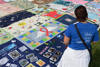
WASHINGTON (By Erin Loury, LA Times) - Scaling up the distribution of HIV medication over the last decade has vastly increased the number of people receiving treatment around the world. An estimated 8 million infected people received the antiretroviral drugs in 2011, compared to just 400,000 in 2003.

Drug-resistant HIV has been increasing in parts of sub-Saharan Africa over the last decade, according to experts writing in the Lancet

WASHINGTON, 22-27 July 2012 - We are hosting a meeting, presenting many talks and posters and tweeting on the XIX International AIDS 2012 Conference.

The Southern African HIV Clinicians Society will be hosting its first Conference: Striving for Clinical Excellence, 25-28 November 2012 at the Cape Town ICC.

In this second issue of our newsletter we have included interesting news, blogs, reports, tweets, publications and training information produced by our network. We hope you enjoy it and find it informative. We welcome any feedback about content or format.
We participated, presented and tweeted about the 3rd South African TB conference, 12-15 June 2012, ICC, Durban. We had covered all the sessions that present TB drug resistance results. Please find below our tweets from our participation in our national TB conference.
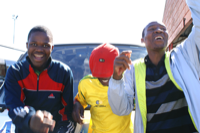
In this exciting new section of bioafrica.net art we feature creative projects that celebrate, investigate and/or communicate biomedical science. Here, we share blogs, news articles, tweets, audio and audiovisual media to increase public awareness of innovative collaborations between art and science.

The newsletter idea is that anyone with 15 minutes to spare can learn about our work and its application in everyday life.
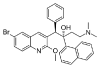
BioAfrica & SATuRN Supports this Open Letter!
Open letter to the Medicines Control Council and Ministry of Health on urgent need for compassionate use of bedaquiline for XDR-TB and pre-XDRTB in South Africa.

by Mark Mascolini - Analysis of South Africans with newly diagnosed, untreated HIV infection indicates low levels of transmitted antiretroviral-resistant HIV across the country through 2010 and no evidence of transmitted drug-resistant HIV in rural KwaZulu Natal
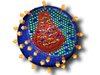
DURBAN, SOUTH AFRICA, 24-26 FEB 2012 - A small, highly specialized multidisciplinary team of doctors and statisticians from South Africa, Botswana, the USA and the UK will meet in Durban this weekend with the express purpose of pooling their resources, knowledge and expertise in an attempt to improve understanding the problem of HIV drug resistance in southern Africa.

One of our main aims for this development is for users and collaborators to become more involved in the website. It has added over 100 new webpages to bioafrica.net, including blogs, open access publications, media coverage, clinical cases tutorials and twitter. It has also increased the number of people collaborating in the development of our website!
JOHANNESBURG - The prevalance of HIV-positive people who have developed a resistance to life-prolonging antiretroviral treatment (ART) is a cause for concern for South Africa, scientists warn.
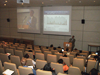
GABARONE - For the first time, Botswana is hosting the Africa HIV/TB Drug Resistance and Clinical Management workshop. The two-day workshop started yesterday at the University of Botswana (UB). Scientists, public health officials and physicians from across the world are attending the event to discuss the growing problem of HIV and TB drug resistance in Southern Africa.
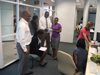
JOHANNESBURG - A group of renowned HIV and TB scientists, public health officials and physicians will meet at the University of Botswana in Gaborone, this coming Monday and Tuesday (7th & 8th of November) to discuss the growing problem of HIV and TB drug resistance in southern Africa.

Indeed, drug resistance is emerging in children on ART in South Africa.
PRETORIA - We would like to draw attention to an HIV-1 drug resistance database, a scientific resource for regional and global HIV research that will enhance surveillance programmes in southern Africa.The database was established by investigators from the Southern African Treatment and Resistance Network (SATuRN), in collaboration with researchers from the United States & Europe. SAT- uRN will provide national de- partments of health with high quality, up-to-date information to guide delivery of antiretroviral ther- apy, helping to ensure the long -term success of antiretroviral treatment programmes.

Jiving with Science is a new public engagement initiative of the Africa Centre for Health and Population Studies. Africa Centre is an international HIV research facility with a partnership HIV testing, treatment and care programme run jointly with the KZN Department of Health. The Mtubatuba-based centre is where the HIV epidemic is one of the most severe in the world, with nearly one in two adults aged 35-40 being infected.
Jiving with Science is a new public engagement initiative of the Africa Centre for Health and Population Studies. The Africa Centre, a joint project of the University of KwaZulu-Natal (UKZN) and the Medical Research Council of Southern Africa, is an international HIV research facility with a partnership HIV testing, treatment and care programme run jointly with the KwaZulu-Natal Department of Health.
MOST POPULAR
BLOG

KRISP has been created by the coordinated effort of the University of KwaZulu-Natal (UKZN), the Technology Innovation Agency (TIA) and the South African Medical Research Countil (SAMRC).


Location: K-RITH Tower Building
Nelson R Mandela School of Medicine, UKZN
719 Umbilo Road, Durban, South Africa.
Director: Prof. Tulio de Oliveira