
Navigating the Dark Side of Science Communication
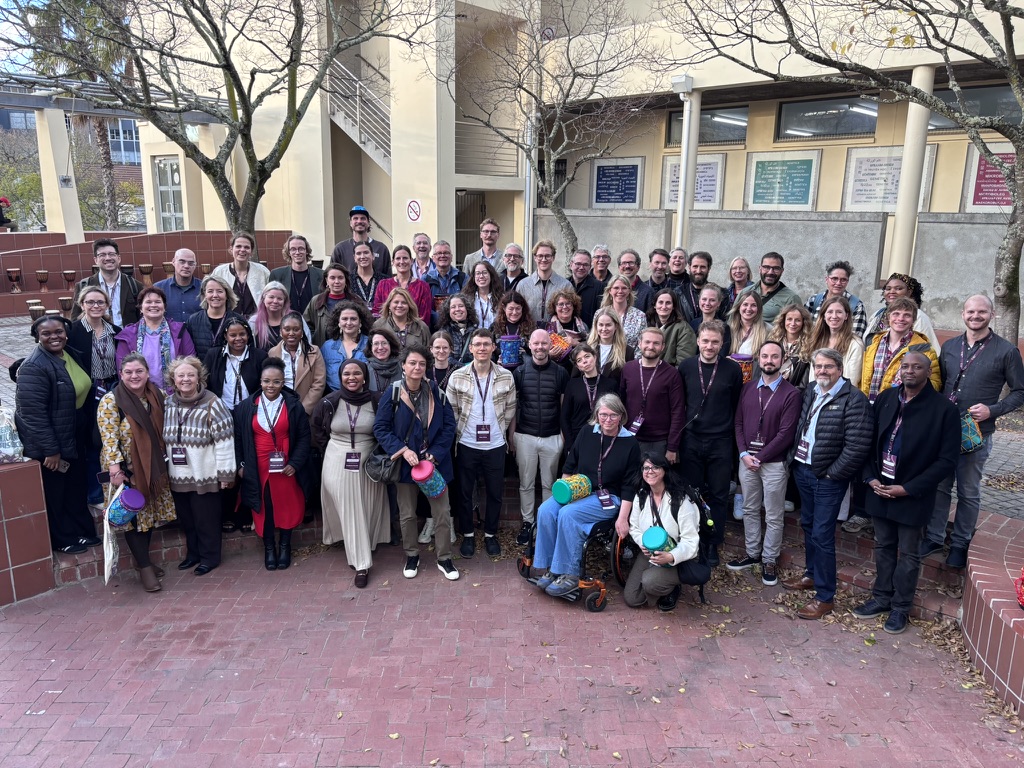
These issues took centre stage at the fourth Science Communication Preconference, held ahead of the 76th International Communication Association (ICA) Annual Conference, and hosted by the Centre for Epidemic Response and Innovation (CERI) at Stellenbosch University on 2 June 2026. Bringing together researchers and practitioners from around the world, the event explored the "dark side" of social conversations around science and the challenges of communicating science in an increasingly complex information environment.
For CERI's Director, Prof Tulio de Oliveira, that starts with who science is speaking to. "We are building not only on academic science communication â not only high-impact journals with lots of citations â but communicating science to the public in a way that is easier to understand."
When Evidence Challenges Power
One of the recurring themes throughout the conference was the relationship between science and power, and how evidence can become contested when it challenges political priorities, economic interests, or established ways of thinking.
Climate researcher John Paul Cauchi from Queen Mary University of London, Malta Campus, described what he calls structural silencing â situations where uncomfortable evidence is acknowledged but not acted upon, or where research is sidelined because of its implications. "Structural silencing refers to when power structures strive to silence â actively or subtly â uncomfortable truths that threaten development orthodoxy or power echelons," he said.
Drawing on examples from climate and health research, Cauchi argued that scientific evidence is often challenged when it conflicts with political priorities or economic interests. "Politicians need to understand that ignoring a problem doesn't make it go away," he said. "Nature and physics do not care about our ideologies or our whims."
His observations echoed wider discussions about climate change, misinformation, and the growing tension between scientific evidence and political narratives.
Beyond Access to Understanding
While access to information has expanded dramatically in the digital age, several speakers argued that making information available is not the same as making it useful.
Sibulele Mabe from South African Environmental Observation Network (SAEON) and The Centre for Humanities Research (CHR) at UWC, whose work focuses on data stewardship and knowledge infrastructures, challenged the idea that science communication begins only when scientists engage with the public. "Making data available does not automatically make it meaningful or usable," she said.
According to Mabe, decisions about how data is documented, curated, visualised, and preserved shape whether it can be understood and used by policymakers, journalists, educators, and communities. "Communication doesn't really begin at public engagement or outreach," she explained. "It is already happening earlier, through these infrastructural decisions."
Her perspective highlighted the often-invisible systems that determine whether knowledge can move successfully between different users and contexts.
Science in The Age of Algorithms
The conference also examined how social media is reshaping the way people encounter scientific information.
Researcher Harry Dugmore, from the University of the Sunshine Coast, explored this through online conversations about adult ADHD, one of the most widely discussed mental health topics on platforms such as TikTok and YouTube. While people have long turned to the internet for health information, social media introduces a different dynamic. Algorithms increasingly determine what information people encounter, often introducing health content to users who were not actively searching for it. "You don't even have to be turning to social media â it turns to you," Dugmore said.
Yet, even so, Dugmore cautioned against viewing influencers simply as sources of misinformation. Many successful ADHD content creators combine scientific information with clear explanations, lived experience, and a sense of community. "The most credible influencers cite research and share full references to sources, and often do a good job of acknowledging scientific uncertainty," he said.
Their popularity raises important questions for scientists and communicators. During one discussion, Prof Marina Joubert from Stellenbosch University's Centre for Research on Evaluation, Science and Technology (CREST) and one of the organisers asked: "Is it part of our responsibility as science communicators to be aware of what influencers are communicating? Should we make more of an effort to keep up with new social media channels, if that is where science is meeting society?"
The question reflects a growing reality that public understanding of science is increasingly shaped by online creators and communities alongside traditional scientific institutions.
Lost in Translation
Research presented by Prof René Gerrets from the University of Amsterdam and Dr Peter Mangesho from Tanzania's National Institute for Medical Research highlighted the challenges of communicating antimicrobial resistance, or AMR, across languages and cultural contexts.
Their work showed that translating a scientific term into a local language is only one part of the communication process. "Whether the local translation actually resonates with intended audiences, and achieves the desired behavioural change, is quite another matter," said Gerrets.
As Prof Marina Joubert observed: "We are not even scratching the surface of effectively communicating beyond English."
Gerrets and Mangesho argued that health communication often places too much emphasis on changing individual behaviour while paying less attention to the broader systems that shape outcomes â the prescribers, vendors, dispensers, and agricultural producers who sit earlier in the chain and often hold more leverage than the end-user.
Beyond Cheerleading for Science
As discussions turned towards solutions, Australian science communicator Jenni Metcalfe, a visiting fellow with the Australian National University, challenged what she describes as "cheerleading" for science â an approach that focuses primarily on promoting science and building trust.
According to Metcalfe, this can be valuable when providing accurate information or inspiring curiosity about scientific discoveries. However, it becomes problematic when it dismisses alternative perspectives or assumes science alone holds all the answers. "It becomes ugly when cheerleading actively dismisses other people's values, concerns and knowledge," she said.
Instead, Metcalfe advocates for a more reflexive approach that recognises scientific expertise while also acknowledging cultural, local, Indigenous, and experiential forms of knowledge. "The reflexive science communicator actively finds out the social, cultural and epistemological contexts of all actors involved in a science communication activity," she explained.
Her emphasis on listening, understanding context, and recognising different forms of expertise resonated strongly with discussions throughout the conference.
A more Complex Future
Although the conference focused on misinformation, hostility, political interference, and other challenges, its overall message was not one of pessimism. Rather, the discussions reflected a growing recognition that science communication is evolving beyond simply sharing facts. Increasingly, it is about helping knowledge move meaningfully across political, social, cultural, and technological boundaries.
While misinformation, political polarisation, and artificial intelligence are reshaping the communication landscape, Metcalfe believes new approaches and ways of thinking are emerging that can help science communication continue to serve society. The field's most pressing challenge may no longer be how to reach more people â but how to reach them in ways that are genuinely understood, trusted, and acted upon.
"The question is no longer whether science communication has a dark side," said Maambele Khosa, Head of Communications and Marketing at CERI. "It's how we build it to be resilient enough to cut through the noise and inclusive enough to be understood beyond the academy."
This pre-conference was made possible by the Munich Science Communication Lab (MSCL) under Prof Bernhard Goodwin, and three centres at Stellenbosch University: the Centre for Research on Evaluation, Science and Technology (CREST), CERI under Prof Tulio de Oliveira, and the Centre for Science Communication (CSC) under Prof Mehita Iqani.
By Katrine Anker-Nilssen
News date: 2026-06-19
Links:
KRISP has been created by the coordinated effort of the University of KwaZulu-Natal (UKZN), the Technology Innovation Agency (TIA) and the South African Medical Research Countil (SAMRC).


Location: K-RITH Tower Building
Nelson R Mandela School of Medicine, UKZN
719 Umbilo Road, Durban, South Africa.
Director: Prof. Tulio de Oliveira