
Room To Learn
[caption id="attachment_3344" align="alignnone" width="1024"]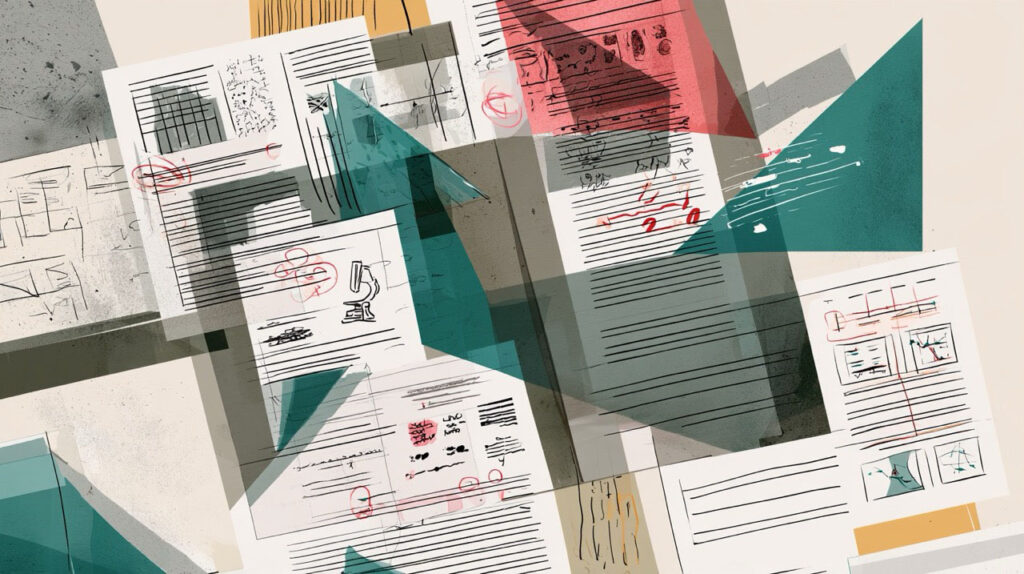 Editorial illustration about research grant writing and scientific funding, a complex scientific idea moving through layers of review and becoming a clear compelling proposal, overlapping research papers, diagrams, data visualisations, annotations and scoring marks arranged across a large workspace, visual tension between complex science and clear communication, subtle elements suggesting funding decisions and research collaboration, African research context without stereotypical imagery, sophisticated contemporary editorial illustration, abstract geometric composition, textured paper and ink, restrained professional aesthetic, minimal human presence, no prominent faces, no readable text, no logos --ar 16:9 --stylize 25 --v 8.2 Job ID: 00cfc456-cdae-4f45-a46b-de61340c2470[/caption]
This September, I had the privilege of co-facilitating the African STARS Fellows Grant Writing Workshop at the School for Data Science and Computational Thinking, Stellenbosch University, stepping outside my usual role as a grant writer at SACEMA to help early-career African researchers build the skills to fund their own work.
For me, facilitation has never been about conveying what I know or reading off a slide. It’s about creating the right environment for open dialogue.
Two moments stood out.
The first came during the mock review panel, when groups swapped proposals and scored each other’s work. One group defended their science passionately – this hits close to home and we know these methods. The reviewers were firm: we can’t fund what we don’t understand! We returned to the call text, the instructions were clear, that narratives must be written for a non-specialist audience. No matter how strong the science, if a reviewer needs a translation to follow the argument, it may never reach a fundable score.
The second moment was quieter but just as important. A conversation emerged about something rarely named in grant writing training: how early-career researchers navigate budget when collaborating with a senior PI who expects them to work for free. The room weighed it honestly, the value of network access, a co-authorship, a foot in the door against the cost of unpaid labour dressed up as opportunity. There were no easy answers, but the fact that the conversation happened at all felt like progress.
The fellows left with practical tools. But what I’ll carry forward is the reminder that the most useful thing a facilitator can do is get out of the way and let the room teach itself.
Text: Dr Yuri Munsamy
News date: 2026-10-05
Links:
KRISP has been created by the coordinated effort of the University of KwaZulu-Natal (UKZN), the Technology Innovation Agency (TIA) and the South African Medical Research Countil (SAMRC).


Location: K-RITH Tower Building
Nelson R Mandela School of Medicine, UKZN
719 Umbilo Road, Durban, South Africa.
Director: Prof. Tulio de Oliveira