KRISP COVID-19 NEWS

For the second year in a row, the Director of the Centre for Epidemic Response and Innovation (CERI) at Stellenbosch University (SU), Prof Tulio de Oliveira, has secured a spot on the prestigious Clarivate Highly Cited Researchers list for 2025, specifically in the Cross-Field category

The Centre for Epidemic Response and Innovation (CERI) demonstrates its commitment to environmentally responsible research, joining a growing network of sustainable laboratories globally

The School for Data Science and Computational Thinking at Stellenbosch University (SU) hosted its 2025 Research Days on 13 and 14 November, bringing together students, researchers, and partners to showcase cutting-edge work addressing Africaâs most urgent challenges â from AI and data infrastructure to womenâs health, climate change, infectious disease surveillance, and mental health

South Africa continues to face one of the worldâs highest burdens of cervical cancer, a disease that disproportionately affects women living with HIV. New modelling work by SACEMAâs Senior Researcher, Dr Cari van Schalkwyk, explores how current HPV vaccination strategies could reshape the countryâs path toward cervical cancer elimination
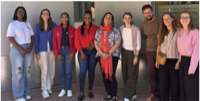
In late October, the Centre for Epidemic Response and Innovation (CERI) at Stellenbosch University welcomed two internationally recognised computational scientists â Dr Joseph Elsherbini of Massachusetts Institute of Technology (MIT)âs Ragon Institute and Dr Laura Symul, assistant professor of biostatistics at UC Louvain
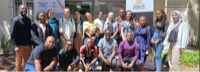
In the past, researchers and scientists could comfortably work in their own silos without needing to interact outside of their boundaries. Today, however, global challenges have become increasingly complex and the call for scholars to work collaboratively across disciplines and beyond academia has never been louder.
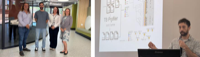
From 24 to 28 November 2025, the Centre for Epidemic Response & Innovation (CERI) and the Tuberculosis Genomics Group (TBG) had the pleasure of hosting Dr Jody Phelan, an Assistant Professor from the London School of Hygiene & Tropical Medicine (LSHTM).
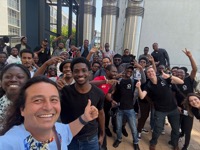
The new cohort of students from the African Institute for Mathematical Sciences (AIMS) and Google DeepMind Fellows visited the Centre for Epidemic Response and Innovation (CERI) at the Biomedical Research Institute (BMRI) on Stellenbosch Universityâs Tygerberg Campus on 28 November.
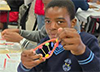
As part of its commitment to strengthening STEM education and scientific capacity in South Africa, KRISP recently welcomed 30 Grade 9 learners from the Umlazi and Chesterville branches of IkamvaYouth for an immersive outreach day at its laboratories. This initiative is part of KRISPâs broader efforts to spark early interest in genomics, biotechnology, and life sciences among curious young learners.
Avisiting HIV Research Trust Fellow from Cameroon, Dr Armando Djiyou, joined KRISP for a month-long training and knowledge exchange programme. Based at the University of Yaoundé I, Dr Djiyou wished to deepen his expertise in genomics and clinical research methods.

A high-level Bavarian delegation visited Stellenbosch University and CERI to tour world-class genomic infrastructure and strengthen a new international partnership in biotechnology and scientific innovation. The visit highlights a shared commitment to collaborative research, capacity building, and scalable technological advancement across Africa and Bavaria.

This keynote connects ancient disease landscapes with modern spillover surveillance through metagenomics and One Health approaches. Participants will gain insights into environmental sampling at high-risk interfaces and the genomic reconstruction of Africaâs ancient pathogens.

From mosquitoes carrying dengue and chikungunya in Indian Ocean islands to West Nile virus now endemic in parts of Europe, climate change is redrawing the global map of infectious disease.

CLIMADE COP30 Report highlights how climate change is fuelling new epidemics across the world. The report also provide an action plan on how to mitigate the effects of climate change and epidemics.
This Thursday, 6 November 2025, the Climate Amplified Diseases and Epidemics (CLIMADE) Consortium will officially launch the CLIMADE COP30 Report, highlighting how climate change is fuelling new epidemics across the world. The event will be streamed live on YouTube and feature insights from leading scientists and global health experts working at the intersection of climate and disease.

The past two months have been exceptionally busy and rewarding, marking one of our most dynamic periods yet. This special 44-page edition of the gem covers the highlights of September and October 2025, months filled with inspiring collaborations, events, and significant achievements.

The Africa in the World Festival 2025 gathered African leaders, scientists, and innovators in Stellenbosch to reimagine the continentâs future amid global funding shifts. Through powerful dialogues on research resilience and inclusive leadership, the event called for African-led collaboration to drive sustainable change.

CERI 2025 Summer Scientific Series Seminar II focuses The reality of manufacturing diagnostics in Africa and the reality of supply chains/market access in Africa: Case studies of successful and unsuccessful approaches to market entry.
CERI 2025 Summer Scientific Series focuses on bringing the top scientists, innovators and policy makers to present on how scientific advance in Africa can and should translate to innovation and entrepreneurship.

Yesterday, September 18, 2025, the Centre for Epidemic Response and Innovation (CERI), the LaunchLab, Stellenbosch Network and Innovus at Stellenbosch University welcomed a vibrant gathering of innovators at the inaugural Cape HealthTech Connect event at BMRI, Tygerberg campus.
We are proud to announce the launch of the African STARS Fellowship programme, a milestone for Africa. Our first call attracted over 3 000 applicants for just 40 fellowships, which was an extraordinary response that highlights Africaâs scientific talent. A 12-member selection committee from CERI, KRISP, and Institut Pasteur de Dakar carefully reviewed candidates. The first 20 fellows, now in Stellenbosch, have impressed us with their passion and brilliance.

In just weeks, fellows from across the continent have already engaged in leadership, science communication, and innovation training.
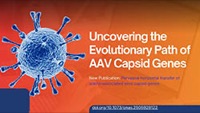
This study reveals that AAV capsid genes have frequently jumped between viral lineages through horizontal gene transfer, reshaping their evolutionary history. These insights not only improve our understanding of viral evolution but also hold practical implications for designing safer and more effective gene therapy vectors.
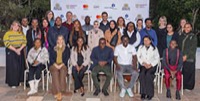
Stellenbosch University has launched the African STARS Fellowship Programme, bringing together young scientists from across Africa for intensive training in genomics, innovation, and leadership. The initiative aims to build the next generation of leaders equipped to tackle the continentâs public health challenges with local solutions and global impact.
This edition is a special one. It shines a spotlight on some of the incredible women at CERI â changemakers who are pushing boundaries in genomics and public health. Their dedication, innovation, and leadership remind us how vital it is to create space for diverse voices in science. We also highlight Prof Lenine Liebenbergâs cutting-edge research in womenâs health â from the HPV therapeutic vaccine, to promising developments in live biotherapeutics for genital health.
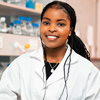
Dr. Nonsikelelo Precious Hlongwa, a researcher at CERIâs African Microbiome Project, uses genomics to study pathogens, microbiomes, and antimicrobial resistance in under-resourced settings. Passionate about mentorship and African-led solutions, she inspires young women to embrace resilience, seize opportunities, and lead in science.

Dr. Chanelle Mulopo, a postdoctoral fellow at CERI, researches how extreme weather events affect mental health in vulnerable African communities, using participatory and inclusive methods to center local voices. Motivated by her early experiences with health inequities, she advocates for equity, transdisciplinary collaboration, and empowering women in science.

Cari van Schalkwyk, Senior Researcher at SACEMA, applies her expertise in epidemiological modeling to address high-priority infectious diseases, influencing public health policy at national and global levels. Her career reflects a commitment to mentorship, inclusion of women in science, and the translation of complex modeling insights into impactful health interventions.

Emilyn Costa Conceição, a scientist from the Brazilian Amazon, uses genomics and next-generation sequencing to advance TB diagnostics, antimicrobial resistance research, and public health surveillance in Africa and Brazil. Committed to equity and mentorship, she founded the IGNITE program to empower young women in science and ensure innovation reaches vulnerable communities.

Gugulethu Mkhize, Grants Manager at CERI, plays a key role in securing and managing funding that drives impactful scientific research. Passionate about equity and inclusion, she encourages young women to pursue science and seek environments that empower their growth.
KRISP COVID-19 TV COVERAGE
COVID-19 | News sub-variant being monitored closely
By: Tulio De Oliveira and CERI and KRISP teams