


NEWS

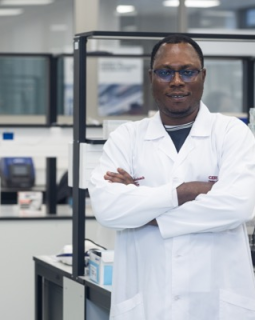
Prof. Tulio De Oliveira talks to Stephen Grootes about the outbreak of Mpox in South Africa following the Health Department's concession regarding the outbreak and confirmation of one death.

Imagine this: "Be visible. Be very visible or I'll simply forget about you. I have too many to supervise", said your new supervisor

Welcome to the 2st CERI/KRISP newsletter of 2024. This month, we are thrilled to celebrate Professor Tulio de Oliveira, The Director, for his second recognition by TIME as one of the TIME100 Health 2024's most influential individuals globally.
From April 15th to 17th, 2024, an insightful workshop took place at the KEMRI-Wellcome Trust Research Programme in Kilifi, Kenya, bringing together global health and genomic data experts. This event, in collaboration with Oxford University, aimed at advancing the federated analysis of genomic data for public health, particularly focusing on enhancing rapid data sharing and analysis capabilities during the initial stages of outbreaks and epidemics.

TIME Magazine has recognized Prof Tulio de Oliveira in its inaugural 2024 TIME100 Health list, a new annual compilation that celebrates 100 individuals who have had the most impact on global health this year.
Issued by Stellenbosch University, May 2, 2024. Liaise with Maambele Khosa at maambele@sun.ac.za or +27 79 592 9174 for more information or to schedule interviews.
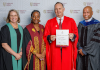
On April 23, 2024, Prof. Frank Tanser, the Director of Population Health Innovation at Stellenbosch University's Centre for Epidemic Response and Innovation, delivered an insightful inaugural lecture titled "The rise (and fall?) of South Africa's HIV epidemic: a personal perspective." His talk provided a deep dive into the past, present, and future of HIV epidemic management in South Africa, underlining both the achievements and ongoing challenges.
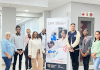
In line with the Centre for Epidemic Response and Innovation (CERI)’s commitment to provide high quality genomics services, the laboratory is gearing up to achieve ISO/IEC17025 accreditation – an internationally recognized Standard for testing laboratories. This prestigious accreditation is internationally recognized and is key to laboratories aiming to demonstrate their operational competence and ability to produce valid and high-quality results.
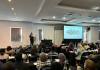
The Virology Africa 2024 conference, held from April 15-18 at the Protea Hotel in Techno Park, Stellenbosch, brought together a vibrant community of virologists from across Africa and beyond. Key themes of the conference included One Health, the management of emerging viruses, pandemic preparedness, and advances in vaccinology among others.
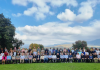
In a concerted effort to bolster the global fight against HIV/AIDS, leading experts from a host of prestigious institutions convened at the recent HIV Prevention Workshop that took place from 24-26 April 2024 near the Drakensberg, South Africa. The collaboration between the Ragon Institutes of Massachusetts General Hospital, Harvard, and MIT with Durban-based organizations such as the Centre for the AIDS Programme of Research in South Africa (CAPRISA), African Health Research Institute (AHRI), HIV Pathogenesis Programme (HPP), and the University of KwaZulu-Natal (UKZN), underscored the importance of international cooperation in tackling this pressing public health challenge.

The United World Antiviral Research Network (UWARN) recently held its annual meeting from April 22-24, in Kaohsiung City, southern Taiwan, bringing together key partners from the University of Washington, Senegal, South Africa, Switzerland, Pakistan, and Taiwan. The primary focus was on fostering collaboration and exchanging updates on ongoing research. Participants shared their latest findings, discussed the challenges faced, and highlighted their successes, reinforcing the network’s commitment to advancing the global response to infectious diseases.

The continent – in dire need of its own production capabilities – could once again be at the back of the vaccine queue in the next pandemic

On Friday, April 19th, our newly formed soccer team, CERI FC, played its very first friendly match. The game was held in Stellenbosch, and it was much more than just a soccer match; it was about building a sense of team and community among our research group.

We are thrilled to extend our heartfelt congratulations to the remarkable individuals from the CERI team who recently graduated from Stellenbosch University. Their achievements mark not only personal milestones but also significant contributions to the academic and scientific community. Among these bright stars, we celebrate the accomplishments of Lucious Chabuka, Maambele Khosa, Nikita Sitharam, Somila Ntsiyane, and Yandisa Ntatiso.

The H5N1 strain of bird flu has spread rapidly among mammals in the United States. The first death of a common dolphin due to the virus has been documented and the number of infected cows could be higher than estimated. by Fernanda Gonzalez

Genomic analysis suggests that the outbreak probably began in December or January, but a shortage of data is hampering efforts to pin down the source. By Smriti Mallapaty
Seminar presentation by Prof Lenine Liebenberg 6 March 2024, 1-2 pm, University of Cape Town (UCT), IDM, Wolfson Pavilion Lecture Theatre, Health Sciences, Anzio Road, Observatory.

We invite applications from ambitious post doctoral scientists, to undertake research in a Flagship research programme on epidemics and modeling in South Africa. Interested candidates with background in quantitative methods, which may include Biostatistics, Epidemiology, Econometrics, Data Science, Geography, or Mathematical Modelling
We invite applications from ambitious post doctoral scientists, to undertake research in a Flagship research programme on epidemics in South Africa. Interested candidates holding a PhD, and with clear evidence of advance computer programming and internationally competitive research.

As head of the largest genomics institute in Africa and new deputy director at the Genomic Surveillance Unit, Wellcome Sanger Institute, Professor Tulio de Oliveira hopes close collaboration can be 'world changing.'
Data collection, ethics and use of AI (artificial intelligence) in healthcare are among the key topics leading global experts addressed at the inaugural Digital Health Africa? (DHA 2024) conference held recently at Stellenbosch University's (SU's) Biomedical Research Institute (BMRI).
As pressure intensifies on World Health Organization (WHO) member states to finalise a pandemic agreement by May, insiders are concerned by the snails’ pace of negotiations – primarily because they believe the negotiators have spent an inordinate amount of time on contentious issues while neglecting more procedural issues.

Prof Lenine Liebenberg's determination to find solutions to complex issues drove her to study science. Prof Liebenberg leads the Immunology Research Programme at the Centre for Epidemic Response and Innovation (CERI). South Africa joined the world in celebrating the International Day of Women and Girls in Science on 11 February.
Scientists in Africa are calling for in-human testing in Senegal of the highly anticipated new Chikungunya vaccine, following the detection of a novel strain of the virus that is driving one of the largest outbreaks of the disease in West Africa.
Une réaction rapide s'impose face à la nouvelle variante à l'origine d'une épidémie de grande ampleur. Des scientifiques africains demandent que le nouveau vaccin très attendu contre le chikungunya soit testé sur l'homme au Sénégal, à la suite de la détection d'une nouvelle souche du virus qui est à l'origine de l'une des plus importantes épidémies de la maladie en Afrique de l'Ouest.

Climate change is our planet’s most immediate existential threat, and will likely only worsen for the foreseeable future. Among its numerous adverse effects on human health, there is strong evidence linking climate change to infectious disease outbreaks.

As the world observes World Cancer Day on 4 February, our focus zeroes in on a persistent and deadly adversary — cervical cancer. In South Africa, this disease claims the title of the second most common cancer among women and the leading cause of cancer-related deaths. Women in this country face a one in 42 lifetime risk of developing cervical cancer and with the lack of up-to-date figures, these numbers might be the tip of the iceberg.
Welcome to the 1st CERI/KRISP newsletter of 2024. This month, we are delighted to welcome Prof. Thulani Makhalanyane, a pioneer in the microbiome field, to our team. Excitingly, we proudly announce the newly formed partnership between CERI at Stellenbosch University and GSU at Wellcome Sanger Institute.
The Wellcome Sanger Institute’s Genomic Surveillance Unit (GSU) and Stellenbosch University’s Centre for Epidemic Response and Innovation (CERI) announce a new partnership to coordinate the genomic surveillance of infectious diseases globally.

Stellenbosch University's Centre for Epidemic Response and Innovation (CERI) is proud to welcome a new luminary to its ranks, Prof. Thulani Makhalanyane, as Head of Microbiom research.

Academic cooperation between Africa and Europe is forging ahead, as exemplified by two new research collaborations tackling severe infections in children, as well as a genomic surveillance project to control pathogen infections in Africa.
MOST POPULAR
BLOG

KRISP has been created by the coordinated effort of the University of KwaZulu-Natal (UKZN), the Technology Innovation Agency (TIA) and the South African Medical Research Countil (SAMRC).


Location: K-RITH Tower Building
Nelson R Mandela School of Medicine, UKZN
719 Umbilo Road, Durban, South Africa.
Director: Prof. Tulio de Oliveira