


NEWS

the gem is a monthly magazine produced by CERI, SACEMA and the Data School at Stellenbosch University and KRISP at UKZN. The objective is to provide stories of world class African science that impact lives and train the next generation of scientists in Africa. In this first issue of 2025, we partner with the Mastercard Foundation and the Institute Pasteur de Dakar to launch the African STARS Fellowship.

The MBA is developed in collaboration with the Stellenbosch Business School. The MBA will be a 24-month programme and has modules focused on business, finance and management geared for health care leadership.

The 2-year MSc program offers a vigorous coursework component followed by a research project mentored by world-class infectious disease researchers in Stellenbosch University.

Summary of a news piece in Science on an alternative for Twitter for scientific researchers quoting Prof Tulio de Oliveira view on the use of X and Bluesky.
By Prof Tulio de Oliveira - New York Times, 19 Nov 2024. As a virus scientist in South Africa, I’ve been watching with dread as H5N1 bird flu spreads among animals in the United States.

Released at COP29 in the WHO Pavillion. Baku, Azerbaijan. On the final day of COP29, an international team of over 100 scientists and policymakers released the 2024 edition of the Climate Change and Epidemics report at the WHO Pavilion.

Roche Diagnostics and the Centre for Epidemic Response and Innovation (CERI) hosted a two-day training on advanced DNA Library Preparation at Stellenbosch University's Biomedical Research Institute (BMRI).
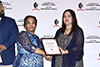
UKZN 2024 Research Awards Dinner: Celebrating Excellence in Research. This much-anticipated occasion highlights UKZN's unwavering commitment to fostering research excellence and its profound impact on local and global communities.
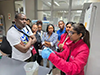
Members of the KRISP (KwaZulu-Natal Research Innovation and Sequencing Platform) team recently had the privilege of hosting undergraduate students from UKZN and the University of Limpopo as part of the HIV Cure Workshop.

The first CERI-SACEMA Research Days, held from November 27-29, 2024, brought together students, researchers, and staff for three days of scientific exchange and learning. Opening keynotes by Prof. Francesco Petruccione and Prof. Thulani Makhalanyane set the collaborative tone, emphasizing how different scientific disciplines can work together to address complex health challenges.

The project will officially launch on February 6, 2025 with a signing event involving the UK High Commissioner of South Africa and the Director of the Centre for Epidemic Response and Innovation (CERI) at Stellenbosch University medical campus in Tygerberg, Cape Town. At the event representatives from CERI, the Wellcome Sanger Institute, key stakeholders, and UK and SA government leaders will outline their vision for transforming disease surveillance and collaborate on global health, security and science.

Africa is home to the fastest-growing young population globally. African STARS Fellowship Programme to capacitate African scientists on epidemic and pandemic response be launched with an award of US$ 9 million (ZAR ZAR 165 million) from the Mastercard Foundation. First phase of the programme will fund 131 fellows over three years. Media invited to attend the launch of the programme at 13:00 at CERI at SU’s Tygerberg Campus on 15 January

Short overview of the hMPV and its impact in South Africa. By Prof Tulio de Oliveira, Director of CERI & KRISP & Dr. Richard Lessells, Senior ID specialist, KRISP.
the Mastercard Foundation, Stellenbosch University and the Institute Pasteur Unveils African STARS Fellowship Programme to Empower the Next Generation of Health Leaders in Africa.

CLIMADE consortium are releasing the 2024 edition of the Climate Change and Epidemics report at the WHO COP29 Health Pavilion. This comprehensive report, produced by an international team of over 100 scientists and policymakers highlights the growing intersection of climate change and infectious disease outbreaks, with 2024 marking a record year for new and amplified epidemics.
21 November 2024, Baku, Azerbaijan — On the final day of COP29, an international team of over 100 scientists and policymakers released the 2024 edition of the Climate Change and Epidemics report at the WHO Pavilion. This comprehensive study highlights the growing intersection of climate change and infectious disease outbreaks, with 2024 marking a record year for new and amplified epidemics.
The Centre for Epidemic Response and Innovation (CERI), Stellenbosch University, South Africa, Fundação Oswaldo Cruz (FIOCRUZ), Brazil, Brazilian Ministry of Health and Insituto National de Saude (INS), Mozambique invite you to the ‘Climate Amplified Disease and Epidemics (CLIMADE): Characterization of and Response to epidemics in the Global South’ event at the COP28 Blue Zone.

We invite you to join our center of excellence. If you hold a PhD in Bioinformatics, Data Science, Microbiology/Virology, and have a passion for research in metagenomics and meta-transcriptomics within a One Health framework, this is your opportunity! Be part of a pioneering team and contribute to groundbreaking global science. Apply by December 1, 2024, and start your innovative journey in 2025.
We invite applications from ambitious postdoctoral scientists for a 3-year fellowship in partnership with the CLIMADE consortium at the Centre for Epidemic Response and Innovation (CERI). This transdisciplinary project focuses on leveraging satellite data, remote sensing, GIS, and climate modeling to advance spatial epidemiology research. The successful candidate will integrate genomic and geospatial data to develop predictive models that monitor and control infectious disease outbreaks influenced by climate change.
the gem is a monthly magazine produced by CERI at Stellenbosch University, KRISP at UKZN and SACEMA. The objective is to provide stories of world class African science that impact lives and train the next generation of scientists in Africa.
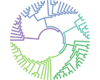
Publication in PLoS Biology, new website & tools to better classify Dengue genomes for public health response.
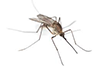
Nature News coverage of our work and how climate sensitive pathoges are becoming increasingly common as the insects that spread them move north.

Over four days, more than 20 fellows from nine countries gained advanced skills in data analytics, including epidemiological modeling, phylogenetics, metagenomics, data visualization, AI, and bash scripting.

A new proposal draws inspiration from FIFA’s benefit sharing model to support fair reward systems in global health, especially in pandemic preparedness.
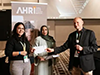
Six months can make a world of difference, especially when spent in a hub of scientific excellence. This was certainly the case for Débora Glenda Lima de LaRoque, a PhD student from the University of São Paulo (USP) in Brazil, who came to Stellenbosch University’s Centre for Epidemic Response and Innovation (CERI) to enhance her research in dengue virus phylogenetics and phylodynamics.
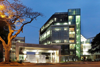
As part of the National Science Week 2024, the team at KRISP hosted 50 students from Chesterville Secondary School and KwaMathanda High School in Durban.

This inaugural lectured titled on Unveiling the Hidden World Within Us: What Environmental Microbiomes Can Teach Us About Ourselves, explored how these microbial communities are active, essential contributors to ecosystems and human health.

Lessons from the Public Square Workshop. In the world of research, deadlines are relentless, and competition for funding is fierce. Without strong grant writing skills, even the most innovative ideas can fall through the cracks.
Key learning points from Prof. Tulio de Oliveira on the Art of Grant Writing Workshop. Published at the gem: genomics, epidemics & microbes - Oct/Nov 2024
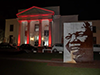
The ‘Africa in the world’ festival has the world’s brightest on the African continent engage in all fields of human endeavour.
MOST POPULAR
BLOG

KRISP has been created by the coordinated effort of the University of KwaZulu-Natal (UKZN), the Technology Innovation Agency (TIA) and the South African Medical Research Countil (SAMRC).


Location: K-RITH Tower Building
Nelson R Mandela School of Medicine, UKZN
719 Umbilo Road, Durban, South Africa.
Director: Prof. Tulio de Oliveira