


NEWS

Professor Tulio visited Bern University in Switzerland and met with the team from the MCID (Multidisciplinary Center for Infectious Diseases). During his visit, they discussed potential collaborations on topics related to pandemic preparedness and emerging infectious diseases. In addition, discussions focused on how to expand genomics to rare diseases and cancer.

Prof. Tulio de Oliveira had the opportunity to visit the Health 2030 Genomics Center in Geneva on the 22 May 2023, where he was able to present some of the research being undertaken at CERI and KRISP.
WHO and partners are launching a global network to help protect people from infectious disease threats through the power of pathogen genomics. The International Pathogen Surveillance Network (IPSN) will provide a platform to connect countries and regions, improving systems for collecting and analyzing samples, using these data to drive public health decision-making, and sharing that information more broadly.

by Prof Tulio de Oliveiea, CERI, University of Stellenbosch & KRISP, UKZN, Wednesday 16 May 2023 17h00-19h00, BMRI, Tygerberg Campus, Stellenbosch University or virtually
Professor Tulio de Oliveira was invited by Dr. Tedros Adhanom Ghebreyesus (Director General WHO) and Dr. Chikwe Ihekweazu (Director of WHO pandemic Hub) to take a position on the leadership committee of the International Pathogen Surveillance Network (IPSN). Prof de Oliveira will be a panellist on the official launch of IPSN as part of the World Health Assembly on 20 May 2023 in Geneva.

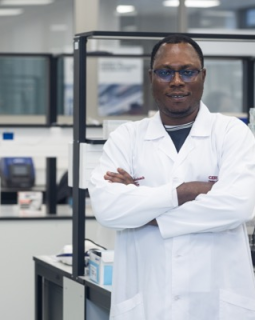
Sophisticated genomic surveillance lab aims to keep one step ahead of outbreaks with effective tests, treatments and vaccines

Welcome to the April/May 2023 edition of our newsletter. April was an incredibly busy and exciting month for CERI and KRISP, centered around the launch of the CLIMADE (Climate Amplified Diseases and Epidemics) consortium and the inauguration of the R1.2 billion Biomedical Research Institute (BMRI) at Stellenbosch University. This events brought together leading experts and stakeholders from all over the world to celebrate this momentous occasion and the state-of-the-art facilities that will enable us to lead the way in genomic research.
The WHO Hub for Pandemic and Epidemic Intelligence was established in Berlin with the foundational investment of the Government of the Federal Republic of Germany in September 2021 to support countries, regions, and global actors to avert and manage public health threats more efficiently.

The fellowship is a tailored training opportunity intended to train a pathogen genomics and bioinformatics workforce with expertise to improve outbreak detection and disease surveillance in Africa.

A new coalition, CLIMADE, brings together some of the biggest names in public health to address climate-amplified diseases in Africa and Latin America.

Abbott is joining the Climate Amplified Disease and Epidemics (CLIMADE) consortium, which will use data science to predict, track and control diseases that may be amplified by climate change
A sustainable global commitment to pandemic preparedness is instrumental to maintaining the upper hand and winning the battle.

Regarded as the pride of Africa, the facility has opened its doors to the continent and the world – offering training and fellowships to those in the field of genomics.
Remember when the weather felt more predictable? When seasons felt consistent, even if we complained about it, and things like wildfires, droughts or flooding seemed like rare events?
Many of Africa's higher education institutions were established by colonial governments to meet the labor needs of the time. Now many universities on the continent want to prepare graduates for the modern job market.

The new Biomedical Research Institute on the Tygerberg campus of Stellenbosch University ‘was a 10-year dream costing R1.2-billion’ to address the major health challenges of Africa

Technology is the best weapon against future pandemics, believes renowned scientist Tulio de Oliveira, a professor of bioinformatics at the School for Data Science and Computational Thinking at Stellenbosch University, who foresees 'an armed race between humans and pathogens”.

In April, we will commence a series of festivities and activities in the lead-up to the inauguration of the BMRI and CERI new state-of-the-art laboratories. This building is dedicated to understanding the genetic and bio-molecular basis of disease with a decidedly African focus

CAPE TOWN - The most advanced biomedical research centre on the African continent has opened in South Africa, boasting state-of-the-art research and training facilities.
Genomics Symposium - 17 April 2023, TB Symposium - 18 April, Cardiometabolic research symposium - 20 April. Symposiums are free of charge and will be hosted at the new BMRI building at FMHS Tygergerg Campus of Stellenbosch University.
A leading-edge biomedical research facility, the Biomedical Research Institute (BMRI), was officially launched this week. BMRI is the home of CERI new state-of-the-art Genomics Facilities.
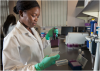
The fellows have come from 42 different countries in the global south. We are privileged to provide the opportunity for knowledge transfer to scientists from all walks of life and to allow them to come together and share their experiences with others and to learn how to become world leaders in genomic surveillance.

VEME2023 will be organized in Stellenbosch, South Africa, during August 20–25, 2023. The workshop comprises 6 full days of theoretical lectures, practical sessions and keynote presentations. VEME2023 will accept 150 participants in 4 modules.
Thomas C. Marlovits is a full Professor and Director of the Institute of Structural and Systems Biology at the University Medical Center Hamburg-Eppendorf in Germany. He is resenting at CERI on the 27 March 2023 a talk entitled: Design and Function of Molecular Machines in Microbial Pathogenesis,
Time: 12h00 | Wednesday, 22 March 2023, Venue: Room 3073, BMRI, Tygerberg Campus or Online, Presenters: Prof. Graeme Meintjes, University of Cape Town (UCT)
Prof Graeme Meintjes is the Second Chair and Deputy Head of Medicine at the University of Cape Town, and alsoholds the SARChIChair of Poverty-related Infections. He is presenting at CERI on the 22 March 2023 a talk entitled: The ARTIST trial and the expanding role of Tenofovir/Lamivudine/Dolutegravir in ART programmes.

The multi-institutional research would develop new strategies to combat HIV in vulnerable populations impacted by COVID-19.
New funding has been awarded for the development of HIV-prevention strategies in rural communities of sub-Saharan Africa. The five-year, $2.2 million research grant from the US National Institutes of Health (NIH), will be used to identify vulnerable groups at high risk of contracting the virus, and design appropriate intervention strategies
I am delighted and honoured to be back in South Africa working at Stellenbosch [University] and with CERI and the Department of Global Health. I love this continent and there is no place in the world I would rather be right now – here is where I feel that I can make the biggest impact, Prof. Frank Tanser.

CNN feature including Prof. Tulio De Oliveira, from CERI at Stellenbosch University and KRISP, UKZN as one of the four most inspiring minds in Africa in 2022. The film also includes Dr. Shiulile Moyo, Prof Tulio de Oliveira’s past PhD student, who co-discovered with Omicron variant.
MOST POPULAR
BLOG

KRISP has been created by the coordinated effort of the University of KwaZulu-Natal (UKZN), the Technology Innovation Agency (TIA) and the South African Medical Research Countil (SAMRC).


Location: K-RITH Tower Building
Nelson R Mandela School of Medicine, UKZN
719 Umbilo Road, Durban, South Africa.
Director: Prof. Tulio de Oliveira