


NEWS

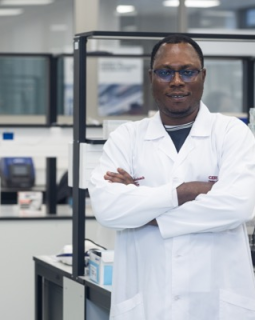
As part of our special edition of Focus on Africa with guest editor, Professor Thuli Madonsela speak to Professor Tulio de Oliveira – one of the South African scientists who helped identify the Omicron variant. He talks about the discrimination African scientists often face.

From the Amazon jungle to village townships of South Africa, to crowded urban centers in India and finally cutting-edge surveillance sites in Chicago, follow a group of Coalition experts as they race the clock to stay one step ahead of the next viral threat.
NPR is running a series on spillover viruses — that's when animal pathogens jump into people. Researchers used to think spillovers were rare events. Now it is clear they happen all the time. That has changed how scientists look for new deadly viruses. To learn more, we traveled to Guatemala and Bangladesh, to Borneo and South Africa.

Every year, the photo team from Science select the best pictures for Science. Here is some of the other Science collection of 2022’s best, from the edges of outer space to microscopic close-ups, from the genetics of ancient times to the discovery of new species.

NGS can address a broad range of research topics involving genomes exploration in basic, applied, and clinical research. Please see CERI and KRISP services using the largest fleet of DNA sequencers in Africa.
CERI and KRISP have access to the highest technology in the world. It includes automated -80C bio repository for 7 million samples and liquid handling high-throughput equipment feeding the largest fleet of DNA sequencers in the African continent.
After years of constructions & one of the biggest investment in scientific infrastructure in SA (ZAR 1.5 billion), we finally open the largest genomics facility in Africa!

Presenter: Prof Darren Martin, University of Cape Town, Date: Wednesday, 22 February 2023, BMRI, Tygerberg Campus, Stellenbosch University

We invite applications from ambitious post doctoral scientists, to undertake research in a Flagship research programme on epidemics in Africa. Fellows will receive a very well paid fellowship and access to some of the best datasets and facilities in the world.
Time: 12h00 | Wednesday, 25 January 2023,Venue: STIAS, Stellenbosch Campus or virtually,Presenters: Prof James R. Carey, University of California Davis (UC Davis)

CAPE TOWN - Health experts have cautioned South Africans that it is too early to panic over the new COVID-19 Omicron subvariant, dubbed "Kraken".

South Africans, especially the elderly and those with underlying health conditions, are being urged to vaccinate against Covid-19 or get booster shots as a precaution.

Prevalence of a new subvariant of Omicron is increasing, but whether it will cause a big surge in infections or hospitalizations is not clear.

LONDON, Jan 3 (Reuters) - Leading scientists advising the World Health Organization said they wanted a "more realistic picture" about the COVID-19 situation from China's top experts at a key meeting on Tuesday as worries grow about the rapid spread of the virus.

We invite applications from three postdoctoral researchers with an interest in developing into professional Research Software Engineers (RSEs). Research Software Engineer (RSE) is an exciting new role for researchers with an interest and aptitude for the computational aspects of research and is of growing importance internationally.
We invite applications from ambitious post doctoral scientists, to undertake research in a Flagship research programme on epidemics in Africa. The fellow will have access to some of the finest longitudinal datasets in Africa and will apply advanced geospatial and molecular epidemiological analytical techniques to identify spatiotemporal hotspots for emerging pathogens, understand the dynamics of transmission networks and directly inform prevention and treatment efforts in Africa.
We invite applications from ambitious post doctoral scientists, to undertake research in a Flagship research programme on epidemics in Africa. The fellow will contribute to further developments in existing modelling techniques that estimate the reproductive potential of mosquito-species and the suitability transmission potential of arboviruses such as dengue and Zika.
We invite applications from ambitious post doctoral scientists, to undertake research in a Flagship research programme on epidemics in Africa. The fellow will develop and apply molecular epidemiology, phylodynamics and phylogeography techniques to describe pathogens of epidemiological concern to Africa.

Welcome to another inspiring edition of the CERI & KRISP Newsletter. This month the global impact of our work is once again in the spotlight. Testament to this are the numerous awards, publications and international recognition that the team continues to receive.

Health experts said the old nomenclature was imprecise, played into racist stereotypes and fueled stigmatization, making it harder to contain the most recent outbreaks.

German Chancellor Olaf Scholz has praised the work of virologist Sikhulile Moyo and bioinformatics scientist Tulio de Oliveira. The COVID-19 researchers are the 2022 recipients of the German Africa Prize.
Time: 12h00 | Wednesday, 30 November 2022, Venue: STIAS, Stellenbosch Campus or Online, Presenters: Dr Christopher Trisos, directs the Climate Risk Lab for the African Climate and Development Initiative at University of Cape Town.
China's daily COVID-19 cases hit a record high since the beginning of the pandemic, according to the data revealed by the National Health Bureau. The country reported as many as 31,444 domestic cases on Wednesday despite its targeted approach. However, the numbers are relatively small when compared with China's t population of 1.4 billion, AFP reported.
Academic research findings can promote entrepreneurship, innovation, create new jobs, products and services that address all Africa’s citizens needs

The Centre for Epidemic Response and Innovation (CERI) is seeking to appoint a post-doctoral fellow with great potential and ambition to become a leading scientist. The position will work with some of the best genomics and bioinformatics scientists in the world. We aim to identify both pathogen and human genomic variation that are associated with the transmission and virulence of pathogens and the development of diseases.

The GRM provides a platform for any stakeholder who has a grievance or problem that has arisen from their involvement with the project the right and the opportunity to lodge their grievance and discuss it with an eye to resolving it, if possible, to mutual satisfaction. The purpose of standard operating procedure (SOP) is to outline the procedures to be followed in addressing any grievance.
Welcome to another edition of the CERI & KRISP Newsletter. This month we reflect on how much recognition we have received nationally and internationally and reflect about what can be done better and how best to prepare for future threats to global health.
Virologist Dr. Sikhulile Moyo in Botswana and South Africa-based bioinformatics scientist Prof. Tulio de Oliveira have won this year's German Africa prize for their work identifying the COVID-19 variant omicron.

The World Health Summit (WHS 2022) was the first World Health Summit together with WHO. It was attended by over 1000 participants. CERI and KRISP sent a delegation of 5 of our brightest and younger scientists

IRESSEF and UCAD in Senegal organized and hosted a bioinformatics workshop that will included one week of virtual sessions on October 3 - 7, 2022, and one week of in-person sessions in Senegal October 10 - 15, 2022. Dr. Tulio de Oliveira of CERI and Dr. Luiz Alcantara Jr. of FIOCRUZ and their teams assisted in facilitating this training. They are at the forefront of capacity-building efforts in bioinformatics, with experience leading large-scale bioinformatics training programs.
MOST POPULAR
BLOG

KRISP has been created by the coordinated effort of the University of KwaZulu-Natal (UKZN), the Technology Innovation Agency (TIA) and the South African Medical Research Countil (SAMRC).


Location: K-RITH Tower Building
Nelson R Mandela School of Medicine, UKZN
719 Umbilo Road, Durban, South Africa.
Director: Prof. Tulio de Oliveira