


NEWS

The extended five-week national lockdown has postponed South Africa's worst-case Covid-19 scenario to September, a government projection shows. March was arguably the busiest month for President Cyril Ramaphosa in his tenure as head of state. Every other day, the President is putting out fires.

A UKZN seminar series has been moved online in the face of the COVID-19 epidemic. IT was a logical step for UKZN Pro Vice-Chancellor for Big Data and Informatics, Professor Francesco Petruccione, to turn to the online world to continue with his monthly data@breakfast seminar series in a time of national Covid-19 lockdown.

Lessons learned in Eshowe, South Africa, one of the areas worst hit by the HIV pandemic, are being used against coronavirus. Jason Burke in Eshowe writes to The Guardian about KRISP and UKZN work.

Durban - Conflicting information and misinformation about whether to wear a mask or not during the Covid-19 pandemic has left many people confused.The World Health Organisation (WHO) has recommended people not wear a mask unless they are sick with Covid-19 or caring for someone who has the virus.

Durban - ONLY polymerase chain reaction (PCR) tests are being used to test for the coronavirus in South Africa, which can detect infection before patients become symptomatic, and not rapid serological tests, which are not recommended by experts for public use.

A young single mother has started her own business making masks, which she distributes in rural areas. Currently there's a huge debate on the subject of a face mask's efficiency, with the World Health Organisation saying there is no evidence to suggest it curbs the spread. However, some experts believe it does indeed work, as studies into other coronaviruses proved masks can reduce the risk.

Speaking to the media on Wednesday night, Health Minister Zweli Mkhize said, We will only fight coronavirus with facts and evidence-based strategies, not fake news. Mail and Guardian news, 2 April, 2020.

South Africa stands at a crossroads in the fight against the new coronavirus — and winning the battle will hinge on the decisions we make now about how quickly and how broadly we begin to test for the virus. In a grim news cycle, Health Minister Zweli Mkhize's announcement yesterday that the country is evaluating rapid tests for the new coronavirus is something to celebrate. Bhekisisa opinion piece by Dr. Richard Lessells and Prof. Mosa Moshabela.
Durban - An infectious disease specialist says that although the world is much more prepared to deal with a pandemic than in previous years, African countries are still unable able to respond adequately to a respiratory virus like Covid-19.

South Africa's strategy to defeat Covid-19 is to lock down the country and scale-up testing to quickly identify people who may have been infected with the SARS-CoV-2 virus. Health journalism by Adele Baleta for Spotlight 31 March 2020.

Südafrika hat die meisten Corona-Fälle in Afrika. Auch wenn die Zahlen denen in Europa noch hinterherhängen, warnen Experten vor einer rasanten Ausbreitung des Virus. Von Julia Jaki, Kapstadt, 27. März 2020
There is much we do not understand about the virus and how it will affect our bodies, especially after Minister of Health Zweli Mkhize said that 60% to 70 % of people could be infected by Covid-19. The Mail & Guardian asked different experts — including disease specialist Dr Richard Lessells, the National Institute for Communicable Diseases, and the World Health Organisation (WHO) — for information about this coronavirus.

Together with the Big Data group of UKZN, we started a daily update of the data on COVID-19 in South Africa and a weekly update on cases, deaths and genomic data in Africa. All of the scripts for generation of the data is deposited open in repositories as all any data developed by our team.
Three thousand people have died in Italy as a result of Covid-19, with more than 35000 infected. Three weeks ago, the country passed the 150 mark for infected people. It took three weeks to get to that number. In South Africa, we passed the 150 mark on Thursday, two weeks after the first local positive test. Mail and Guardian, 19 March 2020.
The University of KwaZulu Natal's Research Innovation and Sequencing Platform (KRISP) boasts state-of-the-art laboratory facilities and scientific expertise and capacity not commonly found in Africa. This places our multidisciplinary team in the ideal position of being able to play a critical role in supporting the public health response to the COVID-19 pandemic. The team has placed all current research activities and services on hold to focus full-time on helping with this outbreak. Please help to fund it by donating to our activities here.
The National Institute for Communicable Diseases can run hundreds of tests at the same time but ultimately the number of tests South Africa will be able to carry out for the new coronavirus depends on the machines, people and testing supplies available.

To bolster these efforts, the university has created an email address: covid19@ukzn.ac.za and the hashtag: #ukzncovid19 that staff and students can make enquiries to. The university is in the process of creating a hotline, which will aid in communicating with its stakeholders about the virus.
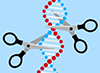
KRISP flew two international specialists from Thermo Fisher Scientific to start our new CRISPR-Cas9 laboratory! We also received advanced training on genetic and epigenetic editing techniques in our own lab. KRISP has now all of the equipment to growth, edit and analyse cell lines. The lab is available for scientific service and it is a major development that will help to keep Africa at the cutting-edge of science.

KRISP has an exhibition space at the Innovation Festival, Durban, 5-7 march 2020. We will also be participating in the Cities of the Future discussion session, where we will present BioDurban vision to make Durban the Biotech capital of Africa. Please come visit us and learn more about Biotech, Innovation, Genomics, Epigenetics, Bioinformatics, Precision Medicine and DNA testing...

We developed an rapid bioinformatics tool for the identification and characterization of novel coronavirus genomes. The tool was released in January 2020 and published in Bioinformatics in February 2020 as an open access tool to help to characterise genomes of COVID-19 viruses.

In our February/March issue of 2020, we highlight our work on the current coronavirus outbreak. We published a software application for rapid identification and characterization of novel coronavirus genomes. Our quick response was lauded by the national and international media. In this issue, we also cover the award from UKZN vice-chancellor to Dr. Veron Ramsuran, launched a CRISPR-Cas9 laboratory and organized talks, exhibitions and training workshops.
Inkosi Albert Luthuli Central Hospital (IALCH), KRISP and Genetic Alliance SA joins nearly 200 national and global organizations in observing the sixth annual World Birth Defects Day (WBBD) on March 3, 2020. Launched in 2015, the WBBD movement aims to raise awareness around the serious global issue of birth defects and to urge improved surveillance, research, prevention, and care for affected individuals and families.
Learn UNIX/Linux from our experienced KRISP bioinformaticians. This 2-day course will teach you the basic UNIX/Linux commands that you will need to manage data. This is the first of five bioinformatics courses that KRISP is presenting in 2020.

KRISP was in the front and second page of Saturday Independent newspaper, including an article on how a reporter from nature has followed our hard work to produce and release the Genome Detective Coronavirus Tool in January 2020.

High-impact researchers at the KwaZulu-Natal Research Innovation and Sequencing Platform (KRISP), based at the University of KwaZulu-Natal (UKZN), Dr Veron Ramsuran and honorary senior lecturer, Dr Lenine Liebenberg, have been selected as African Academy of Sciences (AAS) Fellows.

Durban - University of KwaZulu-Natal's (UKZN's) high impact researcher, Dr Veron Ramsuran, was awarded the prestigious UKZN Vice-Chancellor's annual award. This award is the most prestigious award given at UKZN.

As news of the deadly Coronavirus spreads across the globe, a Durban man, teaching English in Hangzhou, describes the eerie streets of a city on lockdown and researchers at the University of KwaZulu-Natal (UKZN) prepare for the potential of a Coronavirus outbreak in Durban.
The huge amount of knowledge gathered in six short weeks on the coronavirus outbreak (Covid19 or SarsCoV2) was a first for the global scientific community. That was the opinion of University of KwaZulu-Natal Professor Tulio De Oliveira from the KZN Research Innovation and Sequencing Platform (KRISP) at a public talk attended by 120 people at the Nelson Mandela Medical School, 15 feb 2020.
KRISP Talks by Prof. Tulio de Oliveira (KRISP UKZN & CAPRISA), Novel Coronavirus (2019-nCoV) Outbreak: Genomics & Epidemiology. This page summaries resources for coronavirus COVID-19 in KZN and South Africa and internationally. It also present our work on the creation of a genomics and bioinformatics pipeline for fast and accurate analysis of coronavirus genomes. KRISP is bases at K-RITH building, Nelson R Mandela School of Medicine, UKZN, Durban, South Africa.
This month, we launch our bioinformatics training program for 2020 and highlight as one of our key researchers become affiliate to the African Academy of Science. We also join the international community to fight the new coronavirus (2019-nCoV) pandemic, published a key paper on understanding HIV transmission hotspots and renewed our partnership with Thermo Fisher Scientific to provide very affordable sequencing in Africa
MOST POPULAR
BLOG

KRISP has been created by the coordinated effort of the University of KwaZulu-Natal (UKZN), the Technology Innovation Agency (TIA) and the South African Medical Research Countil (SAMRC).


Location: K-RITH Tower Building
Nelson R Mandela School of Medicine, UKZN
719 Umbilo Road, Durban, South Africa.
Director: Prof. Tulio de Oliveira