
African Innovation with Global Impact
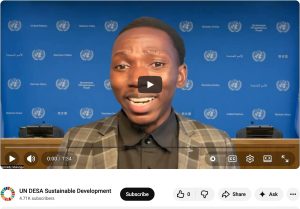
When Kennedy stood at the United Nations headquarters earlier this year, it marked a significant milestone in his growing work across biotechnology, entrepreneurship, and product innovation. “Personally, it was a profound affirmation that African innovators from countries like Malawi can compete and contribute meaningfully at the highest global levels,” he says. “Professionally, it positioned me within elite international innovation ecosystems where science, entrepreneurship, and policy intersect.”
A major foundation behind that trajectory, Kennedy says, has been the African STARS Fellowship, led through Centre for Epidemic Response and Innovation (CERI) at Stellenbosch University and Centre for Africa’s Resilience to Epidemics (CARE) at Institut Pasteur de Dakar, in partnership with the Mastercard Foundation. “African STARS has been the foundation of my transformation from scientist to entrepreneur,” he notes. “It equipped me with critical skills in innovation commercialisation, venture building, leadership, and product-market strategy.”
Kennedy says the fellowship also opened access to entrepreneurial ecosystems, strategic mentorship, and global opportunities that directly shaped his development and international exposure. “It exposed me to world-class entrepreneurial ecosystems, strategic networks, and global opportunities, directly preparing me for competitive platforms like the United Nations STI Forum, LEA-WH Fellowship, and Excellentium,” he says. “African STARS has been instrumental in shaping my ability to translate innovation into scalable enterprise and global impact.”
The UN forum itself created opportunities to engage directly with institutions shaping the future of global innovation, including the World Intellectual Property Organization (WIPO) and the American Society of Mechanical Engineers (ASME). These engagements also shaped how he thinks about innovation and commercialisation.
“WIPO’s emphasis on translating ideas into protected, investable enterprises strongly aligned with my entrepreneurial ambitions,” he says. “Engagement with ASME provided insight into engineering commercialisation, manufacturing scalability, and practical frameworks for moving technical innovations from prototypes to impactful real-world solutions.”
That thinking now underpins his work in Malawi. “I am a scientist, entrepreneur, and innovation leader passionate about building ventures that solve real African challenges through biotechnology, entrepreneurship, and scalable product development,” he says. “My journey is driven by the belief that science must move beyond research into sustainable enterprises capable of creating meaningful impact.”
Through Ubhwando Group Limited, Kennedy has led sexual and reproductive health initiatives in rural Malawian communities, focusing particularly on youth and women’s health. The work includes awareness programmes, community-based initiatives, and innovation-driven projects addressing menstrual health and access to essential health products.
Alongside this, he is developing alginate-based biodegradable sanitary pads and wound dressings through his Kelp Alginate project, which he aims to commercialise in Malawi.
“I am focused on bridging critical gaps in African innovation ecosystems by transforming scientific discoveries into locally built, commercially viable products that address pressing health, manufacturing, and development challenges,” he says.
Kennedy says his entrepreneurial focus emerged through firsthand exposure to persistent healthcare and access challenges across underserved communities. “Direct exposure to unmet healthcare, manufacturing, and access challenges within African communities revealed the urgent need for locally driven innovation enterprises capable of delivering scalable solutions,” he explains. “I have witnessed persistent gaps in healthcare access, product affordability, and innovation penetration. This reinforced the importance of entrepreneurship models tailored to underserved African populations.”
Kennedy’s approach combines scientific rigor with commercialisation strategy. “I emphasise local manufacturing, sustainability, intellectual property development, and long-term venture scalability,” he says.
His work recently gained further recognition through his acceptance into the LEA-WH Fellowship Innovation Track. “The LEA-WH Fellowship Innovation Track is one of Africa’s most prestigious and competitive leadership platforms focused on advancing health innovation, women’s health solutions, and entrepreneurship across the continent,” Kennedy explains.
“What makes LEA-WH particularly powerful is the caliber of institutions driving it – the U.S. National Academy of Medicine and KEMRI – alongside other global and African strategic partners,” he says. “For entrepreneurs like myself, this means access to leadership development, commercialisation and funding support, strategic mentorship, scientific visibility, and global networks necessary for product deployment.”
Later this year, he will also join Excellentium 2026 in France, a global biotechnology leadership platform focused on the future of biotech innovation.
Looking ahead, Kennedy believes Africa’s innovation future will depend on stronger support systems for innovators. “Africa’s innovation future depends on stronger commercialisation ecosystems, intellectual property systems, investment access, manufacturing capacity, mentorship, and policy environments,” he says. “We need systems that enable innovators to move products from laboratories into markets at scale.”
By Katrine Anker-Nilssen
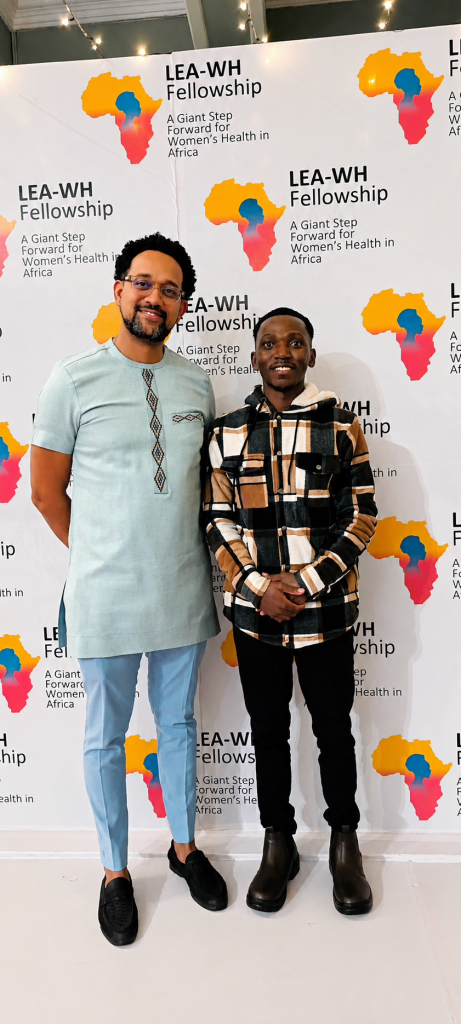
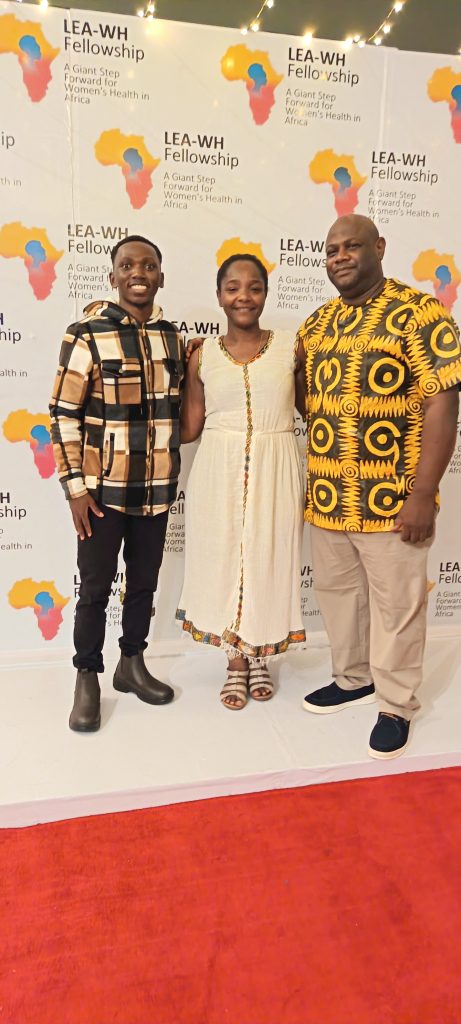
Below (left); Kennedy in Nairobi, Kenya, with Prof Yaw Bediako, CEO of Yemaachi Biotech Company. Below (right); with MS. Gellila Biresaw Sime (Arba Minch University, Ethiopia) and Dr Kenneth Toby Maduako (University of Benin Teaching Hospital, Nigeria) - LEA-WH fellows.
News date: 2026-05-17
Links:
KRISP has been created by the coordinated effort of the University of KwaZulu-Natal (UKZN), the Technology Innovation Agency (TIA) and the South African Medical Research Countil (SAMRC).


Location: K-RITH Tower Building
Nelson R Mandela School of Medicine, UKZN
719 Umbilo Road, Durban, South Africa.
Director: Prof. Tulio de Oliveira