
Fogarty Fellowship Opens New Chapter
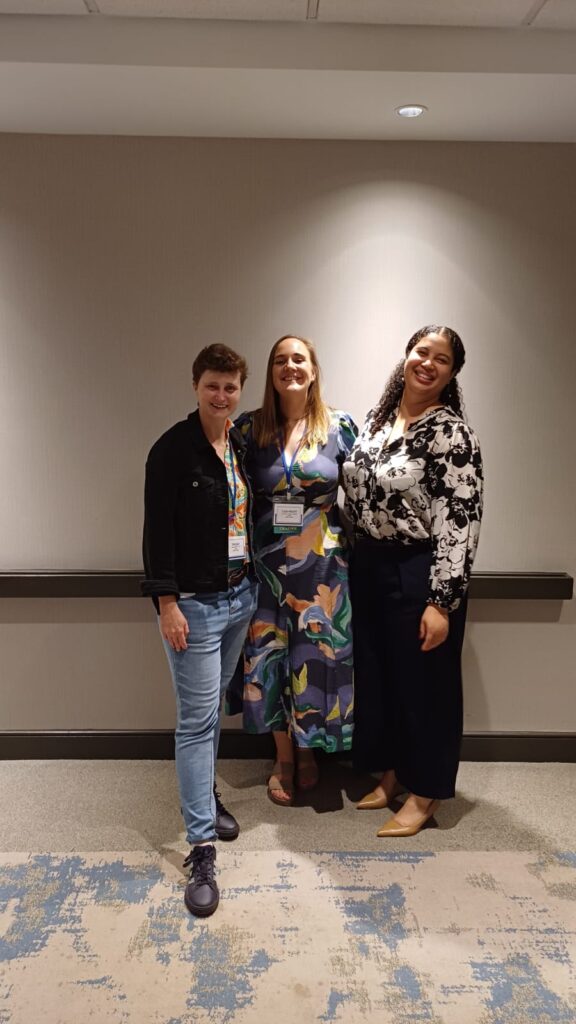

When Dr Margot Otto found out she had been selected for the 2026â2027 UJMT Fogarty LAUNCH Programme, her mum was sitting right beside her. An important source of motivation throughout her career, she was naturally the first person Margot told. âI think initially she thought I was having a panic attack, but then soon after realised it was very good news,â Margot recalls.
SACEMA colleagues Larisse Bolton and Yuri Munsamy were next. Larisse had encouraged her to apply for the fellowship, and both spent weeks reading research proposal drafts and offering feedback. âThrough the entire application I felt like I really had a team rooting for me, and this was a big motivational force for me,â says Margot.
The UJMT Fogarty LAUNCH Programme is one of the worldâs most competitive global health research fellowships, funded by the U.S. National Institutes of Health. It gives early-career researchers a year of mentored research at leading biomedical institutions in low- and middle-income countries, while building international collaborations and leadership in global health. For Margot, the fellowship feels like a natural next step in a career that has been anything but predictable.
Growing up in South Africa, she was fascinated by science and initially imagined herself becoming a doctor. Instead, she discovered that she was better suited to answering health questions through research.
After completing a general BSc, she specialised in microbiology before gradually moving into bioinformatics, epidemiology, and public health as data became an increasingly powerful tool for understanding disease.
âWhat motivates me most is the idea that science can help guide better decisions and ultimately improve health outcomes at population level,â she explains.
That motivation now underpins her work as a postdoctoral researcher at the Africa Health Research Institute (AHRI), where she has strengthened her skills in epidemiology, statistics, and public health research. She first worked with AHRI data while based at Stellenbosch University, serving as a data liaison between the two institutions, before later joining AHRI and building closer relationships with its researchers and data teams.
One of the defining experiences of her time at AHRI has been visiting the surveillance and clinic sites in rural KwaZulu-Natal. âSeeing firsthand where the data come from and how HIV services are delivered has helped connect my analyses to the communities they ultimately serve,â says Margot.
Her research already tackles questions with national significance. In work soon to be published in The Lancet HIV, Margot and colleagues examine South Africaâs progress towards HIV epidemic control, with findings suggesting that progress has begun to falter in recent years despite the availability of highly effective prevention and treatment tools. âBeing able to contribute evidence that can inform national and international health policy is what makes global health research so rewarding to me,â she says.
The Fogarty Fellowship brings together many of the threads Margot has followed throughout her career: epidemiology, bioinformatics, data science, and HIV research. Working within CERI and SACEMA has exposed her to researchers shaping how infectious disease epidemics are understood across Africa and globally. The fellowship now allows her to add a new dimension to that work through HIV bioinformatics.
âDeveloping these skills will not only benefit my own career, but will also add new capacity to the research programmes that I contribute to,â Margot explains.
During the fellowship, she will investigate how HIV drug resistance is changing in rural KwaZulu-Natal following the widespread introduction of dolutegravir, now a cornerstone of HIV treatment in South Africa. By combining viral genetic sequencing with clinical, treatment and long-term population data, she hopes to identify which forms of resistance are emerging, who is most affected, and what factors may be driving them.
With South Africa home to the worldâs largest HIV treatment programme, those answers matter. Drug resistance can make treatment less effective and viral suppression harder to achieve, while understanding how resistance evolves at community level could strengthen surveillance, guide treatment strategies, and inform public health policy in South Africa and elsewhere in the region.
Margot will be mentored by Prof Frank Tanser and Prof Ann Dennis, whose complementary expertise spans HIV epidemiology, bioinformatics, and pathogen genomics. Their combined expertise aligns closely with Margotâs longer-term goal of becoming a senior researcher working at the intersection of epidemiology, bioinformatics, and infectious disease research.
The fellowship has already taken her to the NIH campus in Bethesda, Maryland, where the new cohort met NIH and Fogarty International Center leadership, programme alumni, and fellow researchers during an intensive orientation week. Margot hopes the international component of the fellowship will bring benefits beyond technical training.
âI hope to bring back new ideas, new skills and new collaborations,â she says. She also values the opportunity to experience another culture, meet new people, and make friends along the way. âI think those experiences outside the research environment are an important part of a fellowship too as they broaden your perspective, both as a scientist and as a person,â she adds.
Margot is no stranger to living abroad. She previously spent three years in Hungary, an experience that broadened her perspective both professionally and personally, and remains open to working internationally again. For now, however, two things brought her back to South Africa: being closer to her family and the opportunity to work with Prof Tanser and the SACEMA team on public health challenges of particular importance to South Africa.
Looking back, what surprises Margot most is how little she could have predicted the direction her career would take. âI started my career in microbiology doing very hands-on laboratory work, and if someone had told me then that I would one day be working primarily in HIV epidemiology and population health research, with most of my work now being computational, I probably would not have believed them,â she reflects. âPerhaps that has been the biggest surprise: becoming comfortable with not knowing exactly where the journey will lead next.â
It is an experience that also shapes her advice to young South African scientists considering competitive international opportunities. âSome of the opportunities that have shaped my own career came from taking a chance and putting myself forward before I felt entirely prepared. You may be surprised by what others see in your potential,â she says.
Her advice is to see even an unsuccessful application as part of the process, with the proposal and feedback providing opportunities to refine ideas and strengthen future applications. âApply, learn from the outcome, and keep going. Being unsuccessful sometimes is simply part of building a research career,â Margot concludes.
text: Katrine Anker-Nilssen photos: Supplied
News date: 2026-09-03
Links:
KRISP has been created by the coordinated effort of the University of KwaZulu-Natal (UKZN), the Technology Innovation Agency (TIA) and the South African Medical Research Countil (SAMRC).


Location: K-RITH Tower Building
Nelson R Mandela School of Medicine, UKZN
719 Umbilo Road, Durban, South Africa.
Director: Prof. Tulio de Oliveira