
Building AI Teaching Capacity Across African Universities
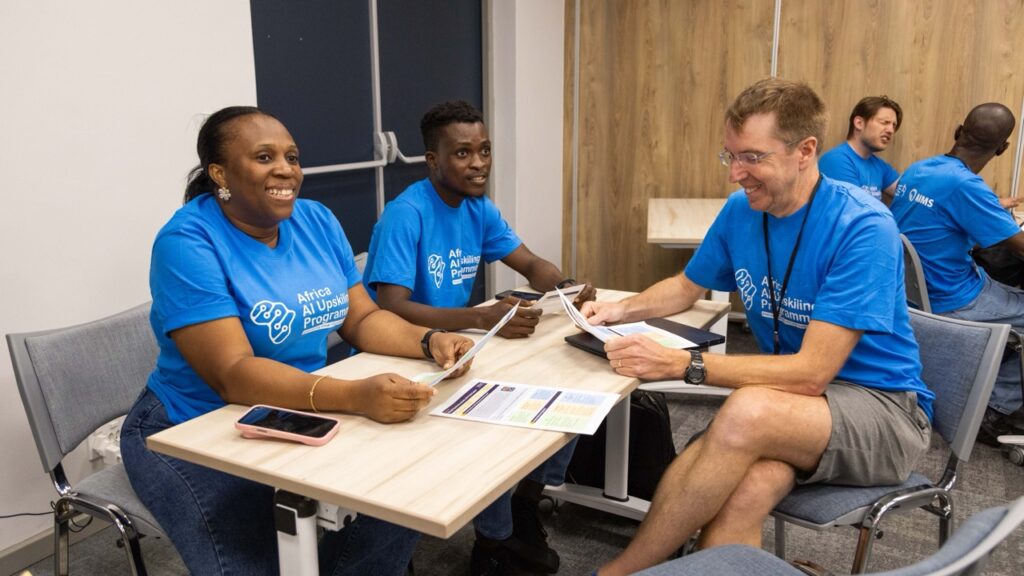
The AI Research Foundations (AIRF) programme aims to strengthen advanced artificial intelligence (AI) education by giving university lecturers the technical knowledge, practical resources, and teaching methods needed to bring complex concepts into their classrooms.
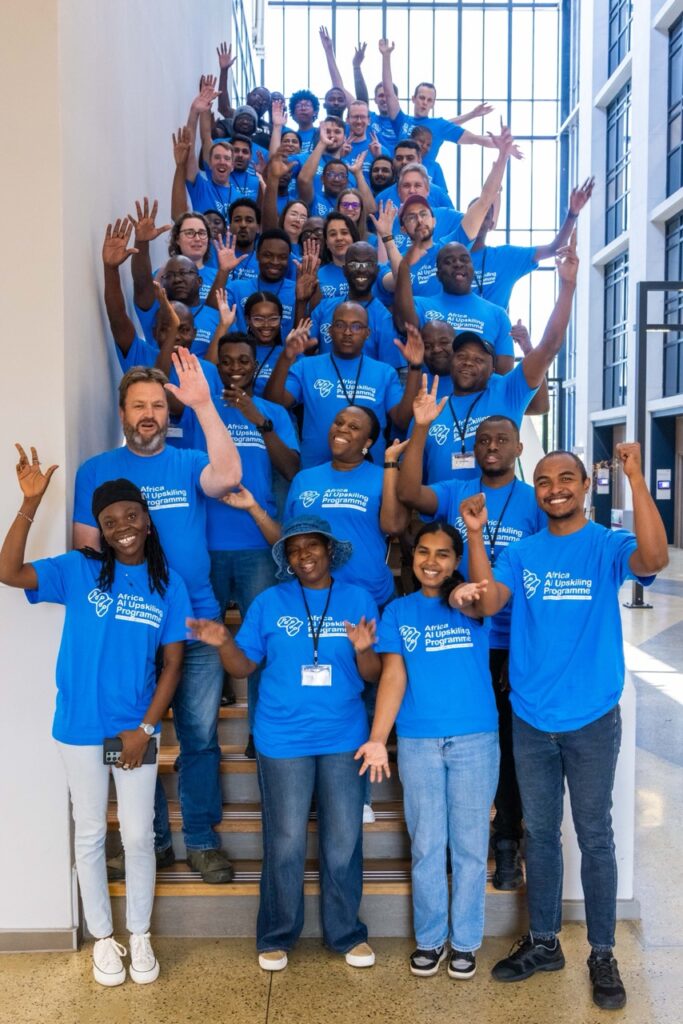
This approach was central to the AIRF Train the Trainer workshop held at Stellenbosch University's Biomedical Research Institute in Tygerberg from 9–13 November 2026. Hosted by the Centre for Epidemic Response and Innovation (CERI), in collaboration with AIMS South Africa, it was the seventh workshop in an established pan-African programme, following earlier training sessions in Nigeria, Ghana, Kenya, and Pretoria.
The programme draws on Google DeepMind's AI Research Foundations curriculum, available online at no cost to students. Funded by Google.org through FATE Foundation, AIRF combines technical AI training with responsible innovation and teaching resources designed to support lecturers across African universities. Further information is available on the AIRF project website.
For Prof Ulrich Paquet, AI Director of AIMS South Africa, the programme's strength lies in combining technical understanding with responsible innovation, while recognising that lecturers need more than subject knowledge to teach AI effectively.
Before attending the workshop, participants completed four online courses covering foundational AI concepts. They also joined a virtual learning community where they could ask questions, receive guidance, and attend weekly live sessions. This preparation allowed the in-person training to focus on deeper understanding, practical exercises, and teaching techniques.
Central to the approach was the flipped classroom model, in which participants engaged with learning material in advance and used classroom time for discussion, problem-solving, and collaborative activities.
Rather than simply learning to use existing AI tools, participants built and trained their own small language models from scratch, exploring the mathematical, statistical, and engineering principles behind them. The training also encouraged critical consideration of the ethical and societal implications of AI development.
Prof Paquet explained that the programme is supported by a comprehensive Lecturer Toolkit, which includes more than 50 hours of adaptable classroom resources, including lesson plans, coding notebooks, lecture slides, and locally relevant case studies. The curriculum also provides more than 60 short technical laboratories, each designed to take no longer than 20 minutes.
Developed with different educational environments in mind, the resources allow lecturers to adapt the material to their institutions rather than developing advanced AI courses entirely from scratch.
For Prof Paquet, the workshop also offered lecturers something often difficult to find in a busy academic environment: dedicated time to develop new expertise and reflect on their teaching.
Drawing on the idea of 'sharpening the saw' from Stephen R Covey's The 7 Habits of Highly Effective People, he emphasised the importance of stepping away from immediate responsibilities to strengthen one's skills.
"In the long run we have to sharpen our saws, and my hope for the workshops is that participants would sharpen their own saws during the week!"
For participants, this opportunity to explore AI in greater depth was one of the workshop's main benefits. Jenicca Poongavanan, a researcher at CERI, particularly valued gaining a better understanding of how large language models (LLMs) function.
"Technically, it was very grounding to look under the hood and understand how large language models (LLMs) are actually built and what drives their behavior, moving past treating them like black boxes."
The emphasis on making complex concepts accessible was equally valuable for Prof Eduan Kotzé, Academic Head of Computer Science and Informatics at the University of the Free State. He highlighted the material on transformers, a fundamental component of modern language models that students often struggle to understand.
"I enjoyed that the focus was on intuition and not pure mathematics."
Alongside this technical understanding, the workshop introduced participants to teaching methods designed to encourage discussion, collaboration, and active learning.
Prof Joicymara Santos Xavier, who collaborates with CERI on digital surveillance research, particularly appreciated the Explain It Back activities, which encouraged participants to discuss and explain complex concepts to one another, supported by worksheets that guided them through technical calculations and principles.
"I find that combining collaborative discussions with hands-on exercises significantly enhances the learning experience."
Responsible innovation was another important aspect of the training. Poongavanan highlighted the structured debates examining AI's benefits alongside potential bias, blind spots, and over-reliance on the technology.
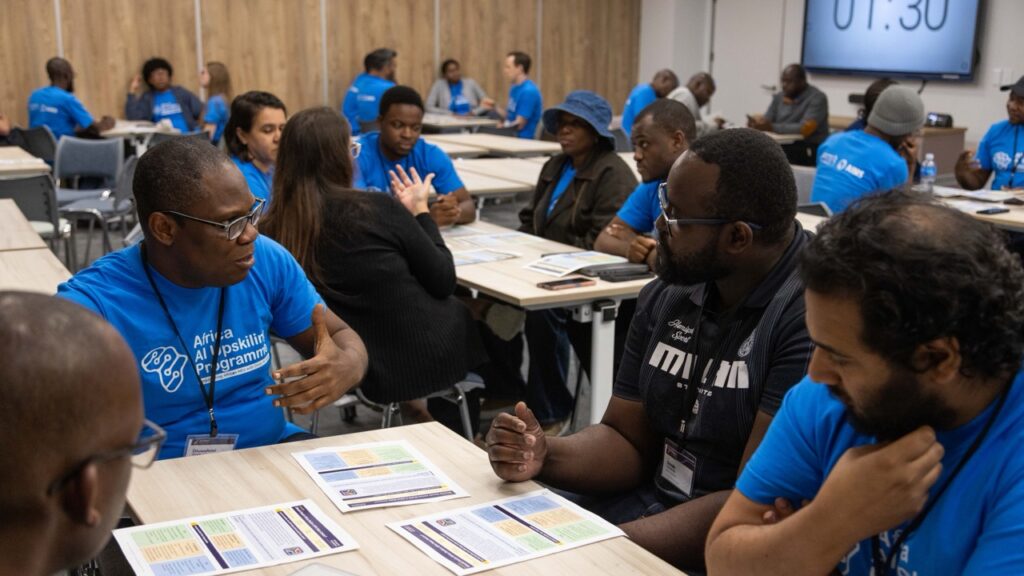

For Duduzile Masuku, a lecturer in Information and Communication Technology (ICT) at the University of Mpumalanga, the ethical and stakeholder considerations were particularly relevant to her research on precision agriculture and sustainable farming. She is interested in developing language models for low-resource languages and adapting existing models to address local challenges.
The value of these experiences extends to how participants intend to apply the training in their own institutions.
At CERI, Poongavanan plans to introduce the interactive teaching activities into laboratory sessions and workshops, while exploring how foundation models and LLM-based workflows could support epidemiological and disease ecology research through the integration of spatial and surveillance data. Prof Xavier similarly intends to apply the knowledge to CERI's digital surveillance projects and adapt the course material to the needs of its students and researchers.
For Prof Kotzé, the resources offer opportunities to strengthen existing undergraduate and honours-level courses at the University of the Free State. He plans to incorporate material into his natural language processing module, while colleagues can draw on resources covering neural networks, gradient descent, and other concepts in machine learning and deep learning teaching.
Masuku also plans to introduce the material into undergraduate teaching at the University of Mpumalanga, supporting students in their third-year capstone projects and preparing them for the university's annual AI hackathon.
"This training will help students and researchers to explore the concepts of LLMs and apply/adapt these concepts to develop LLMs that solve problems in their communities."
These examples illustrate how AIRF aims to extend its impact beyond the lecturers attending the workshops.
According to Prof Paquet, participants continue their work after the workshop by developing their own capstone project designs, adapting the curriculum to their teaching environments and institutional priorities.
Participating universities have committed to teaching hundreds of students using the curriculum, contributing to the programme's ambition of reaching 30,000 students across 30 universities in Ghana, Kenya, Nigeria, and South Africa.
Beyond these targets, the programme aims to strengthen the capacity of African universities to teach and apply advanced AI, supporting research and innovation that responds to local needs.
As Prof Paquet concludes: "Ultimately, we hope that this program plays a role to make the entire research and innovation ecosystem in Africa flourish."
Text: Katrine Anker-Nilssen
Photos: Charlie Sperring
News date: 2026-11-19
Links:
KRISP has been created by the coordinated effort of the University of KwaZulu-Natal (UKZN), the Technology Innovation Agency (TIA) and the South African Medical Research Countil (SAMRC).


Location: K-RITH Tower Building
Nelson R Mandela School of Medicine, UKZN
719 Umbilo Road, Durban, South Africa.
Director: Prof. Tulio de Oliveira