
What Good Is a Breakthrough We Cannot Manufacture?
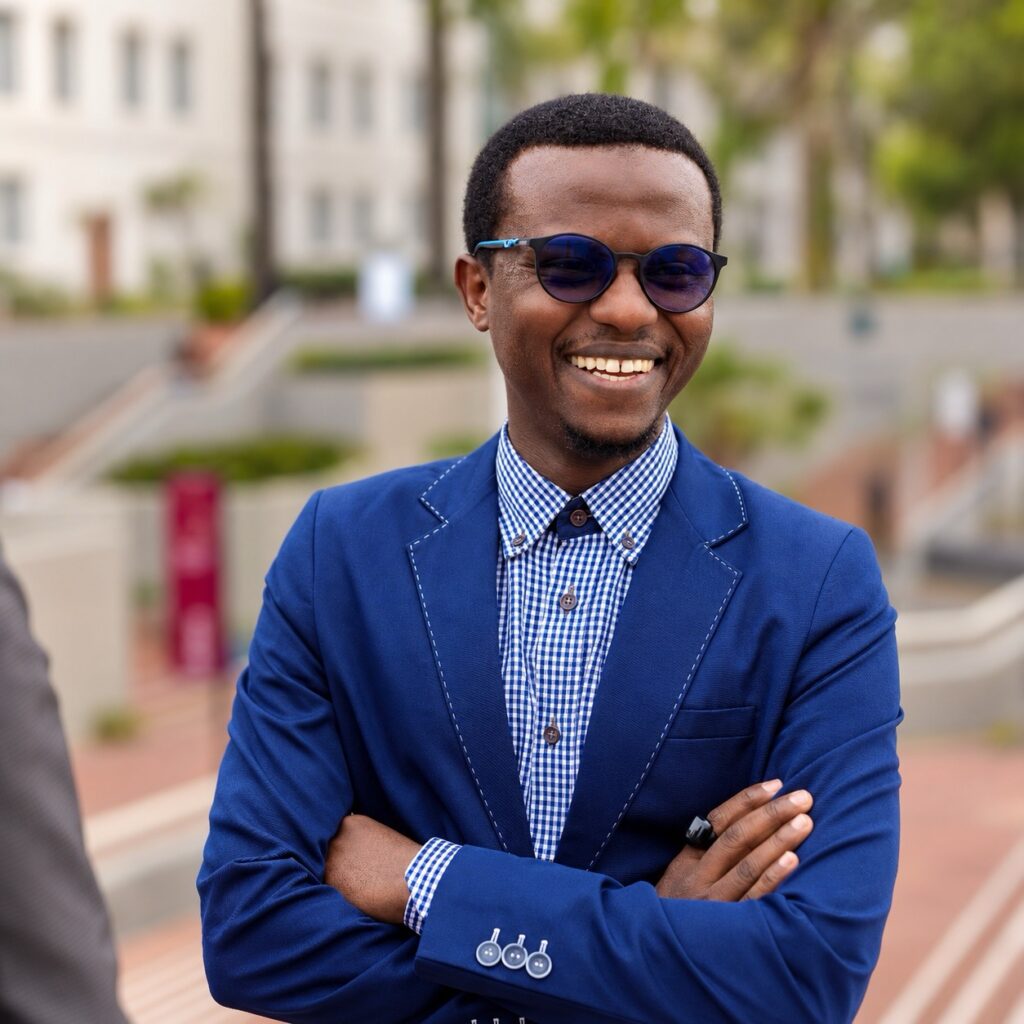
By Abduljalal Yusuf Nadabo, African STARS fellow
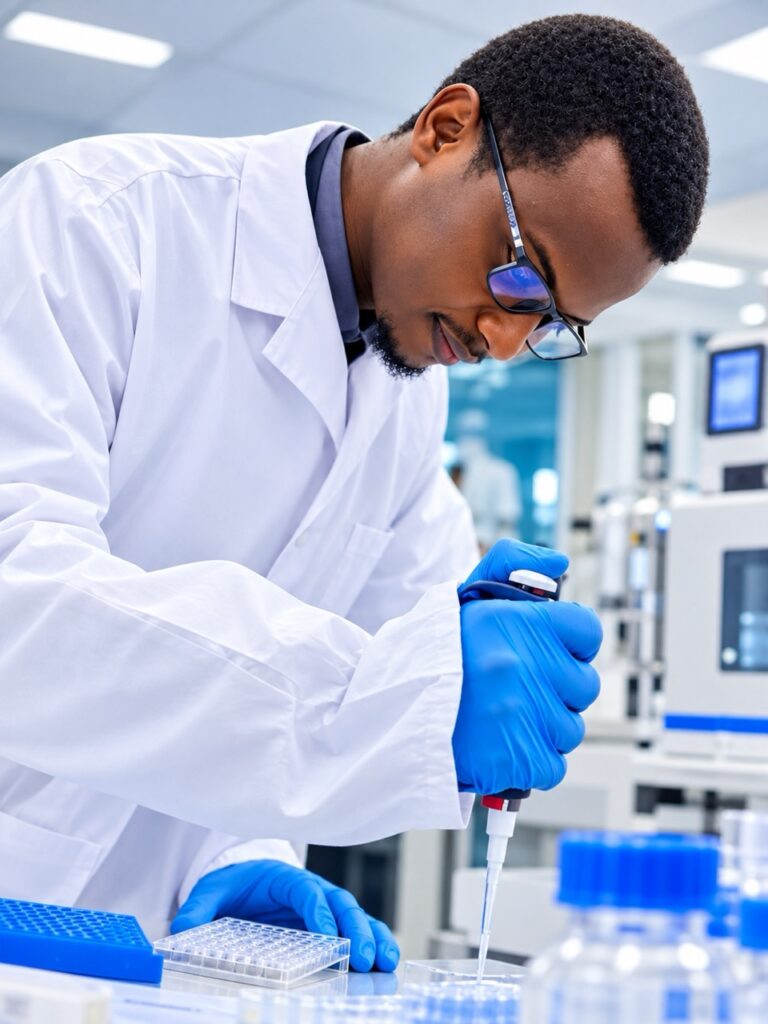
At the precipice of the COVID-19 pandemic, I spent long hours in Nigeria working on hand sanitiser formulations. On paper, the recipe was simple. In practice, achieving the right viscosity required repeated trials and careful adjustment of the balance between the gelling agent and the neutraliser. We had the ingredients, the scientific knowledge, and an urgent public health need. Yet ensuring consistent formulation behaviour from one batch to another was another challenge entirely.
Even a seemingly straightforward pharmaceutical formulation can be humbling.
I often reflect on those experiences when discussing Africa's ambitions in biotechnology and biomanufacturing. Discovering an active molecule in a laboratory and manufacturing a biological product at a commercial scale are two very different achievements. Both require scientific expertise, but science alone cannot sustain an industry.
This became even more apparent during an Africa in the World seminar at Stellenbosch University, where we explored Joe Studwell's book, *How Africa Works: Success and Failure on the World's Last Developmental Frontier*. Industrial development does not happen simply because countries acquire technology or attempt to leapfrog stages. It requires deliberate investment, consistent policies, productive institutions, and patience.
As a pharmacist with experience in pharmaceutical development and supply chain management, I found myself reflecting on what this means for our healthcare. Across Africa, we are developing scientific capabilities in genomics, pathogen surveillance, clinical research, and vaccine development. But how do we translate these capabilities into products that we can manufacture, regulate, and deliver ourselves?
Beyond the Laboratory: The Systems That Make Science Work
One of the most insightful experiences was our visit to the Cape Town headquarters of Lasec Group, a leading supplier of laboratory equipment and life sciences solutions.
Our engagement with CEO Mike Furneaux and his team offered a fresh perspective on what it takes to sustain scientific work. We often celebrate advanced sequencing technologies, gene editing, and laboratory discoveries, yet much of the infrastructure that makes them possible receives far less attention. Behind every successful experiment is a network of people, equipment, and systems working together.
Lasec's decades of work in areas such as diagnostic kit manufacturing, metrology, and laboratory supply logistics brought this home. Its ISO 13485-certified manufacturing operations and ISO 17025-accredited metrology services demonstrate the importance of quality systems and technical support beyond the research laboratory.
My experience in supply chain management makes me appreciate how quickly disruptions can escalate into critical failures. An uncalibrated instrument or delayed medication delivery can disrupt weeks of patient care and tragically cost lives.
Encouragingly, African-led initiatives are beginning to address some of these gaps. Within the Stellenbosch and CERI ecosystem, companies such as FluoroBiotech are working to produce essential biological raw materials locally, including recombinant antigens for diagnostics and enzymes used in mRNA vaccine production. LaunchLab and CERI BIO also support emerging biotechnology companies in developing ideas for commercial application.
Another important lesson came from our engagements with biotechnology founders Dominic Nicholas of Immobazyme and Dr Gestél Kuyler of Nanosene. Starting a biotechnology company is a Herculean task anywhere. In Africa, limited access to financing, specialised infrastructure, technical expertise, and established markets can make the challenge even greater.
Dominic shared Immobazyme's early experience developing enzyme solutions for the sugar industry. The technology had commercial potential, but meeting the market's demand required production capacity that the young company could not easily provide. This presented an interesting dilemma. Having a product that works and customers who want it does not necessarily mean you can manufacture enough to sustain a business. The experience pushed Immobazyme to reconsider how it could apply its protein engineering capabilities, eventually exploring high-value biopharmaceuticals.
By contrast, Dr Gestél Kuyler's experience at Nanosene offered another perspective. The company translates advanced polymer research into tools that help researchers study membrane proteins, important targets in drug discovery. Yet developing a scientifically sound product was only part of the journey. Understanding researchers, navigating institutional procurement, and fitting into existing laboratory workflows were equally important.
What I See Us Building
The African STARS fellowship has made Africa’s pharmaceutical and biomanufacturing sovereignty feel more concrete to me. Scientific breakthroughs and industrial development depend on an ecosystem of people, institutions, infrastructure, financing, and policies working together. I see it in the supplier who delivers a critical reagent, the technician who maintains an instrument, and the founder trying to meet a customer’s requirements while keeping a business running.
Ultimately, what good is a breakthrough we cannot manufacture? And what good is a manufacturing facility we cannot sustain?
If Africa is serious about health sovereignty, we must build the capacity to move from scientific discovery to development, manufacturing, and delivery. The ambition should not simply be to participate in global science, but to contribute meaningfully to it while developing the capacity to meet our own needs.
For governments, this means making industrial policy tangible through reliable infrastructure, financing suited to the time manufacturing takes, and procurement that gives qualified local producers a fair opportunity. For universities and funders, it means supporting the work after a promising research result, including process development and demonstrating consistent quality.
I still remember those hand sanitiser trials. Knowing the formulation was only the beginning. Getting it right, repeatedly, was the work. Our manufacturing ambitions deserve that same patient attention.
News date: 2026-11-25
Links:
KRISP has been created by the coordinated effort of the University of KwaZulu-Natal (UKZN), the Technology Innovation Agency (TIA) and the South African Medical Research Countil (SAMRC).


Location: K-RITH Tower Building
Nelson R Mandela School of Medicine, UKZN
719 Umbilo Road, Durban, South Africa.
Director: Prof. Tulio de Oliveira