
Iron Deficiency Screening at Marconi Beam Primary School
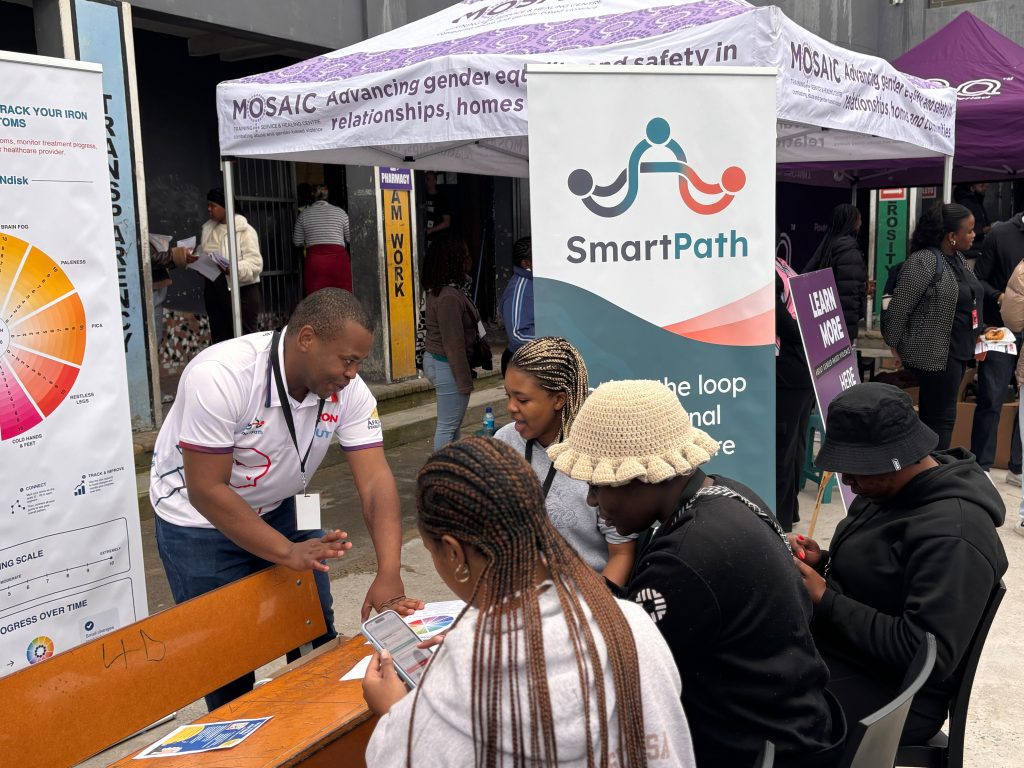
On Mandela Day, 18 July, SmartPath partnered with the Impilo Project's Mandela Day Health Day at Marconi Beam Primary School in the Joe Slovo community.
SmartPath is an integrated care programme developed through the African STARS Fellowship at CERI by fellows Fezokuhle Khumalo, Joel Alukwe, and Harries Molepo. The programme connects communities, healthcare providers, and data to strengthen early detection, treatment, follow-up, and continuity of care. The model was built around a clear gap in the system: by the time a woman needs intravenous iron, she has often already been let down by the system multiple times over. SmartPath was designed to intervene earlier, connecting awareness, screening, diagnosis, and treatment into a single continuous pathway rather than a series of disconnected events.
On the day, the focus was awareness, screening, and follow-up for iron deficiency anaemia among women of reproductive age. Haemoglobin testing alone can miss close to half of iron deficiency cases, which is why the team paired it with point-of-care ferritin testing, giving a fuller picture of each woman's iron status and reducing the risk that early-stage deficiency would go undetected.
Through education, screening, point-of-care haemoglobin (Hb) and ferritin testing, and referral for oral iron, the initiative helped identify women at risk of iron deficiency and anaemia earlier, before they fell through the cracks.
"What has stayed with me most was hearing women describe symptoms they had quietly normalised, constant exhaustion, forgetfulness and brain fog. One woman had initially been told it was anxiety, only for a blood test to later reveal that her iron was extremely low. Once she started taking iron supplements, she finally began to feel like herself again," said Fezokuhle Khumalo. "That interaction reminded me why this work matters. Iron deficiency is not just a laboratory result, it affects how women think, work, care for their families and experience everyday life, and too many live with it without knowing what is wrong."
For Joel Alukwe, community engagement is where the SmartPath pathway begins. It allows the team to identify women earlier, understand the barriers they face, and connect them to coordinated care before complications develop, transforming a single screening event into a continuous journey of referral, treatment, and follow-up. On the day, what stood out to him was how many women had never been screened for anaemia despite already engaging with the health system, a reminder that the challenge is not only awareness but building a reliable pathway from screening through to diagnosis, treatment, and ongoing support.
"What has stayed with me is the woman who had been exhausted for months and had never once been told it could be her iron levels. It was a reminder that the gap is not knowledge on our side, it is access on theirs. She had been carrying that for a long time and nobody had put a name to it. That is the whole reason SmartPath exists," said Harries Molepo.
The team reached roughly 135 women on the day, largely because they showed up at a school on a Saturday, alongside a service the community already trusted. Partnering with the Impilo Project meant reaching women without asking the community to trust an unfamiliar name from scratch.
Looking ahead, the team hopes days like this mark the start of lasting change, with women diagnosed early and reaching care without unnecessary delay, and anaemia screening eventually becoming as routine a part of community health days as blood pressure or HIV testing, rather than a once-off event.
Beyond the test results, the day was also about helping women gain language for symptoms they may have been living with and understand where to go for appropriate care, while supporting community health workers with the knowledge to recognise iron deficiency and guide women into the system.
The architecture behind SmartPath, point-of-care diagnostics, structured referral, and follow-up, was designed to be adaptable beyond iron deficiency alone, with the potential to apply the same connected model to other conditions where care is currently fragmented.
SmartPath worked alongside the Impilo Project, community health workers, clinicians, and the Joe Slovo community to build healthier futures, one woman at a time.
One day. One community. One step towards stronger, connected primary healthcare.
News date: 2026-07-28
Links:
KRISP has been created by the coordinated effort of the University of KwaZulu-Natal (UKZN), the Technology Innovation Agency (TIA) and the South African Medical Research Countil (SAMRC).


Location: K-RITH Tower Building
Nelson R Mandela School of Medicine, UKZN
719 Umbilo Road, Durban, South Africa.
Director: Prof. Tulio de Oliveira