
Chisels and Scientific Money: What SU-CERI's Homecoming Reunion Said About the Future of African Science
Every September, Stellenbosch wakes up. The vineyards turn green, the mountains shake off winter, and Victoria Street fills with people who have not been back in years. This year, more than 3 000 Stellenbosch University alumni from four continents returned for the 11th Annual Homecoming Weekend, travelling from California, New Zealand, London, Kenya and every corner of South Africa for 53 events across three days.
The CERI Fellows and African STARS Reunion was one of them. For CERI, now five years old and with more than 900 trained fellows working across the continent, it was also a first; and a long time coming.
Coming back to a place you never really left
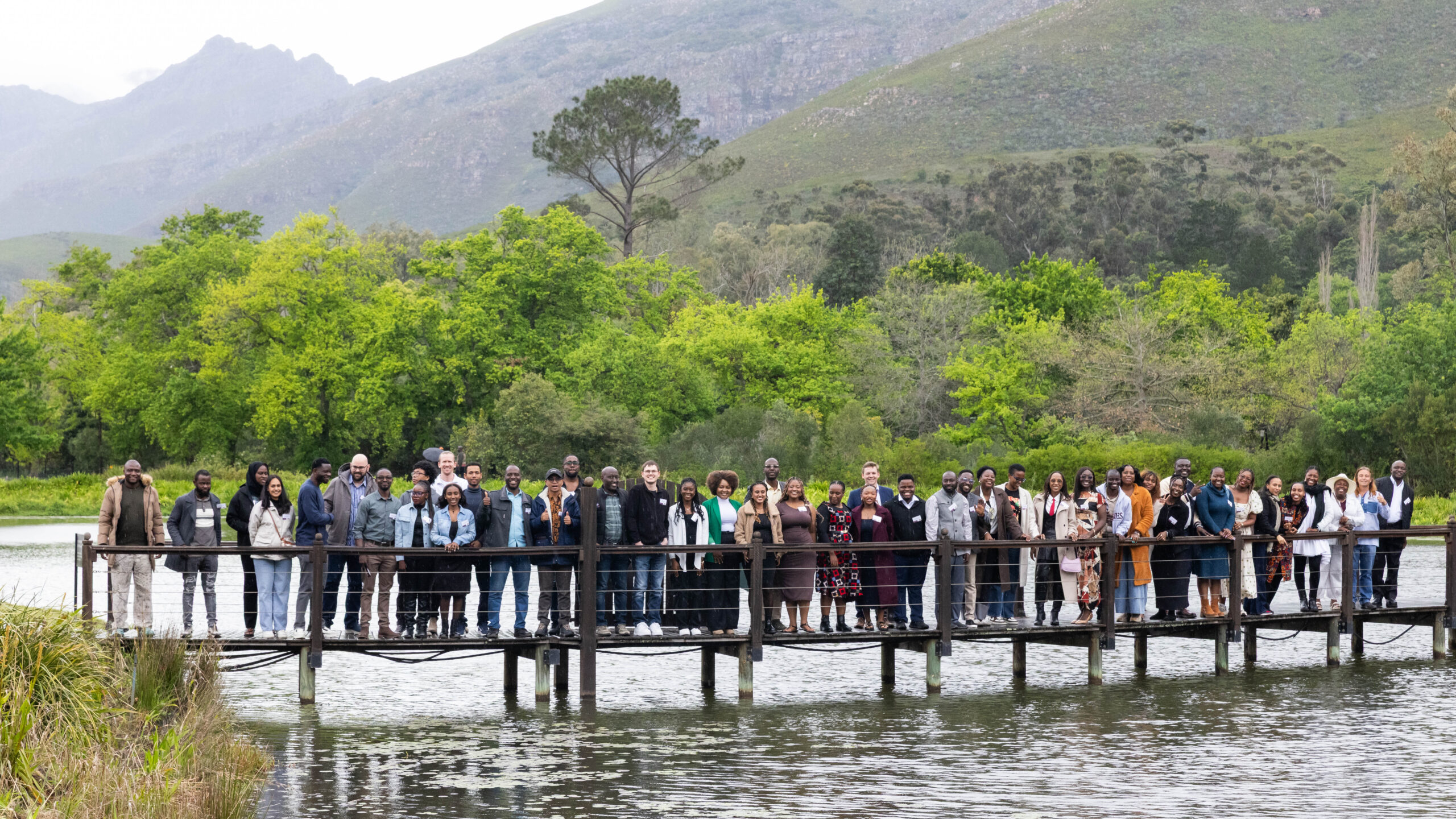
On the morning of Saturday 12 September 2026, more than 50 CERI-trained fellows, African STARS alumni and VEME participants gathered at Postcard Cafe in Jonkershoek for a breakfast that had been five years in the making. They came from different countries, different disciplines and different points in their careers. Some had spent four months at CERI. Others had passed through in ten days. Stellenbosch was not home in the way it is for alumni who lived in res for three years. But the training, the network and the shared purpose had stayed.
CERI Director Prof Tulio de Oliveira opened the morning grounding the gathering in what it represented: five years of building Africa's capacity to detect, respond to and contain its own epidemics, and more than 900 scientists trained in that time, now working across health systems, universities, ministries and research institutions on the continent. The reunion was not a ceremony. It was a measure of what had been built, and a conversation about what comes next.
The chisel and the hammer
One of the fellows in the room offered an image that shaped the morning's conversation. A chisel is nothing without the hammer. It is the strike of the hammer that drives the chisel through stone. Dr Juandre Klopper, an SU MBChB alumnus and current African STARS MBA in Healthcare Fellow at Stellenbosch Business School, recalled a poem about a chisel and a hammer that has stayed with him since his undergraduate years. For the scientists gathered in Jonkershoek, each at a different stage of being shaped, the metaphor resonated deeply.
"To break through stone, the chisel must be willing, prepared and sharpened. If we want to achieve extraordinary things, we must be prepared to do the hard work," he said.
For Klopper, Stellenbosch has been the site of that sharpening more than once; first through medicine, now through the STARS fellowship.
"Stellenbosch University has not only sharpened me through my medical training; it continues to teach and inspire me through the STARS fellowship and the achievements and encouragement of its alumni. It is remarkable what can be achieved when we truly apply ourselves and work together, and here, I have witnessed this firsthand."
Can African scientists make scientific money?
Levi Hosea, a Young Professional Programme fellow from Madagascar currently placed at Institut Pasteur de Dakar through African STARS, brought a different kind of energy to the room. His provocation was simple and drew both laughter and recognition: Africa's scientists need to start making what he called "scientific money"; building and commercialising solutions to the problems the continent is uniquely positioned to solve, rather than leaving that work to others.
Behind the humour was a sharper argument. Scientific discovery without a viable path to market does not reach patients. Training without commercialisation thinking produces knowledge that stays in laboratories. The next generation of African scientists must be as serious about building and funding as they are about research.
"Science is the start, but business is the way. Scientific innovations which lack business implementation will fail." - Levi Hosea
Stay connected, mobilise resources, build together
Dr Richard Gordon brought a complementary perspective to the morning's conversation. Speaking to the fellows directly, he emphasised that the relationships in that room were not incidental to their scientific careers; they were central to them. He encouraged fellows to stay connected with one another and with CERI, to actively mobilise resources and share them across the network, and to see collaboration not as a nice-to-have but as a professional responsibility for anyone serious about advancing African science.
His message was clear: the work of building Africa's epidemic response capacity does not happen in isolation. It happens when scientists who have been trained together continue to find each other, fund each other and open doors for each other long after the fellowship ends.
It was a thread that ran through the whole morning. The fellows in that room carry not just skills but a network with the potential to shape how Africa trains, funds and sustains its scientific workforce for the next generation.
The reunion is the beginning
The breakfast wrapped at midday. Fellows moved on to the Matie Winemakers Showcase at the Alumni Clubhouse, where more than 20 Matie winemakers poured for a crowd of Stellenbosch alumni from across the decades. Later that evening, the group joined hundreds of Maties at the Endler Hall for the Matieland Concert, featuring a special performance by the Stellenbosch University Choir on its 90th anniversary.
Part of a university-wide gathering that for one weekend a year turns Stellenbosch back into the place that shaped them, CERI's reunion added something new to that tradition. A community of African scientists, asking not just where they had been, but where the continent needs them to go next.
CERI turns five. The chisels continue being sharpened.
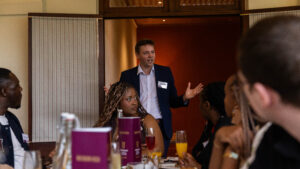
The CERI Fellows and African STARS Reunion was held on 12 September 2026 as part of the Stellenbosch University Annual Homecoming Weekend.
Text: Maambele Khosa
Photos: CERI Media, Charlie Sperring
News date: 2026-09-15
Links:
KRISP has been created by the coordinated effort of the University of KwaZulu-Natal (UKZN), the Technology Innovation Agency (TIA) and the South African Medical Research Countil (SAMRC).


Location: K-RITH Tower Building
Nelson R Mandela School of Medicine, UKZN
719 Umbilo Road, Durban, South Africa.
Director: Prof. Tulio de Oliveira