
TB Genomics Spotlight
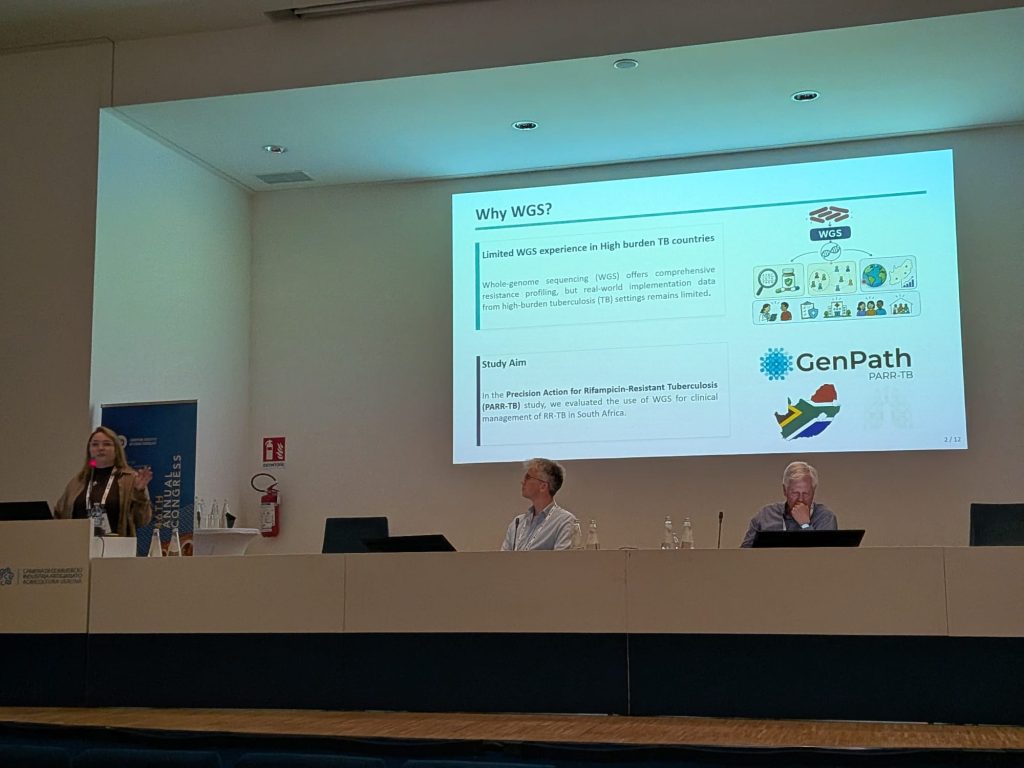
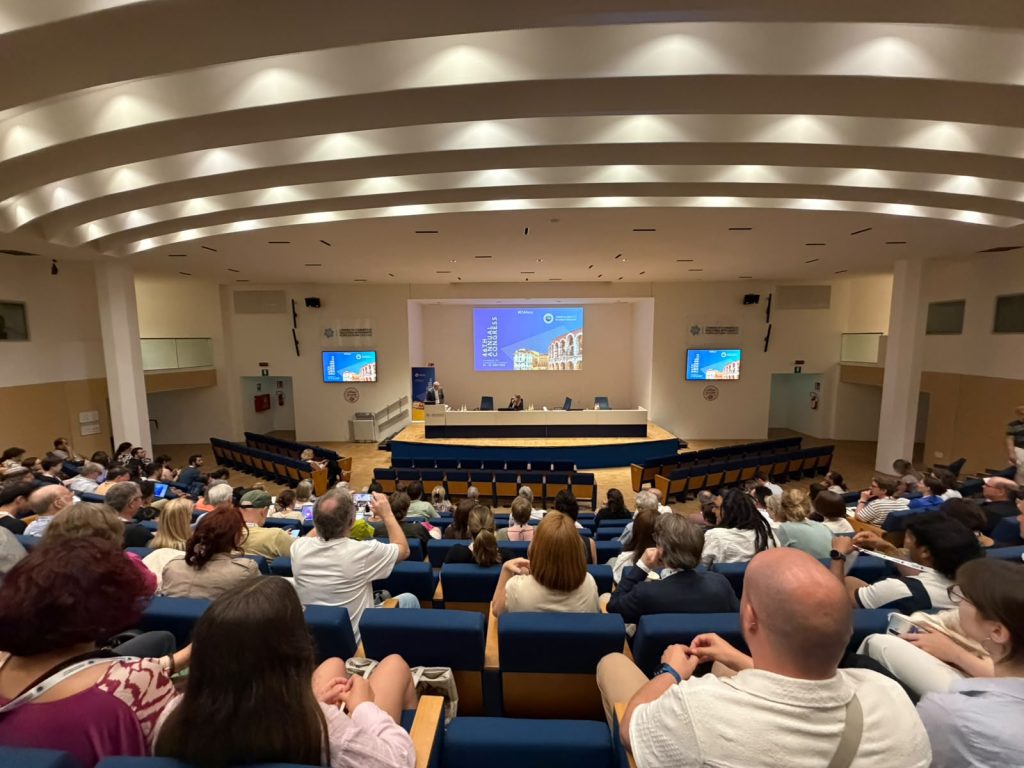
From 22–25 June 2026, I had the privilege of representing Stellenbosch University and the PARR-TB sub-study from the GenPath Africa consortium at the 46th Annual Congress of the European Society of Mycobacteriology (ESM) in Verona, Italy. The ESM is one of the longest-running international scientific meetings dedicated to mycobacterial research and serves as an important forum for researchers, clinicians, microbiologists, epidemiologists and public health professionals working on tuberculosis (TB) and nontuberculous mycobacteria (NTM). The annual congress provides an opportunity to share recent scientific advances, discuss emerging challenges and establish collaborations across disciplines, with participants representing academic institutions, clinical laboratories, healthcare services and industry.
I delivered an oral presentation entitled "Real-time culture-based whole-genome sequencing for clinical management of rifampicin-resistant tuberculosis – insights from the PARR-TB implementation research study in South Africa" during session “Exploring New Strategies for Diagnosis of TB and Other Pathogens” (see the full programme here). The session focused on innovative diagnostic approaches for TB and NTM, with particular emphasis on maintaining diagnostic accuracy in low-incidence, resource-rich European settings. This provided an excellent opportunity to present a complementary perspective from one of the world's highest TB burden countries, where the challenge is not only diagnostic performance but also implementing precision medicine at scale within routine healthcare.
My presentation showcased the ongoing PARR-TB (Precision Action for Rifampicin-Resistant Tuberculosis) implementation research study, which is evaluating the routine use of whole-genome sequencing (WGS) for the clinical management of rifampicin-resistant tuberculosis in three major health districts in the Western Cape, South Africa. Rather than focusing solely on the sequencing technology itself, I highlighted the complete implementation journey, from stakeholder engagement and laboratory workflow development to digital integration, clinical decision support, and communication of genomic results directly to treating clinicians.
One of the key messages I shared was that successful implementation of genomic medicine depends as much on people and systems as it does on technology. Establishing standardised laboratory workflows, strengthening collaborations between diagnostic laboratories, researchers, clinicians, pathologists, and policymakers, and developing an end-to-end digital platform were all essential steps that transformed WGS from a research tool into a clinically actionable diagnostic resource.
Participating in ESM 2026 was an excellent opportunity to exchange ideas with international experts, strengthen existing collaborations, and showcase how South Africa is advancing the implementation of precision medicine for TB. I returned inspired by the scientific discussions and motivated to continue building the evidence needed to support wider adoption of WGS-guided clinical care in high-burden settings.
text: Emilyn Costa Conceição
News date: 2026-07-30
Links:
KRISP has been created by the coordinated effort of the University of KwaZulu-Natal (UKZN), the Technology Innovation Agency (TIA) and the South African Medical Research Countil (SAMRC).


Location: K-RITH Tower Building
Nelson R Mandela School of Medicine, UKZN
719 Umbilo Road, Durban, South Africa.
Director: Prof. Tulio de Oliveira