
AI, Innovation and the Future of Women’s Health
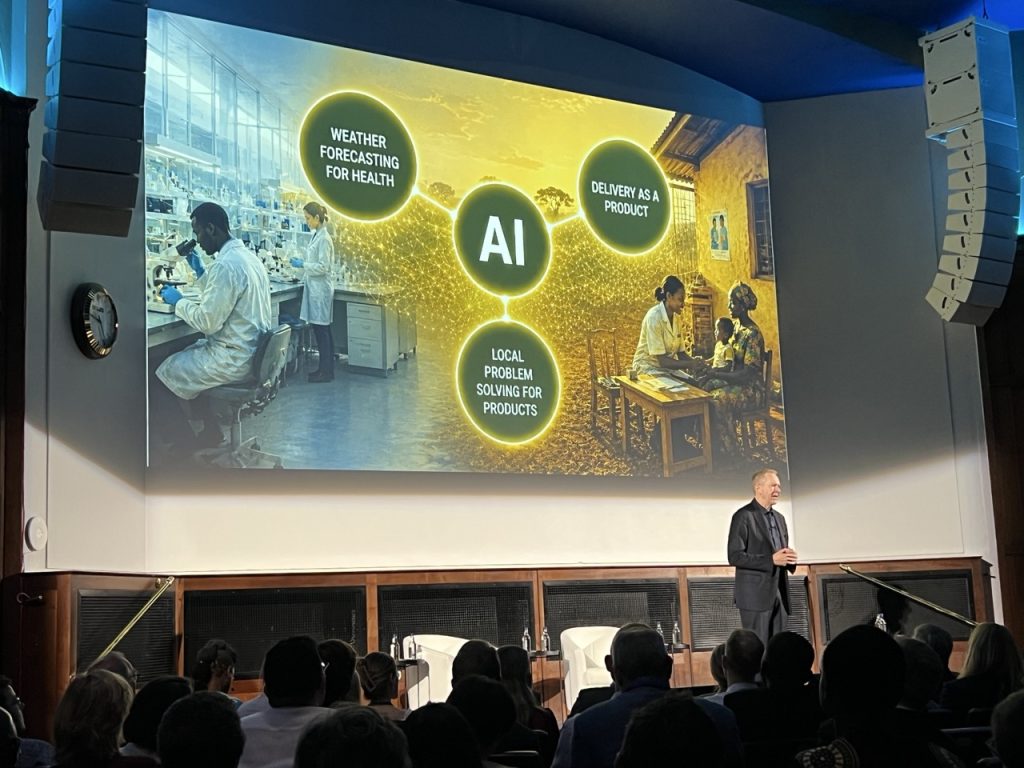
I recently had the privilege of representing CERI at this year’s Gates Grand Challenges Annual Meeting at Imperial College London – a gathering of leaders from the Gates Foundation, Wellcome, CEPI, the Science for Africa Foundation, GSK, Google DeepMind, and other institutions from around the world. Despite representing very different sectors, we were all wrestling with the same question: what is the place of global health in this moment in history?
My connection to this world runs through the Calestous Juma Science Leadership Fellowship, which supports my leadership of the Vaginal Microbiome Research Consortium for Africa (VMRC4Africa) since 2021– investigating the vaginal microbiome across African populations and developing live biotherapeutic approaches for bacterial vaginosis. I’ve recently received Gates Foundation funding to understand pathogenesis leading to pelvic inflammatory disease (PID) and the role of host-directed diagnostics like the genital inflammation test (GIFT) to identify women at highest risk. These programmes tie CERI’s women’s health research directly into the Foundation’s broader priorities: scientific innovation, locally led research, and new solutions for women’s health challenges across Africa.
Three threads ran through the whole week for me:
- AI is changing what scientists can actually do
The one that most blew my mind was the collision between AI and global health, opened by a plenary from Trevor Mundel on AI’s role in the Gates Foundation’s vision for democratising global health. Google’s Gemini for Science ecosystem now spans AlphaFold, AlphaGenome, AlphaEvolve, and Antigravity with Science Skills – allowing AI agents to navigate dozens of scientific databases, integrate knowledge across disciplines, and automate complex research workflows. It goes beyond using software and feels much more like working alongside a team of highly capable scientific collaborators is redefining what is possible in research.
Together, Google’s Science tools go way beyond feeling like a collection of clever AI applications and started to resemble an AI-enabled scientific workbench, where discovery, analysis, hypothesis generation, and workflow automation can happen on my old laptop in one ecosystem.
One of the biggest bottlenecks in research, particularly in Africa, is access to advanced bioinformatics expertise. These tools could put powerful scientific capabilities into researchers’ hands wherever they are, letting scientists ask more ambitious questions and move faster on problems that matter here but have historically been under-researched. AI is no longer just helping us analyse our data – it’s beginning to change what we’re capable of asking and doing as scientists.
- Maternal and child health took centre stage
Maternal and child health surfaced throughout the 4-day programme. New data from Ruanne Barnabas (MGH, Boston, USA) estimated the burden of maternal and neonatal harm attributable to three STIs – chlamydia, gonorrhoea and trichomoniasis – drawing on 178 studies, alongside work from Imperial highlighting the protective role of Lactobacillus crispatus in preventing preterm birth.
The clear headline for me: too many STIs in women remain silent until their consequences are anything but. Most women with common STIs have no symptoms, yet these infections can have profound consequences for their reproductive health and their babies. We now have rapid, point-of-care diagnostic tests for most STIs, but cost remains a major barrier. If we rely on symptoms alone, we will continue to miss most infections. Better access to affordable diagnostics should be a priority for women’s health in Africa.
I also have to mention Allison Footman, who I was thrilled to meet in person – the best science communicator I know, with a genuine passion for destigmatising STIs.
- Climate change is a women’s health issue
The third thread that caught me by surprise was climate and global health, with new evidence linking rising ambient temperatures to increased risk of hypertensive disorders of pregnancy, preterm birth and stillbirth.
While much of the meeting focused on extraordinary advances in AI and biotechnology, one message from the final day of the meeting resonated deeply with me: scientific progress alone is not enough. Alongside innovation lies a quieter, but equally important, challenge: earning and maintaining community trust in an age of misinformation.. We’ve already learnt hard lessons from vaccine hesitancy about what happens when trust lags behind scientific progress – as AI moves into health, we need to carry those lessons with us.
What comes next for CERI
The meeting has already led to tangible opportunities. My exposure to Google Antigravity opened the door to a collaboration with Prof Moses Obimbo at the University of Nairobi, investigating the ecological principles underpinning vaginal microbiome stability across different stages of women’s lives – bringing together my work in non-pregnant women with his pregnancy cohorts. We’ve already submitted a joint grant application to take this forward.
The meeting also opened up opportunities around climate and women’s health: I’ve since applied to the new NEXA funding mechanism, announced at GCAM, for a proof-of-concept study on how extreme heat exposure during pregnancy affects maternal health in Cape Town – combining personal heat monitoring with clinical and microbiome measures, a new research direction for CERI.
AI will change how science is done. We should embrace it.
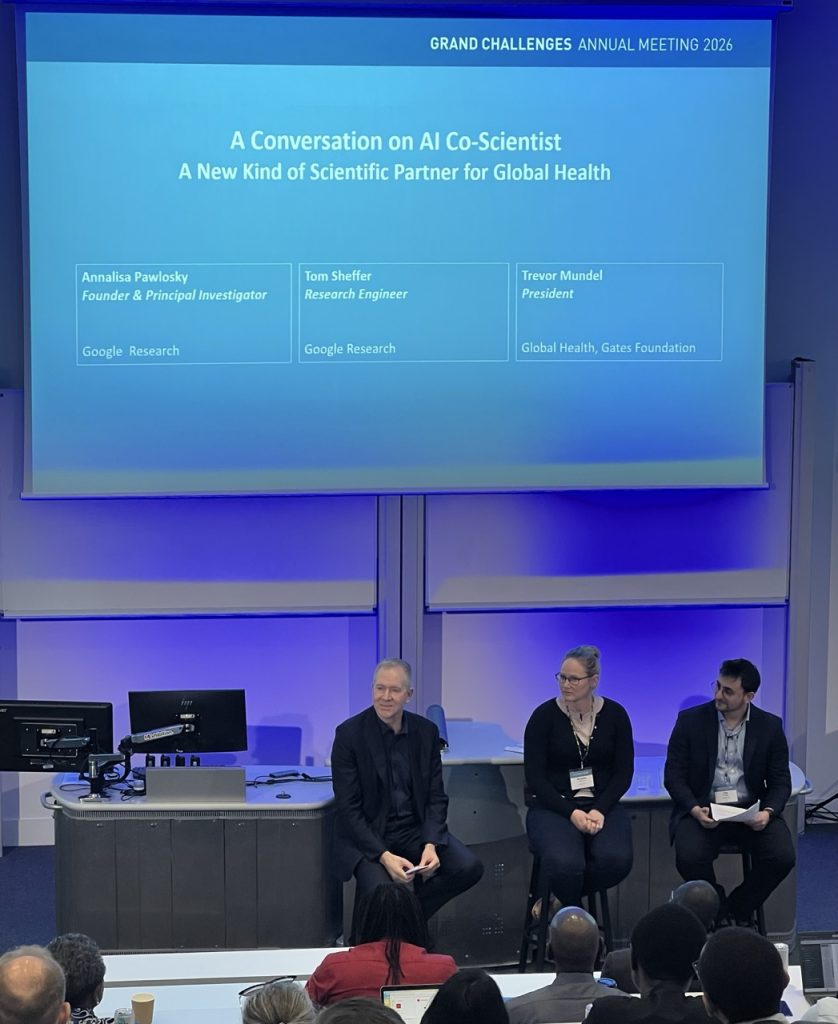
text & photo: Prof Jo-Ann Passmore
News date: 2026-07-30
Links:
KRISP has been created by the coordinated effort of the University of KwaZulu-Natal (UKZN), the Technology Innovation Agency (TIA) and the South African Medical Research Countil (SAMRC).


Location: K-RITH Tower Building
Nelson R Mandela School of Medicine, UKZN
719 Umbilo Road, Durban, South Africa.
Director: Prof. Tulio de Oliveira