
TB Research Exchange
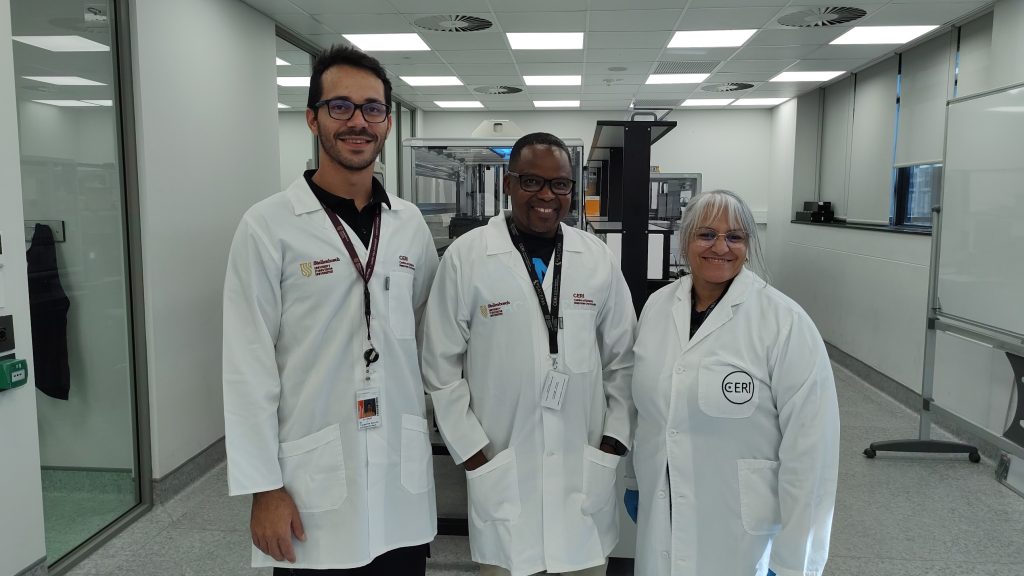
ABOVE: Lucas Evangelista, Lucius Chabuka, and Velda Wentzel (during the training at CERI).
A recent international research exchange hosted at Stellenbosch University highlighted the growing scientific collaboration between Brazil and South Africa in the fields of mycobacteriology, genomics, and diagnostics. As part of the CAPES PDSE/CAPES programme, PhD candidate Lucas Evangelista Marques from the Federal University of São Paulo (UNIFESP) completed a four-month research internship under the supervision of Prof Cristina Viana (UNIFESP) and Dr Emilyn Costa Conceição at Stellenbosch University.
The exchange focused on integrating advanced molecular methodologies for the diagnosis and characterisation of mycobacteria, including MALDI-TOF mass spectrometry, whole-genome sequencing (WGS), and bioinformatics applications. Throughout the programme, Lucas was integrated into the research environment of the Tuberculosis Genomics (TBG) group and the Centre for Epidemic Response and Innovation (CERI), gaining hands-on experience in genomic workflows, laboratory biosafety, and data analysis pipelines.
As part of the training, Lucas completed biosafety induction activities at the Biomedical Research Institute (BMRI) BSL-3 facility, including laboratory safety certification, occupational health procedures, and practical supervised activities involving mycobacterial manipulation. He also participated in weekly scientific seminars and research meetings, contributing to discussions on tuberculosis genomics and mycobacterial research advances.
The exchange also strengthened institutional collaborations through technical visits to the National Health Laboratory Service (NHLS), where strategic planning was conducted for implementing MALDI-TOF MS workflows for non-tuberculous mycobacteria (NTM). Activities included cost assessments, sample collection planning, and discussions with bioinformatics and statistical experts regarding study design and analytical approaches.
On the genomics side, the internship provided training in DNA extraction, sequencing library preparation, and genomic data quality control. Beyond technical training, the collaboration generated substantial academic output. The internship contributed to the development of multiple scientific manuscripts involving researchers from Stellenbosch University and Brazilian institutions, including publications focused on MALDI-TOF MS protocols, multicentre validation studies, and genomic analyses of NTM.
Reflecting on the programme, it is crucial to highlight the importance of international training initiatives for building sustainable scientific networks across the Global South. The collaboration reinforces Stellenbosch University's ongoing commitment to capacity building, technology transfer, and advancing precision medicine approaches for tuberculosis and other mycobacterial diseases.
The internship further demonstrates how partnerships between Stellenbosch University, TBG, CERI, BMRI, NHLS, and Brazilian institutions are contributing to the development of globally connected research ecosystems capable of addressing infectious disease challenges through genomics, bioinformatics, and translational science.
text & photo: Emilyn Costa Conceição
News date: 2026-07-31
Links:
KRISP has been created by the coordinated effort of the University of KwaZulu-Natal (UKZN), the Technology Innovation Agency (TIA) and the South African Medical Research Countil (SAMRC).


Location: K-RITH Tower Building
Nelson R Mandela School of Medicine, UKZN
719 Umbilo Road, Durban, South Africa.
Director: Prof. Tulio de Oliveira