
VEME 2026 Kicks Off in Stellenbosch
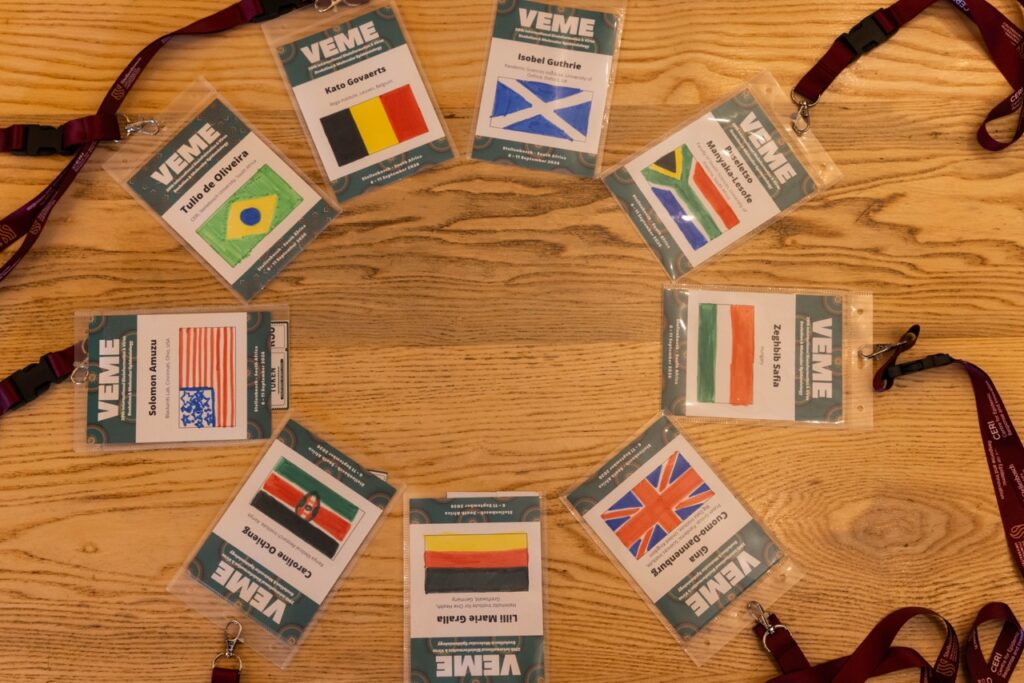
Hosted by Stellenbosch Universityâs Centre for Epidemic Response and Innovation (CERI), VEME 2026 runs until Friday, 11 September at Bertha Retreat. One of the longest-standing bioinformatics training programmes in the field, VEME builds skills in virus evolution and molecular epidemiology.Â
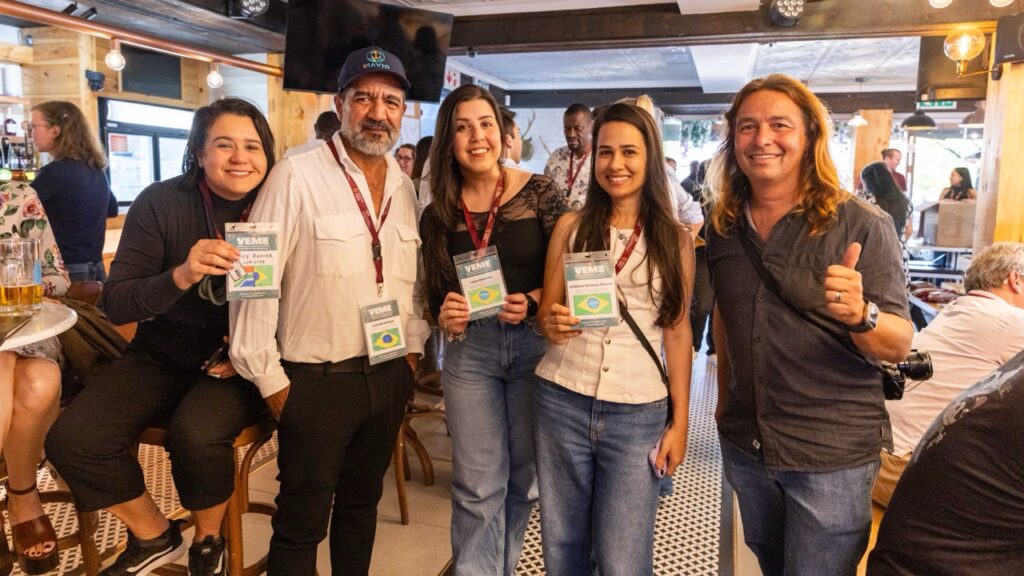
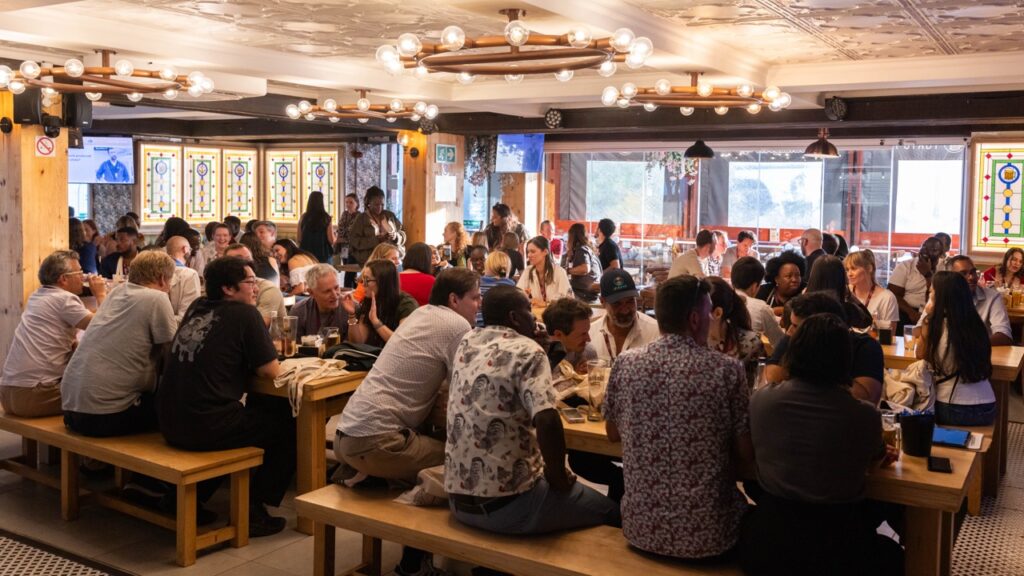
The week officially kicked off last night with a welcome and registration event at Kapstadt Brauhaus in Stellenbosch, where participants had their first opportunity to meet the researchers and instructors they will be working alongside over the coming days.Â
In his welcoming speech, Professor Tulio de Oliveira, CERIâs Director and one of the VEME organisers, noted that several members of the faculty have taught at the workshop for more than 20 editions. For Prof de Oliveira, the combination of experience and enjoyment is central to VEME. âFirstly, this workshop is very well run with incredible, experienced lecturers,â he said. âBut secondly, VEME is also fun. We really want you to network and have lots of fun while youâre here!âÂ
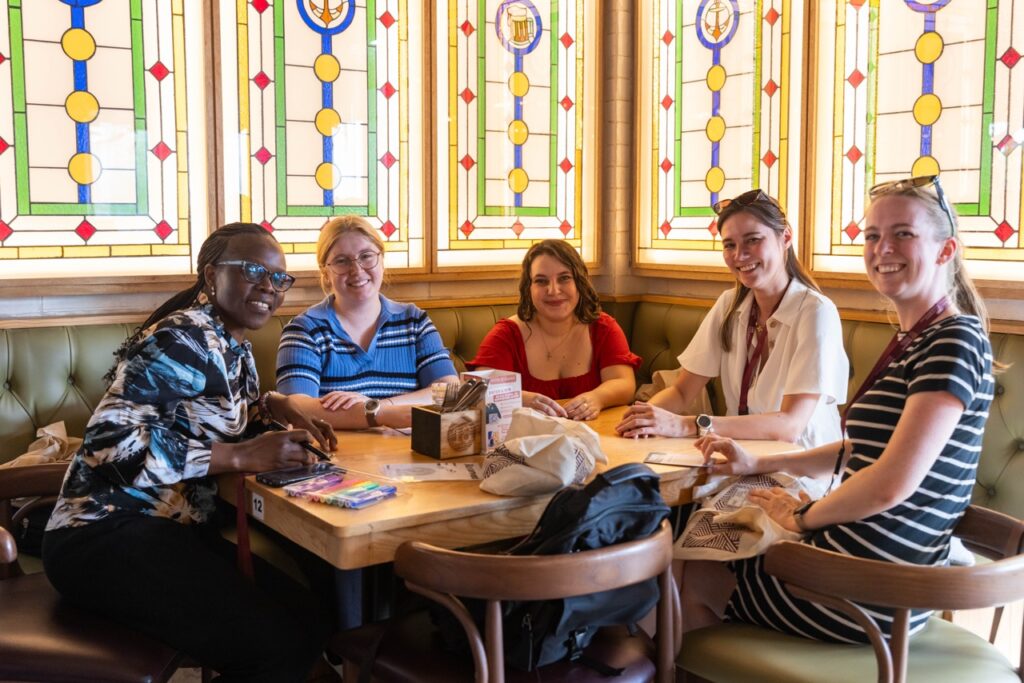
After registration, participants were mixed into teams for a lively pub quiz, with rounds of non-scientific questions taking them out of their comfort zones and giving them a chance to get to know one another before the formal training begins.Â
From today, the focus shifts to the science. Computer-based approaches have become central to modern clinical and biological research, particularly as DNA sequencing technologies generate increasingly large volumes of data. VEME combines theoretical understanding with practical bioinformatics training, equipping participants to work with these data and apply them to research and public health questions.Â
This year's five-day scientific programme centres on two main modules: Phylogenetic Inference and Evolutionary Hypothesis Testing. The first combines theoretical foundations with hands-on experience in phylogenetic analysis and is designed for participants with little or no previous expertise. The second is aimed at researchers already familiar with sequence alignments and phylogenetic trees who want to extend their skills in likelihood and Bayesian inference, including phylogenetic, phylogeographic, and phylodynamic analyses.Â
Participants have also been encouraged to bring their own datasets and engage directly with instructors about their research during the week.Â
This opportunity is a major draw for Caroline Ochieng from Kenya, a PhD student at the Kenya Medical Research Institute whose research focuses on the molecular characterisation and phylodynamics of dengue and chikungunya viruses.Â
âI was excited when I saw the VEME course and what it offers, especially the hypothesis testing module â because it's strongly related to what I'm currently doing,â she said. âI have encountered challenges while analysing data for my PhD, and hope the training will equip me with the skills needed to complete my sequence data analysis.âÂ
Building connections with researchers working on similar problems is equally important to Ochieng. âWe know that pathogens are global problems, so it's not just specific to a country,â she said. âWhen we combine forces and collaborate, we're able to make the world a safer place to live in.âÂ
Established in Leuven, Belgium, in 1995, VEME has since evolved into an international travelling workshop, with editions hosted across Europe, the Americas, Asia, and Africa. South Africa first hosted VEME in Cape Town in 2008, marking the workshopâs first edition on the African continent. More recently, VEME has been held in Panama City in 2022, Stellenbosch in 2023, and BrasÃlia in 2024, before returning to Stellenbosch for its 29th edition this year.Â
For Kieran Chopra from the MRC Centre for Global Infectious Disease Analysis at Imperial College London in the U.K., VEMEâs international environment is an important part of its appeal. Having previously worked on projects involving phylogenetics, he described much of his learning until now as having happened âon the flyâ. VEME offers an opportunity to gain a more complete understanding of the field, while meeting researchers outside his own institution.Â
âMy department at Imperial is quite big, but it's also important to meet people from other places to get new ideas and collaborate,â he said. Another highlight for Chopra is the opportunity to share his own research; everyone is expected to present a scientific poster during the workshop, providing a platform for discussion and feedback.Â
âHaving specialists in the field engage directly with your research offers something different from presenting at a broader scientific conference,â he said. âYou'll have lots of real experts here really looking at what you're doing and giving you great tips.âÂ
And there is another benefit he hopes will come from the week: âI am looking forward to learning things which I didn't know I didn't know.âÂ
While much of the week will focus on sophisticated analytical methods, the broader purpose of the training extends beyond mastering individual tools. The VEME programme aims to equip researchers to address bioinformatics questions, share expertise with their peers, and ultimately contribute to advances in research and public health.Â
On Wednesday, 9 September, the programme will extend beyond the workshop itself with a free Open Lecture on data, AI, and the future of outbreak science. Professor Houriiyah Tegally of CERI will explore how integrated data science can help understand how pathogens emerge and spread, while Professor Moritz Kraemer of the University of Oxford will examine the potential of AI and digital tools for early warning and outbreak preparedness. The hybrid lecture, which is open to the public, will take place at Reitz Hall, Stellenbosch University, from 17:00.Â
VEME 2026 now moves into five days of intensive learning: testing methods, interrogating data, sharing research, and gaining new perspectives on the questions participants have brought with them to Stellenbosch.
For more info, visit the VEME websiteÂ
News date: 2026-09-07
Links:
KRISP has been created by the coordinated effort of the University of KwaZulu-Natal (UKZN), the Technology Innovation Agency (TIA) and the South African Medical Research Countil (SAMRC).


Location: K-RITH Tower Building
Nelson R Mandela School of Medicine, UKZN
719 Umbilo Road, Durban, South Africa.
Director: Prof. Tulio de Oliveira