
Finding My Place in Science
By Dr Natasha Onalenna Moraka-Mankge | African STARS Fellow
As a child, I dreamed of becoming an engineer. I loved taking apart electronic devices to understand how they worked. I never imagined that curiosity would lead me to virology, but my desire to ask questions and find answers has remained central to my journey.
My interest in viruses began during my undergraduate studies at the University of Botswana. I later pursued a Master's degree in Medical Virology at Stellenbosch University, investigating HIV drug resistance in children. I also contributed to Botswana's initial COVID-19 response, learning to adapt when laboratory closures and limited samples disrupted my research.
In 2022, I began my PhD in Medical Sciences at the University of Botswana, supported by the Sub-Saharan African Network for TB/HIV Research Excellence (SANTHE). I also received a university scholarship and worked as a teaching assistant, helping train future medical laboratory scientists.
My research explored HIV-1 subtype C in Botswana, focusing on viral diversity, drug resistance, and transmission. Together with my supervisors, I established Tekodiso, a cohort study investigating HIV among newly diagnosed individuals. The name loosely translates to "to consult", reflecting my desire to consult the virus itself to better understand the epidemic. Tekodiso was among the first studies funded by Botswana's Ministry of Communication and Innovation.
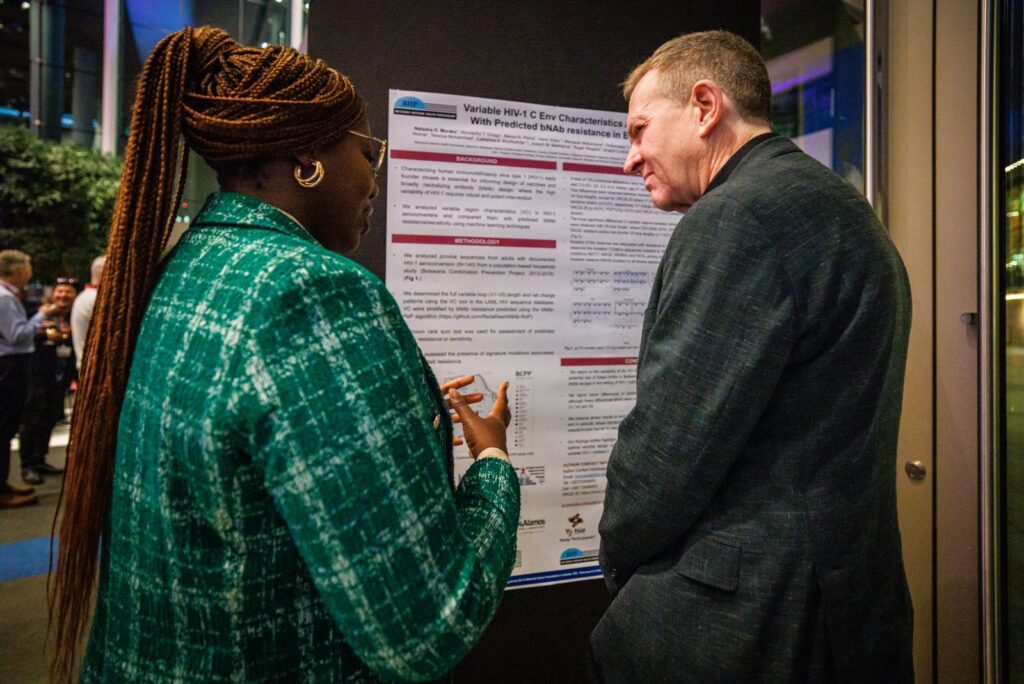
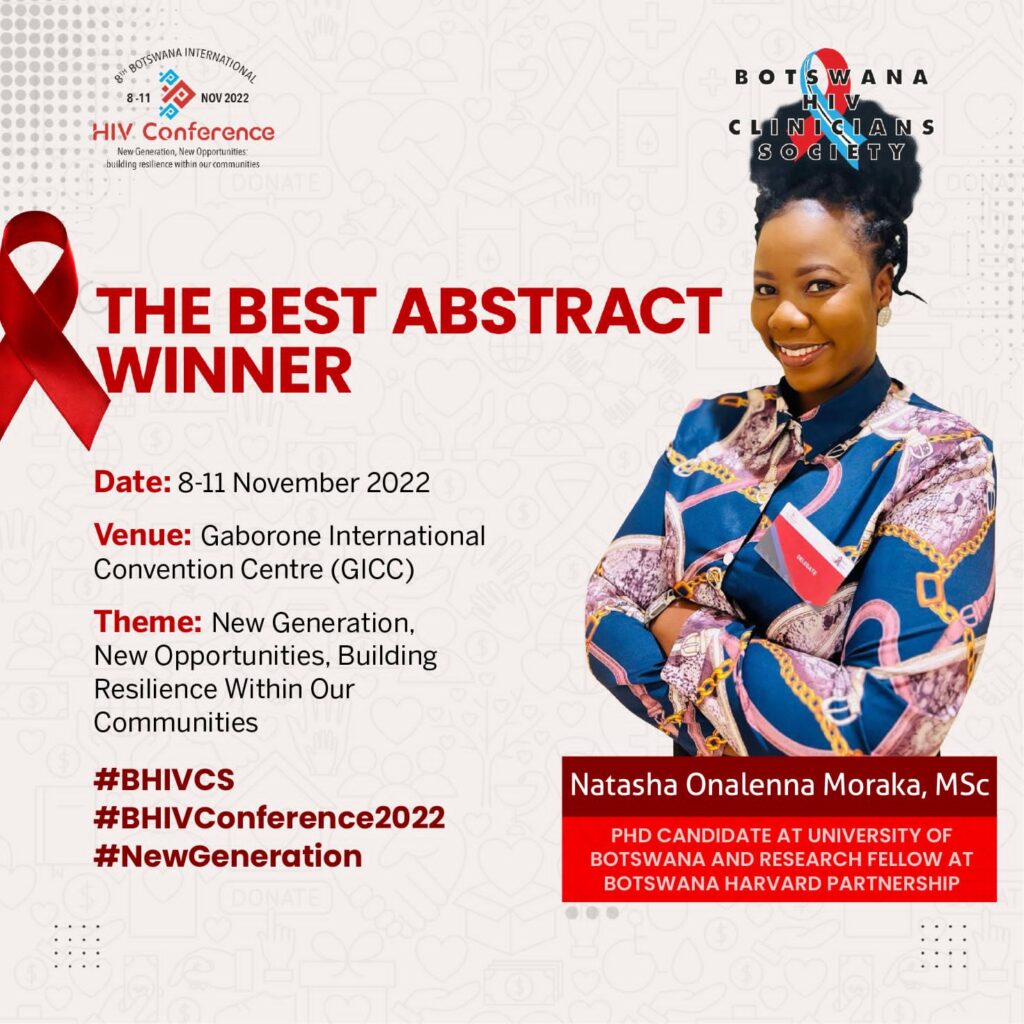
My PhD taught me to find opportunities in setbacks. When laboratory reagents were delayed, I explored machine learning to predict HIV resistance to broadly neutralising antibodies. This work earned the Best Abstract Award at the 2022 Botswana HIV/AIDS Conference, a CROI New Investigator Scholarship in 2023, recognition at international Collaboration for AIDS Vaccine Discovery meetings, and a publication in Scientific Reports.
One of my proudest moments came in 2024, when I received the L'Oréal–UNESCO For Women in Science Sub-Saharan Africa Young Talent Award. I was pregnant when I received the news, and I wept. It was deeply affirming during a period of significant personal change.
Balancing my PhD with marriage and motherhood taught me patience, resilience, and the importance of giving myself grace.
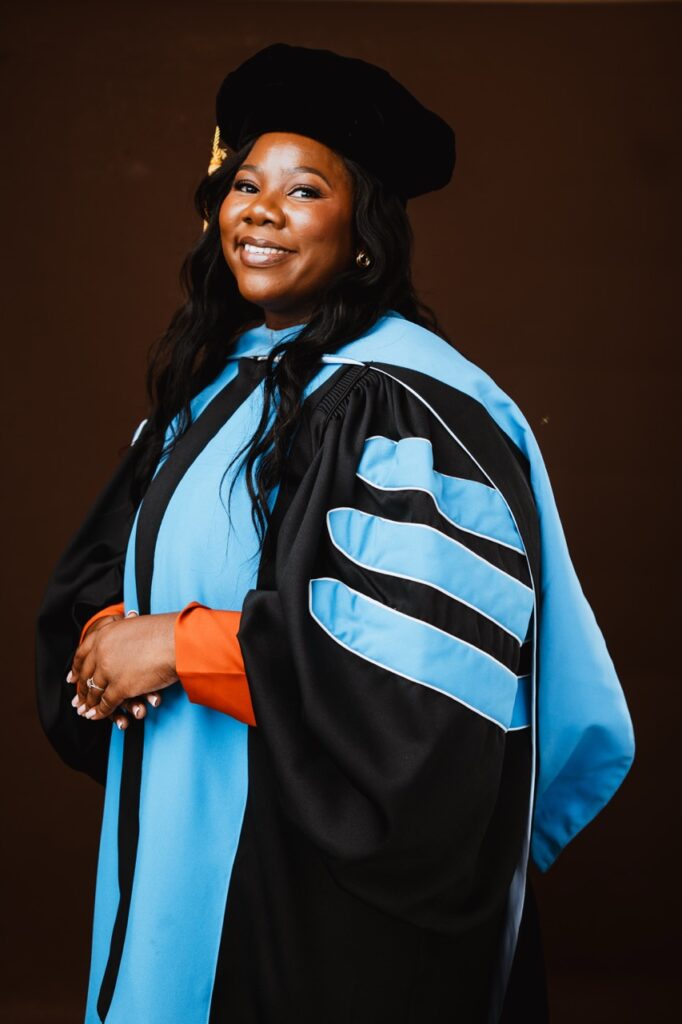
In November 2025, I defended my PhD thesis with no corrections, becoming the first in my family to achieve this milestone. It represented years of persistence and the support of those who believed in me.
My latest chapter is the African STARS fellowship at CERI. Despite my achievements, imposter syndrome sometimes made me question whether I was good enough. Being selected was both surprising and validating, helping me recognise my growth and reflect on the leader I want to become.
I hope to strengthen genomics capacity in Botswana and inspire more young Africans, particularly women, to pursue science.
My advice is simple: remain curious, seek opportunities, and keep going when things do not work out as planned. You do not need every step figured out to begin.
I am still that curious child who wanted to understand how things work. Today, I am asking those questions one genome at a time, hoping our discoveries will help shape the future of HIV research in Africa.
News date: 2026-10-27
Links:
KRISP has been created by the coordinated effort of the University of KwaZulu-Natal (UKZN), the Technology Innovation Agency (TIA) and the South African Medical Research Countil (SAMRC).


Location: K-RITH Tower Building
Nelson R Mandela School of Medicine, UKZN
719 Umbilo Road, Durban, South Africa.
Director: Prof. Tulio de Oliveira