
Harnessing Seaweed: Creating Opportunities for Coastal Communities
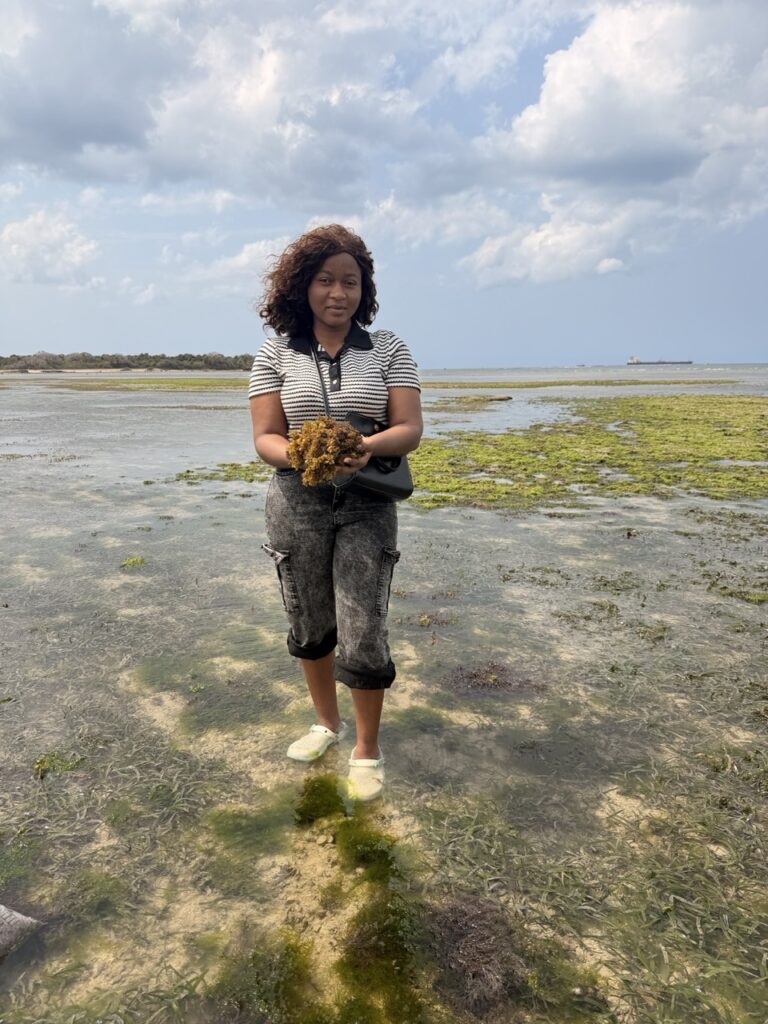
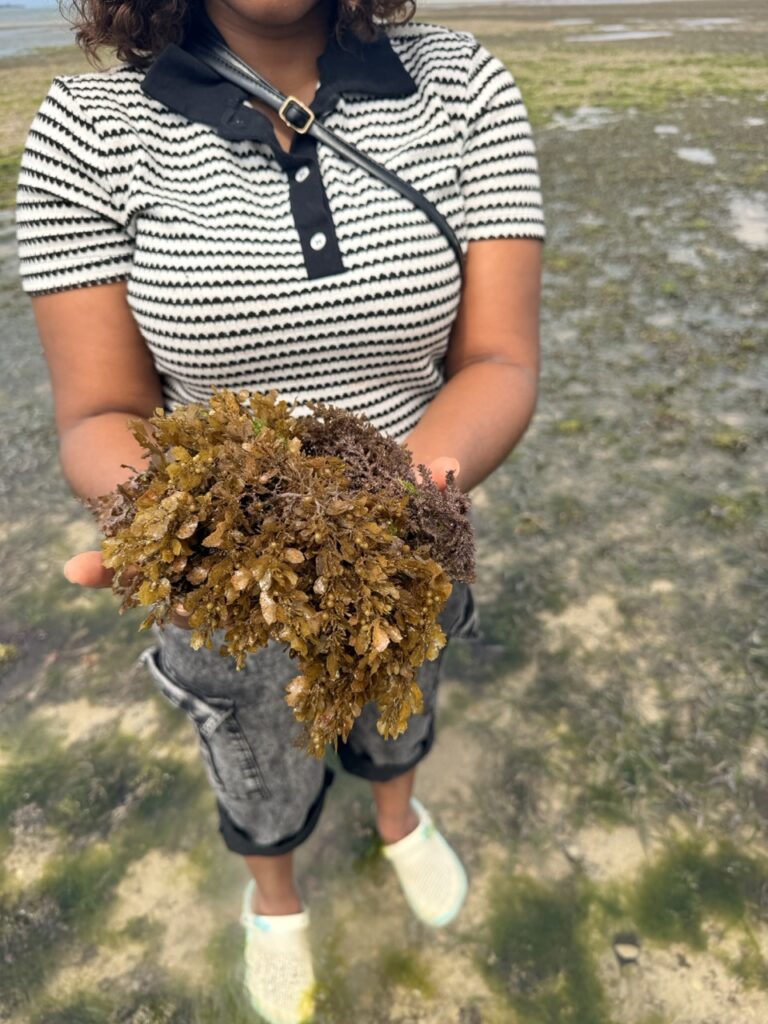
For Grace Bosco, science is about more than developing new technologies. It is about finding solutions to community challenges and ensuring that women have opportunities to benefit from them.
A chemical and process engineer from Tanzania and founder of SAB BIOMANUFACTURES, Grace is exploring the potential of Sargassum, a type of brown seaweed that remains largely underutilised in Tanzania, unlike red seaweed, which is widely cultivated and processed.
"I am interested in using science to solve community problems," she explains. "I see an opportunity to use science to turn this resource into useful products for agriculture and livestock while creating jobs for coastal communities."
Through SAB BIOMANUFACTURES, Grace is investigating how biotechnology, particularly enzyme-based extraction, could recover valuable bioactive compounds from Sargassum for use in agricultural and livestock products, including crop biostimulants and livestock supplements. She is also engaging with the University of Dar es Salaam to support scientific learning and explore the potential of seaweed.
But Grace's ambitions extend beyond developing new products. She has already met with 10 women in the coastal communities of Kigamboni and Bagamoyo, where people have experience in seaweed farming and other coastal activities.
"I want women to understand that seaweed offers opportunities beyond traditional farming and selling," she says.
Grace is now working towards establishing a formal initiative focused on women in the bioeconomy, beginning with these 10 women and eventually reaching more coastal communities.
"Through an initiative focused on women in the bioeconomy, I hope to share knowledge about seaweed processing, biotechnology, and entrepreneurship, helping women participate in emerging industries and find new sources of income."
The possibilities extend across the seaweed value chain, including collection, sorting, drying, transportation, processing and supplying raw materials to biotechnology companies. Further opportunities could emerge in product development, packaging and marketing.
"My goal is to help women participate in higher value activities, earn additional income, and contribute to a growing bioeconomy," Grace explains.
Her participation in the African STARS Fellowship has helped shape her approach, particularly through exposure to new biotechnology applications and mentorship.
"As an African STARS fellow, I have gained more knowledge about using biotechnology to solve community problems, particularly in agriculture. I have learned about the potential of scientific tools such as enzymes and how they can be used to develop valuable products."
The programme has also connected her with mentors, including Professor Brian Fox, who have offered advice and guidance, strengthening her confidence in pursuing her ambitions.
"Through my training and mentorship, I have learned how biotechnology can address community challenges. I want to share this knowledge with women in coastal communities and help them participate in science, innovation, and entrepreneurship."
However, turning this vision into a viable industry will require further research, laboratory equipment, funding and partnerships. Limited awareness of Sargassum's potential remains a challenge, while extraction methods and potential products still need further development and testing. Women will also need training and access to markets to participate meaningfully in the emerging value chain.
Grace hopes to collaborate with research institutions, biotechnology experts, investors, and development partners to advance the science and establish the women's initiative.
Looking ahead, she wants SAB BIOMANUFACTURES to contribute to a sustainable seaweed industry that creates jobs, supports livelihoods, and promotes the responsible use of Tanzania's marine resources.
"Meeting women in Kigamboni and Bagamoyo made me think more deeply about how scientific innovation can benefit coastal communities," she reflects.
"For me, being a woman in science means using the knowledge and opportunities I receive to create opportunities for others. I believe women should not only benefit from new technologies but also participate in developing businesses and creating solutions. By connecting science with local resources, we can create opportunities for women to earn income and contribute to sustainable development."
News date: 2026-10-30
Links:
KRISP has been created by the coordinated effort of the University of KwaZulu-Natal (UKZN), the Technology Innovation Agency (TIA) and the South African Medical Research Countil (SAMRC).


Location: K-RITH Tower Building
Nelson R Mandela School of Medicine, UKZN
719 Umbilo Road, Durban, South Africa.
Director: Prof. Tulio de Oliveira