
Praelexis: Bringing Artificial Intelligence into Real-World Healthcare

Artificial intelligence is opening new possibilities in healthcare, from predicting treatment outcomes and interpreting genetic information to helping older adults remain connected with their families. But turning these possibilities into reliable, practical tools requires more than powerful algorithms.
For South African AI company Praelexis, the challenge is bridging the gap between advanced technology and the everyday needs of healthcare providers, researchers, and patients.
Established in 2012, Praelexis works across industries to help organisations transform complex data into actionable insights. Its expertise spans predictive modelling, computer vision, generative AI, and intelligent automation, with applications in sectors ranging from agriculture and financial services to biotechnology and healthcare.
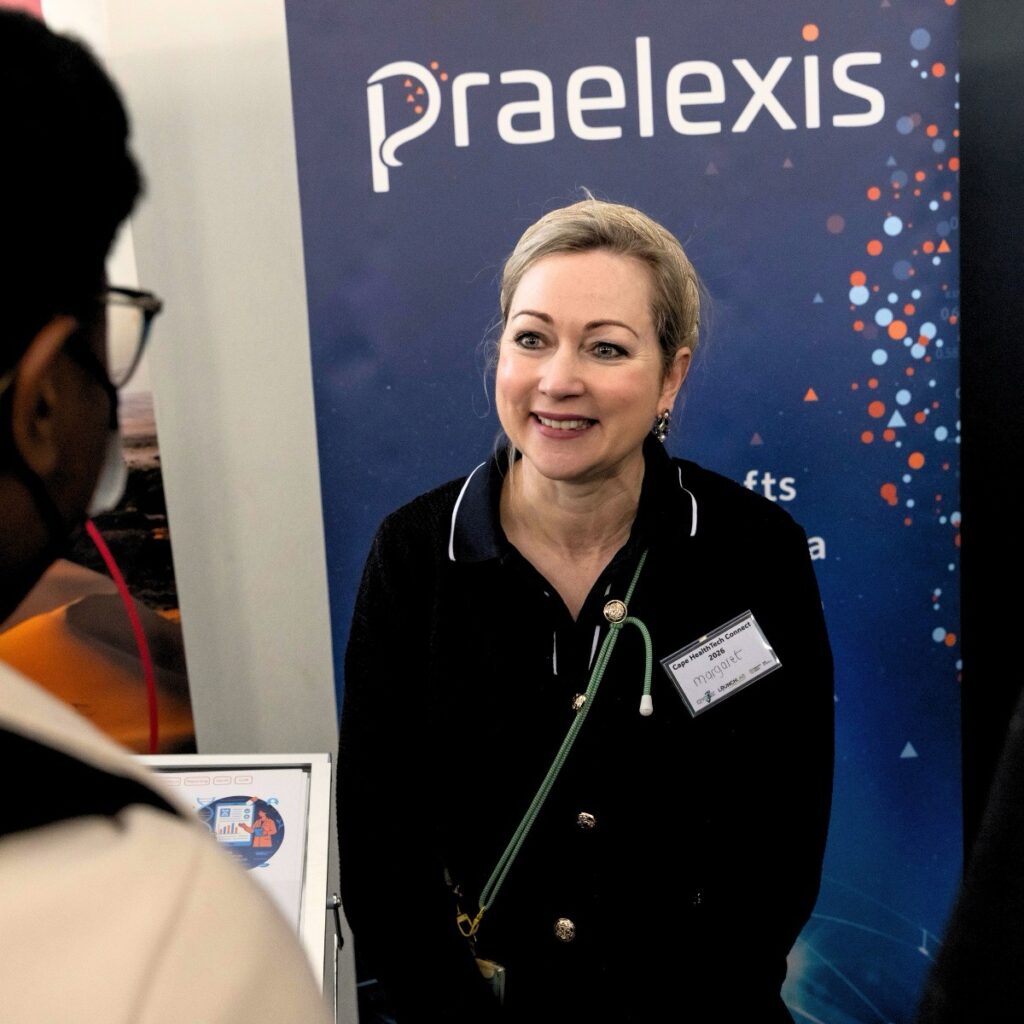
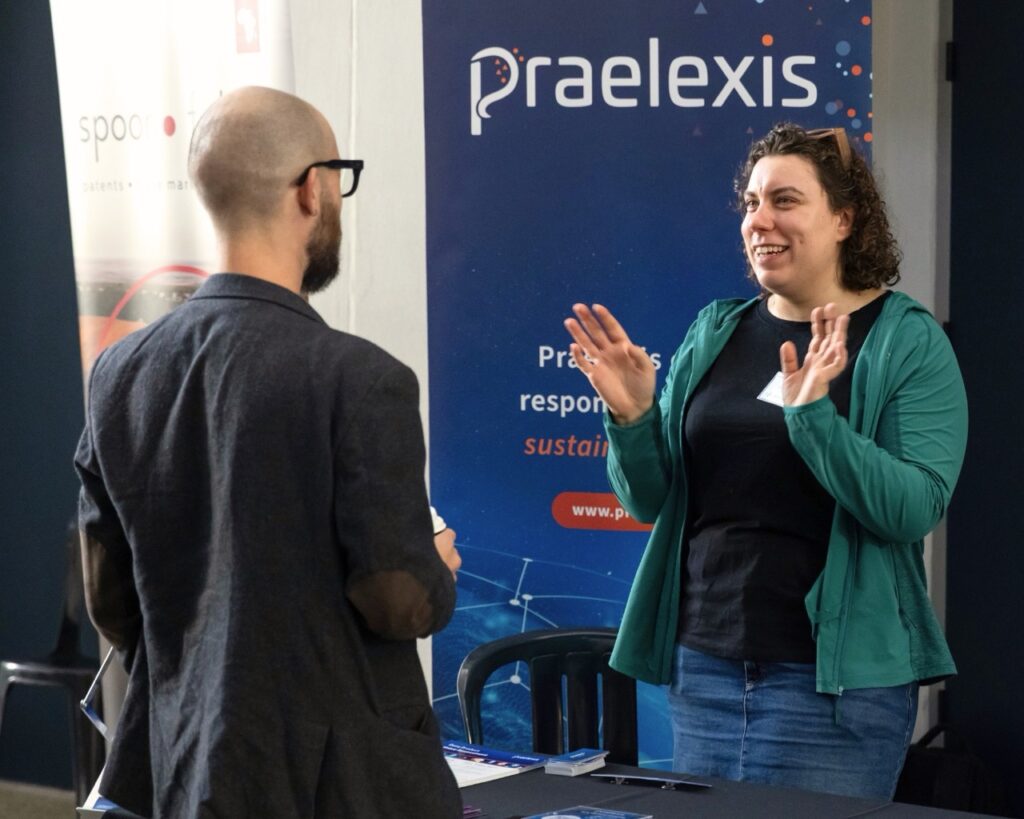
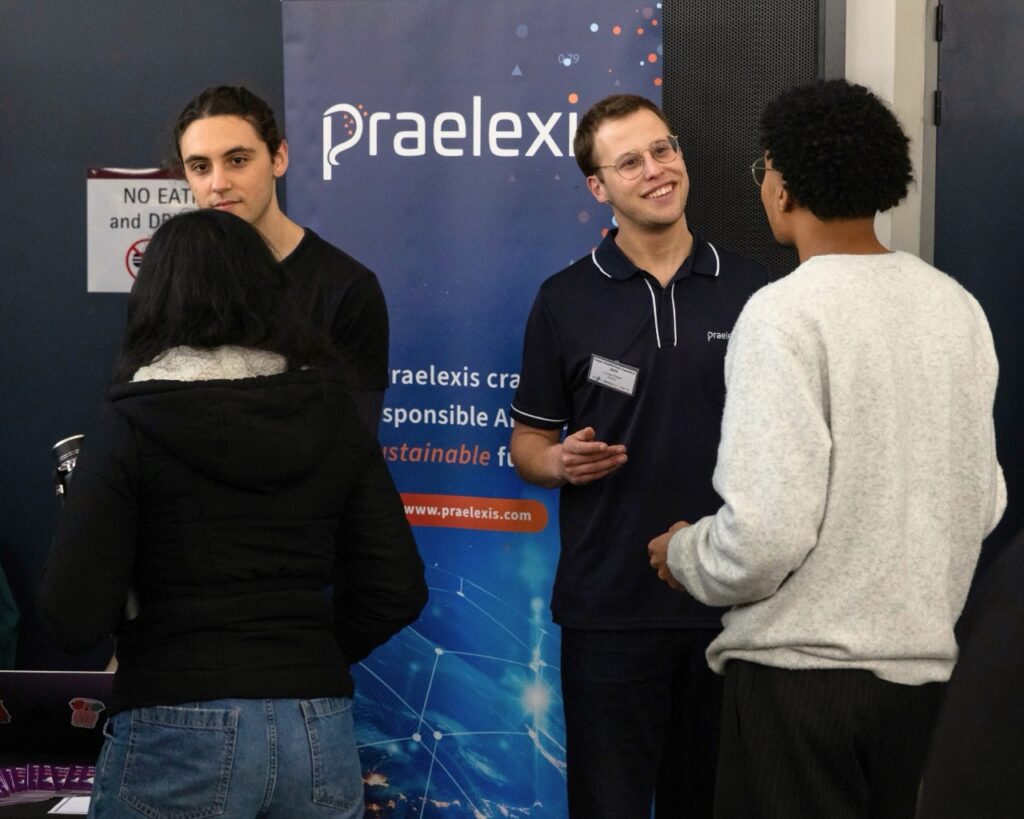
Praelexis brought this perspective to Cape HealthTech Connect 2026, held in September at Stellenbosch University's Biomedical Research Institute. While much of the healthtech conversation centres on developing new technologies and bringing them to market, Praelexis highlights another essential ingredient: the ability to turn complex health data into tools that researchers, clinicians, and patients can actually use. This complements SWEAT Africa's broader ambition to connect scientific expertise with the skills and partnerships needed to translate innovation into impact.
Praelexis's work in health and life sciences demonstrates how different AI approaches can address distinct challenges.
In reproductive medicine, the company has worked on predictive models that combine medical ultrasound imaging and clinical data to estimate the probability of successful embryo implantation during in vitro fertilisation (IVF). Using computer vision, the technology identifies anatomical structures in ultrasound scans and analyses patterns that may help inform clinical decision-making.
In personalised healthcare, Praelexis has worked with Intelligene, a genetics platform that uses genetic information to generate individualised wellness and pharmaceutical recommendations. The system combines genetic data processing, advanced decision logic, and generative AI, with recommendations updated as new scientific evidence becomes available.
A third application, Ria, takes a different approach. Designed as an AI companion for older adults, the voice-based application helps users preserve their life stories while supporting communication between families and caregivers.
Rather than relying on a single AI model, Ria uses a multi-agent system in which several AI capabilities work together. Through natural conversations, it can help build an evolving biography, identify care preferences and routines, and support reminders and scheduling.
The emphasis on voice interaction is deliberate. For older adults who may be less comfortable with smartphones, speaking naturally can be more accessible than navigating conventional applications.
These examples illustrate a central principle in Praelexis's approach: the technology must be designed around the people who will use it.
As the company explains in a recent blog post on why AI projects fail to reach production: "The biggest thing companies forget is change management. Now that I have this new technology, how can I ensure people use it rather than defaulting to their old ways?"
The technical challenges are equally significant. Healthcare applications depend on reliable, representative data, careful validation, and integration with existing systems.
In its IVF work, for example, suitable ultrasound data was scarce and expensive to collect. The team also had to rebuild the underlying data and software framework because an earlier study had not made usable code available.
Praelexis says its approach to reliability includes testing models against historical data, incorporating confidence scores into predictions, and monitoring performance after deployment, with retraining as new data becomes available. The company also emphasises compliance with relevant data protection and regulatory frameworks.
For African healthcare, the representativeness of data is another important consideration. Through its partnership with Intelligene, Praelexis is involved in work that places particular emphasis on African genetic data, an important consideration when developing personalised health technologies for diverse populations.
Ultimately, the company sees collaboration as fundamental to successful innovation.
Rather than assuming that technology providers know which solutions healthcare systems need, Praelexis emphasises working closely with the researchers, clinicians, and organisations confronting those challenges.
Its approach reflects a broader lesson for Africa's growing healthtech ecosystem: the value of artificial intelligence lies not simply in what it can predict or automate, but in whether it can be translated into solutions that people trust, adopt, and use.

News date: 2026-10-25
Links:
KRISP has been created by the coordinated effort of the University of KwaZulu-Natal (UKZN), the Technology Innovation Agency (TIA) and the South African Medical Research Countil (SAMRC).


Location: K-RITH Tower Building
Nelson R Mandela School of Medicine, UKZN
719 Umbilo Road, Durban, South Africa.
Director: Prof. Tulio de Oliveira