
Southern Edge Bio: Automating the Future of Clinical Trials in Africa
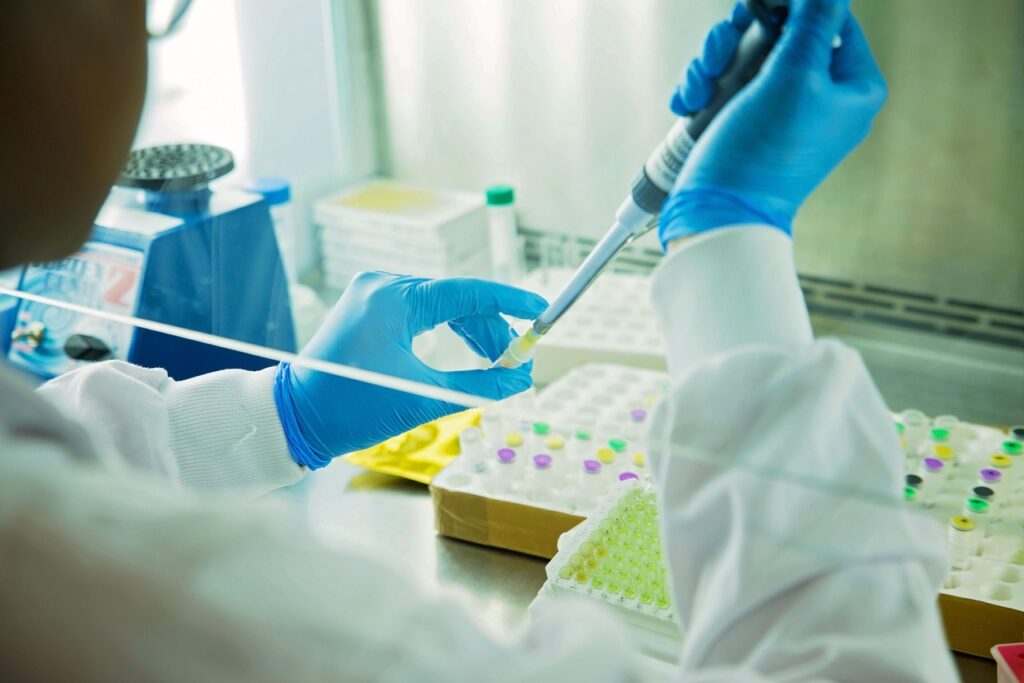
Africa faces a persistent challenge in clinical research: conducting large-scale trials requires specialised laboratories, trained personnel, and infrastructure that are not always available where studies are needed most. Even something as routine as preparing a blood sample for analysis can become a significant bottleneck.
Dr Munyaradzi Musvosvi, Chief Research Officer at South African TB Vaccine Initiative, is developing automated sample-processing technology designed to overcome these barriers, making immune monitoring in clinical trials more efficient, consistent, and accessible.
The venture he is building, Southern Edge Bio™, was among the several featured at Cape HealthTech Connect 2026, held on 17 September at Stellenbosch University's Biomedical Research Institute. The event brought together researchers, entrepreneurs, investors, and industry partners to explore how innovations such as these can move from scientific development into practical application, reflecting SWEAT Africa's focus on research-driven entrepreneurship.
For Dr Musvosvi and his team, the challenge lies in a critical but often overlooked stage of clinical research: what happens to a biological sample between collection and analysis.
In vaccine studies, for example, blood samples are collected before and after vaccination to measure immune responses. Before these responses can be analysed using techniques such as flow cytometry, samples must undergo carefully timed preparation steps, often within hours of collection.
These procedures typically require trained laboratory personnel, specialised equipment, and precise handling of reagents. Differences in processing time, technique, or storage conditions can introduce variability, affecting the quality and comparability of results.
"I think the biggest bottleneck is throughput," explains Dr Musvosvi. "Samples have to be processed manually and individually, so the number of samples a lab team can handle at once is limited, and this gets more complicated when participants arrive at different times."
To address this, they have developed a custom automated liquid-handling system that performs the initial steps of immune-response sample preparation. The device stimulates blood samples with a specific stimulus and prepares them for storage at –80°C, allowing them to be transported to central laboratories for subsequent flow cytometry analysis.
A second platform is also under development, with the aim of automating additional processing steps so that samples can be prepared for flow cytometry without manual handling.
While the underlying intellectual property remains under review, the company's ambition is clear: to enable scalable, decentralised sample processing that reduces dependence on specialised laboratory infrastructure.
"Automation can improve reproducibility because every sample is processed the same way, regardless of who is doing the processing," Musvosvi explains. "It increases throughput, since many more samples can be handled without needing more people, and it can reduce costs."
Developing reliable automation for biological samples presents its own engineering challenges. The technology must perform consistently across different laboratory environments, including settings where temperature fluctuations and electricity interruptions may occur.
The team is still in the prototyping phase, but its working prototype has been tested in both laboratory and field settings. Early comparisons indicate close agreement with conventional manual processing. The next step is evaluation by external users to assess performance under independent operating conditions.
The potential implications extend beyond laboratory efficiency. More accessible sample processing could enable clinical trials to operate at sites that currently lack the personnel, equipment, or resources required for complex immune monitoring.
For Musvosvi, this is particularly important for Africa, which accounts for fewer than 3% of clinical trials worldwide, according to research published in Nature Communications in 2024, despite having the world's most genetically diverse population.
"A device like this could be game changing for Africa," says Musvosvi. He draws a parallel with the transformation of telecommunications across the continent. "What we are building is similar to how cell phones let Africa communicate widely without needing traditional infrastructure like landlines."
By reducing the infrastructure required to conduct sophisticated immune monitoring, Dr Musvosvi hopes to help expand Africa's capacity to conduct high-quality clinical research, strengthen local scientific capabilities, and develop solutions to the continent's health challenges.
[caption id="attachment_3395" align="alignnone" width="763"]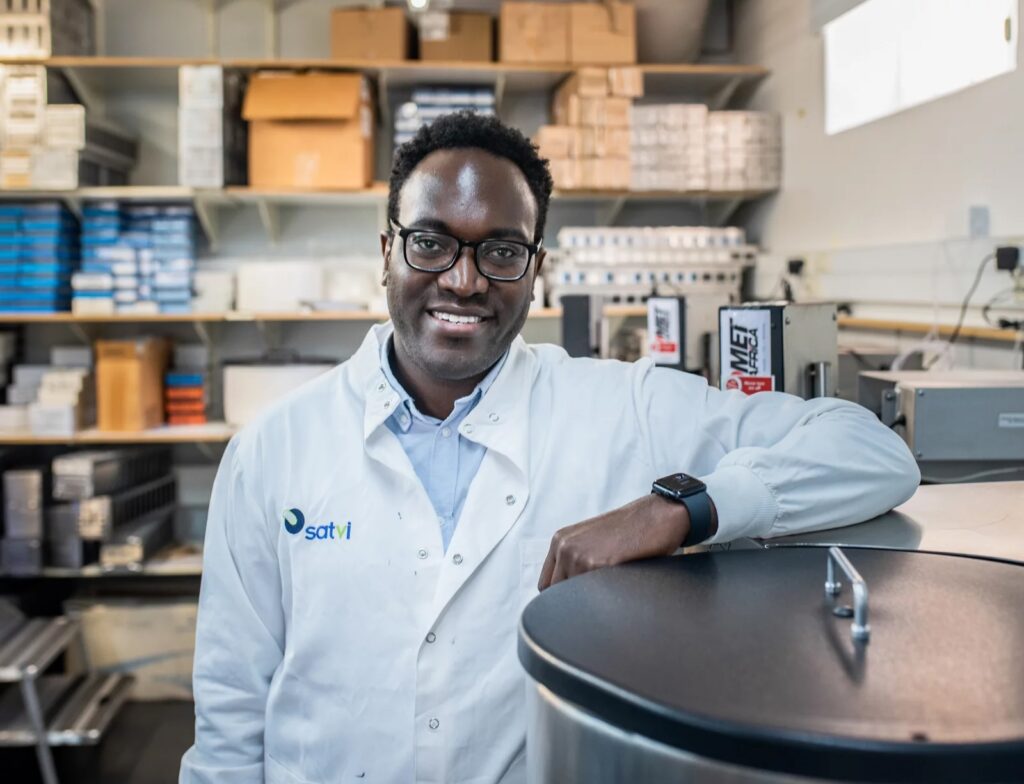 ABOVE: Dr Munyaradzi Musvosvi, TB Research Officer at the South African TB Vaccine Initiative, in his lab at UCT.[/caption]
News date: 2026-10-25
Links:
KRISP has been created by the coordinated effort of the University of KwaZulu-Natal (UKZN), the Technology Innovation Agency (TIA) and the South African Medical Research Countil (SAMRC).


Location: K-RITH Tower Building
Nelson R Mandela School of Medicine, UKZN
719 Umbilo Road, Durban, South Africa.
Director: Prof. Tulio de Oliveira