KRISP COVID-19 NEWS

Science has never been more visible. Research findings are shared instantly across social media, scientists engage directly with global audiences, and public debates increasingly draw on scientific evidence. Yet alongside these opportunities come new challenges, from misinformation and political interference to online harassment and declining trust.
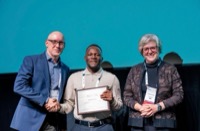
Ugandan clinical microbiologist and African STARS fellow Amusa Wamawobe has won the globally competitive Robert Austrian Research Award â and points to the fellowship as one of the forces that sharpened the scientific writing behind his winning proposal.
The new Genomics of Antimicrobial Resistance (GEN-AMR) Research Unit at CERI aims to strengthen Africaâs response to antimicrobial resistance through genomics, surveillance, bioinformatics, and precision medicine. Led by Dr Emilyn Costa Conceição, the unit brings together interdisciplinary expertise to better understand drug-resistant pathogens, expand genomic surveillance capacity, support public health decision-making, and build research and training networks across Africa and beyond.

Two African STARS MSc fellows at CERI reflect on their journeys in bioinformatics, pathogen genomics, and infectious disease research. Nick Mogoi and Thato Phenyo share how the fellowship has helped them develop advanced analytical skills, deepen their understanding of genomics and public health, and strengthen their commitment to using data-driven approaches to improve disease surveillance, epidemic preparedness, and health outcomes across Africa.
The Virus Evolution and Molecular Epidemiology (VEME) Workshop equips researchers with the skills to analyse and interpret viral genomic data for public health applications. Through hands-on training in phylogenetics, evolutionary analysis, and outbreak investigation, participants learn how to translate genomic data into insights that support disease surveillance, outbreak response, and epidemic preparedness. The workshop also strengthens bioinformatics capacity and collaborative networks across Africa.
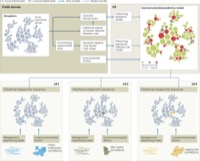
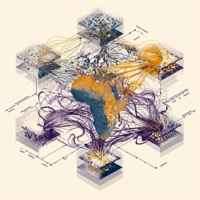
A new Nature paper co-authored by Prof Houriiyah Tegally explores how integrated global surveillance systems could improve the detection, tracking, and response to infectious disease threats. The paper introduces PathogenGlobal, a framework that connects genomic, environmental, modelling, and public health data through collaborative and federated approaches, aiming to strengthen outbreak preparedness, early warning systems, and pandemic response worldwide.
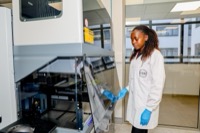
Celestine Kemunto Nyamari reflects on her journey from Kenya to Stellenbosch University through the African STARS Fellowship. Working at the intersection of molecular biology, biotechnology, genomics, and cervical cancer research, she explores how African-led science can address local health challenges. Her story highlights the importance of collaboration, community, and pan-African partnerships in strengthening research capacity and improving health outcomes across the continent.
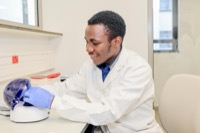
Joel Kabugo shares his journey from Uganda to Stellenbosch University through the African STARS Fellowship, highlighting his work in clinical microbiology and infectious diseases. His research focuses on improving access to diagnostics, tackling antimicrobial resistance, strengthening health systems, and expanding African representation in genomics research to address pressing public health challenges across the continent.
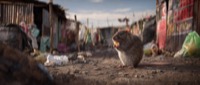
Researchers are calling for stronger surveillance of hantaviruses in Africa, warning that climate change, land-use change, and limited monitoring may increase the risk of future outbreaks. Improved detection, research, and One Health approaches could help identify and prevent spillover events before they become larger public health threats
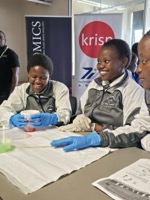
Through hands-on activities and direct engagement with researchers, learners gained practical insight into genomics and the role it plays in understanding health, disease, and scientific discovery.
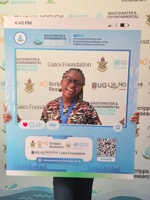
The Wastewater & Environmental Surveillance Meeting 2026 in Ghana brought together researchers from across Africa to explore how wastewater data can support disease surveillance, outbreak preparedness, and public health decision-making.
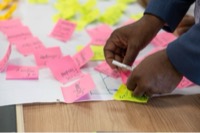
Researchers and community engagement teams from four African countries gathered in Kenya for the 2026 WEMA Consortium and Scientific Advisory Board meeting, sharing emerging findings on climate-related mental health and shaping the next phase of the project.

Behind every successful research programme is a strong operational foundation. At CERI, Zethu Luthuliâs dedication to research management and administration helps create the conditions that enable researchers and students to thrive.
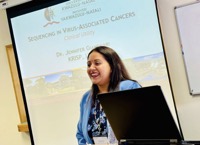
An international symposium explored how research on oncogenic viruses is advancing cancer prevention, diagnosis, and treatment, with a focus on translating scientific discoveries into public health impact in Africa.
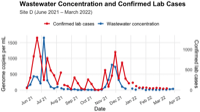
A new study highlights the potential of wastewater surveillance as a cost-effective tool for tracking disease outbreaks in low-resource settings. By comparing wastewater data with clinical testing results during a SARS-CoV-2 outbreak in South Africa, researchers found that wastewater monitoring can provide valuable early insights into community-level disease trends.
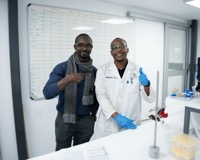
Representatives from the Mastercard Foundation visited CERI to meet African STARS fellows, learn about their experiences, and explore how the programme is helping develop the next generation of African researchers, innovators, and public health leaders.

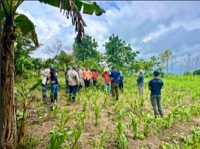
Emerging infectious diseases do not appear in isolation. They emerge through complex interactions between humans, animals, ecosystems, climate, and environmental change. For Prof Carla Mavian, Programme Director for One Health at the Centre for Epidemic Response and Innovation (CERI), those connections are central to preventing future outbreaks.
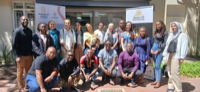
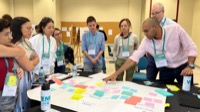
The âSilos to Synergyâ workshop introduced African STARS fellows to transdisciplinary research principles, stakeholder engagement, and creative methods for producing meaningful, context-specific research impact.
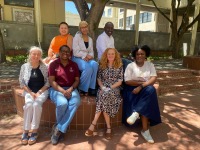
CERIâs new Social Science Unit will integrate social science into health research, strengthening community engagement, policy translation, and transdisciplinary collaboration across Africa.
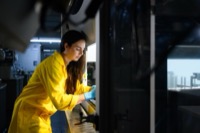
For Dr Monique Barnard-Matthee, some of the most important work in vaccine development happens in the systems behind the science: the workflows, infrastructure, automation platforms, and quality control processes that determine whether a promising scientific breakthrough can actually become a reliable public health solution. She believes that work must happen in Africa, led by African scientists, using African expertise.
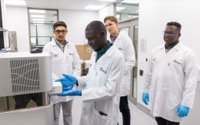
As emerging and re-emerging viruses continue to shape global public health, the ability to rapidly detect and characterise pathogens has become increasingly important, particularly in regions where surveillance resources remain unevenly distributed. Earlier this month, scientists, laboratory professionals, and public health researchers from across Africa gathered at the Centre for Epidemic Response and Innovation (CERI) at Stellenbosch University for an intensive hands-on workshop focused on one of the fieldâs most advanced viral sequencing approaches: VirCapSeq-VERT.
A connection made at SWEAT Africa 2026 led to a role at Nanosene within weeks, offering a clear example of how the event creates the conditions for real opportunities to emerge.
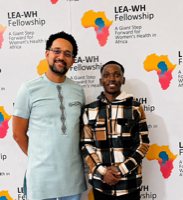
Selected from more than 900 international applicants as one of only 10 young innovators invited to the United Nations Science, Technology and Innovation Forum in New York, African STARS fellow Kennedy Mulungu is emerging as part of a new generation of African scientists and entrepreneurs building globally competitive innovation from the continent.

Prof Tulio de Oliveira, Director of the Centre for Epidemic Response and Innovation (CERI) at Stellenbosch University and founder and director of the KwaZulu-Natal Research Innovation and Sequencing Platform (KRISP) at the University of KwaZulu-Natal, has been awarded the Order of Mapungubwe in Gold by President Cyril Ramaphosa, in recognition of more than two decades of work building South Africa's capacity to detect, track, and respond to infectious disease threats.

As climate and environmental change continue to reshape ecosystems across the world, scientists are warning that mosquito-borne diseases may spread into new regions, become more frequent, and intensify in areas already under pressure. A major new international research grant awarded to Dr Monika Moir at the Centre for Epidemic Response and Innovation (CERI) will place Africa at the centre of efforts to better understand one of these moving threats: West Nile virus.
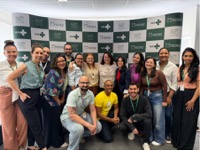
CERIâs engagement in Brazil highlights a growing commitment to advancing genomic surveillance in high-burden settings. Through training, collaboration, and new national networks, this work is translating genomics into real public health impact.

Shaping the future of scientific discovery in South Africa.
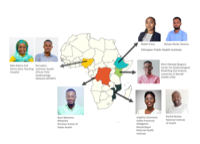
A new cohort of African fellows is turning epidemiological data into practical decisions â from vaccination strategy to outbreak risk âworking directly with policymakers in their own countries. At a time of uncertain funding and rising pressure on health systems, the SACEMA Policy Modelling Fellowship shows how locally driven, data-led insight can protect and strengthen public health across the continent.

Two new publications by Prof Jo-Ann Passmore reveal a critical gap between scientific knowledge and womenâs lived realities â where silence, stigma and power dynamics limit the impact of even the best research. By calling for ethical, community-driven design, the work points to a future where science is not only rigorous, but truly usable in womenâs everyday lives.
KRISP COVID-19 TV COVERAGE
COVID-19 | News sub-variant being monitored closely
By: Tulio De Oliveira and CERI and KRISP teams