


NEWS
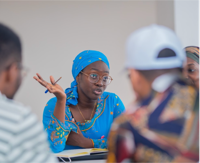
Marième Samb Traoré on innovation, access, and real-world impact.

Engaged research is reshaping how global health challenges are understood and addressed by bringing communities into every stage of the process. At CERI, this approach is helping to build more grounded, context-driven solutions for climate and infectious disease risks in vulnerable settings.
Collaboration and continuous learning are at the heart of advancing genomics in Africa – and the return of Dr Armando Djiyou to KRISP reflects just that.
A fellowship designed to close Africa’s health innovation gap is already reshaping how young scientists think – and act – beyond the lab.
A SARS-CoV-2 lineage once thought extinct has re-emerged after more than two years – revealing how the virus can evolve undetected and return with significant genetic change.
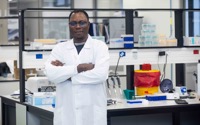
The VirCapSeq-VERT workshop has brought together participants from historically disadvantaged South African institutions, regional academic centres, and members of the Africa CDC network.
CERI is looking for a Senior Project Accountant to support the financial management of our growing research portfolio. This three-year fixed-term role is based at Stellenbosch University and is open to candidates with 5+ years' experience in research funding and international grants. Applications close 13 May 2026.

For decades, Oropouche virus has caused outbreaks in the Amazon region. Spread by a tiny biting midge rather than a mosquito, it was largely restricted to communities within the Amazon Basin. In 2024, it expanded beyond that boundary for the first time at this scale.
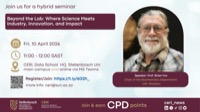
Join us for a seminar on translating scientific research into industry, innovation, and real-world impact with Prof. Brian Fox (UW–Madison).
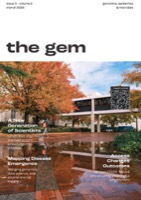
As autumn, a season that invites us to pause and take stock, settles over South Africa, this issue of GEM focuses on something important: what happens when young scientists are given the right support, connections, and space to step into their work.
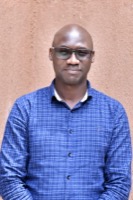
How VEME’s Impact Extends Far Beyond the Workshop
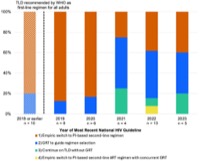
Approaches to the Management of Virologic Failure on Dolutegravir-Based Antiretroviral Therapy in the 50 Countries With the Highest Adult HIV Prevalence

How Akhil Maharaj took his research skills from the lab into corporate and investment banking.
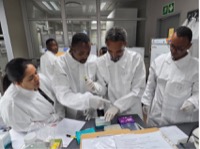
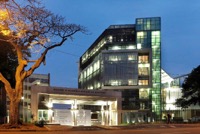
At KRISP, two emerging scientists show how resilience, faith, and purpose are driving a new generation of genomics research.
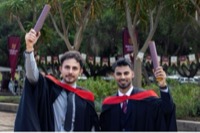

Groundbreaking clinical study, VIBRANT, signals a new direction for Bacterial Vaginosis (BV) treatment.


SU has joined a leading global network shaping how emerging technologies are understood, governed and applied. Through its Policy Innovation Lab, SU is strengthening international collaboration on AI and digital policy while positioning South Africa within key global conversations.
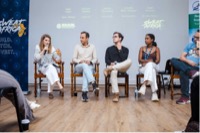
A conversation at SWEAT Africa 2026 explored both the promise of AI and the profound uncertainties that come with increasingly autonomous systems.
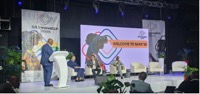
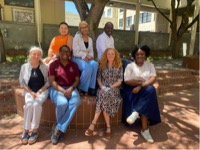
The launch of the Social Science Unit (SSU) at CERI marks a strategic shift toward integrating social science into epidemic response and health research in Africa.
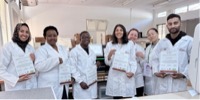
Yes! We Can End TB. Led by South Africa. Powered by Innovation.

Neonatal sepsis remains a leading cause of newborn mortality in sub-Saharan Africa, yet the systems designed to manage it are increasingly out of step with reality.
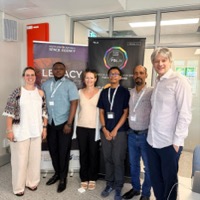
Haingo Andry, PhD candidate at CERI, Stellenbisch University attended the FDL Foundations Africa Workshop, and shares his highlights and key takeouts.

A €1.36 million Horizon Europe grant is enabling the South African Centre for Epidemiological Modelling and Analysis (SACEMA) to expand a long-running initiative that is reshaping how epidemic modelling is taught, applied, and sustained.
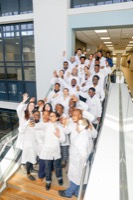
Access is often the difference between potential and progress. For two African STARS fellows, it led directly to employment, independence, and the ability to shape what comes next.

Nanosene, a startup that attended SWEAT Africa 2026, is focused on translating academic research into practical tools for drug discovery and life-science research.

Prof Houriiyah Tegally’s Wellcome-funded research programme brings genomics, data science, and environmental insight together to better understand how infectious diseases emerge and spread across Africa.
MOST POPULAR
BLOG

KRISP has been created by the coordinated effort of the University of KwaZulu-Natal (UKZN), the Technology Innovation Agency (TIA) and the South African Medical Research Countil (SAMRC).


Location: K-RITH Tower Building
Nelson R Mandela School of Medicine, UKZN
719 Umbilo Road, Durban, South Africa.
Director: Prof. Tulio de Oliveira